
Peptide enthusiast starter compounds are foundational research peptides chosen for their safety profile, documented evidence, and beginner-friendly dosing protocols. The three most recommended compounds for newcomers in 2026 are BPC-157, Ipamorelin, and GHK-Cu. Each targets a distinct biological pathway: tissue repair, growth hormone optimization, and skin health. Selecting the right compound depends entirely on your goal. This guide covers what makes a peptide beginner-friendly, how each top starter compound works, and how to build a protocol you can actually measure and trust.
What makes a good peptide enthusiast starter compound?
The best beginner peptide compounds share four defining traits: a strong evidence-to-risk ratio, measurable outcomes, simple dosing, and financial accessibility. A peptide that requires complex titration schedules or expensive lab monitoring every two weeks is not a starter compound. It is an advanced protocol dressed up as one.
Measurable outcomes matter more than most beginners realize. Without a defined biomarker or functional metric, you cannot tell whether a peptide is working or whether you are experiencing a placebo effect. Tracking a pain scale score, an IGF-1 blood level, or a skin texture assessment gives you real data to act on.
Key selection criteria for beginner peptide compounds:
- Evidence quality. Preclinical data with consistent results across multiple studies is the minimum bar.
- Dosing simplicity. Once or twice daily administration with fixed doses reduces error.
- Cycle length. Four to twelve weeks is the standard range for starter protocols.
- Cost per cycle. Accessible pricing lets you complete a full cycle without cutting it short.
- Single-compound use. Starting with one peptide isolates effects and prevents attribution confusion.
Pro Tip: Log your baseline metrics before day one. A pain scale score, a photo, or a blood draw gives you a reference point that makes your post-cycle assessment meaningful.
Weight management peptides like semaglutide and tirzepatide fall outside the starter category. They require physician oversight and ongoing titration, making them unsuitable for a first protocol.
1. BPC-157 for tissue repair and gut health
BPC-157 is the most widely recommended starter peptide for tissue repair. It is a synthetic pentadecapeptide derived from a protein found in gastric juice. Its primary research applications cover tendon healing, ligament repair, gut lining integrity, and inflammation reduction. Sports recovery communities have used it extensively because the results are trackable through functional metrics like pain scores and range of motion.
Typical dosing for BPC-157 runs 250–500 mcg per day over a four to eight week cycle. Administration is either subcutaneous injection near the injury site or oral capsule form for gut-focused applications. Subcutaneous injection delivers more direct tissue exposure. Oral use is simpler but less studied for systemic repair.
Key BPC-157 protocol details:
- Dose range: 250–500 mcg daily
- Cycle length: 4–8 weeks
- Administration: Subcutaneous injection or oral
- Measurable markers: Pain scale (0–10), range of motion, gut symptom diary
- Cost: Initial protocols often cost under $150 for a four to six week cycle
BPC-157 has a well-documented preclinical safety profile. Reported side effects are minimal and typically limited to mild injection site discomfort. One important caveat: BPC-157 shares an angiogenic mechanism with TB-500 and GHK-Cu. Researchers with a personal history of cancer should exercise caution with angiogenic peptides and consult a physician before use.
Peptasticlabs carries HPLC-verified BPC-157 at ≥99% purity, with batch documentation available on request. Purity at that level matters because underdosed or contaminated peptides produce unreliable results and compromise your data.
2. Ipamorelin for growth hormone pulse optimization
Ipamorelin is a growth hormone secretagogue. It stimulates the pituitary gland to release growth hormone in natural pulses rather than flooding the system with exogenous GH. This mechanism makes it one of the cleanest GH-axis peptides available for beginners. Unlike older GH-releasing peptides, Ipamorelin produces minimal cortisol and prolactin elevation, which means fewer hormonal side effects and a cleaner signal to track.
Typical dosing runs 200–300 mcg administered one to three times daily over an eight to twelve week cycle. Timing matters significantly with Ipamorelin. GH pulses are most effective when cortisol and insulin are low.
Key Ipamorelin protocol details:
- Dose range: 200–300 mcg per injection
- Frequency: 1–3 times daily
- Cycle length: 8–12 weeks
- Best timing: Before bed or in a fasted state
- Measurable marker: IGF-1 blood level, body composition, sleep quality log
IGF-1 is the recommended biomarker for tracking effectiveness. A baseline IGF-1 draw before week one and a follow-up at week eight gives you objective data on whether the protocol produced a meaningful GH response. Without that data, you are guessing.
Pro Tip: Inject Ipamorelin 30 minutes before sleep on an empty stomach. GH release peaks during slow-wave sleep, and low insulin at that time amplifies the pulse.
Ipamorelin differs from GHRH peptides like Sermorelin in that it acts on a different receptor class. Stacking Ipamorelin with a GHRH peptide is a common advanced move, but beginners should complete a solo Ipamorelin cycle first. Peptasticlabs offers research-grade Ipamorelin with third-party verification and full Certificate of Analysis documentation.
3. GHK-Cu for skin health and anti-aging
GHK-Cu is a copper-binding tripeptide with strong evidence for skin remodeling, collagen synthesis, and wound healing. Its primary advantage for beginners is the delivery method: topical serum. No needles, no reconstitution, no injection technique to learn. That makes it the most accessible entry point for enthusiasts focused on aesthetic or skin health goals.
Effective concentration ranges from 0.5–1% in topical serum form applied once or twice daily. A standard protocol runs eight to twelve weeks, which aligns with the skin cell turnover cycle. Monthly cost typically falls between $30 and $80, making it one of the most financially accessible peptide protocols available.
Key GHK-Cu protocol details:
- Concentration: 0.5–1% topical serum
- Application: Once or twice daily to target areas
- Cycle length: 8–12 weeks
- Measurable markers: Skin texture photos, hydration assessment, fine line depth
- Administration advantage: Needle-free, no reconstitution required
GHK-Cu also shares the angiogenic mechanism noted in BPC-157. The same cancer history caution applies. For everyone else, the safety data is favorable and the barrier to entry is low. Peptasticlabs lists GHK-Cu in its catalog with documented purity verification, which is the standard you need when applying any compound directly to skin.
4. Comparing beginner peptide protocols and choosing your first compound
Selecting the right starter peptide comes down to one question: what is your primary goal? The best peptide is goal-dependent. Misaligning a compound with your intended biological outcome is the most common beginner mistake.
| Compound | Primary Goal | Cycle Length | Dosing Complexity | Key Biomarker | Approx. Monthly Cost |
|---|---|---|---|---|---|
| BPC-157 | Tissue repair, gut health | 4–8 weeks | Low | Pain scale, function | Under $150/cycle |
| Ipamorelin | GH optimization, recovery | 8–12 weeks | Moderate | IGF-1 blood level | Moderate |
| GHK-Cu | Skin health, anti-aging | 8–12 weeks | Very low | Skin texture photos | $30–$80/month |
A clean protocol also requires baseline and post-cycle bloodwork. At minimum, CMP, IGF-1, and glucose give you objective data to compare against your post-cycle results. Documenting stopping criteria before you start is equally important. Define in advance what would cause you to end the cycle early.
Key protocol recommendations before starting:
- Run one compound at a time. Stacking from day one prevents clear attribution of benefits or side effects.
- Draw baseline labs before week one.
- Set a defined stopping criterion (e.g., adverse symptom threshold).
- Plan a washout period after each cycle to assess lasting effects.
- Source only HPLC-verified, third-party tested compounds.
Research-grade peptides differ from prescription medications. The lack of robust human trial data requires careful self-monitoring with biomarkers rather than relying on subjective experience alone. That is not a reason to avoid peptides. It is a reason to track them properly.
Key Takeaways
The most effective approach to beginner peptide use is selecting one goal-aligned compound, establishing baseline biomarkers, and completing a full documented cycle before considering any stack.
| Point | Details |
|---|---|
| Start with one compound | Isolating a single peptide prevents attribution confusion and produces cleaner data. |
| Match compound to goal | BPC-157 targets repair, Ipamorelin targets GH optimization, GHK-Cu targets skin health. |
| Establish baseline labs | Draw IGF-1, CMP, and glucose before week one to enable objective post-cycle comparison. |
| Use HPLC-verified peptides | ≥99% purity compounds produce reliable results; lower-grade sources compromise your data. |
| Define stopping criteria | Set a clear threshold for adverse effects before starting any cycle. |
What I have learned from watching beginners approach peptides
The most consistent mistake I see is starting with a goal that is too vague. "Feel better" is not a measurable outcome. "Reduce knee pain from 7/10 to 4/10 over six weeks" is. The difference between those two approaches determines whether you learn anything from a cycle or just spend money.
Beginners also underestimate how much purity matters. A peptide at 85% purity is not a bargain. It is an unknown compound at an unknown dose with unknown contaminants. The ≥99% HPLC-verified standard exists because anything below it introduces variables you cannot control or measure.
The temptation to stack early is real, and it is almost always counterproductive. I have seen researchers run BPC-157, Ipamorelin, and a third compound simultaneously in week one, then wonder why they cannot tell what is working. Patience with single-compound cycles is not timidity. It is the only way to build a reliable personal dataset.
Consulting a knowledgeable professional before starting any peptide protocol is not optional. It is the baseline standard for responsible use. The evidence base for these compounds is growing, but it is not complete. Self-monitoring with biomarkers is how you fill that gap responsibly.
— Tintastic
Research-grade starter peptides from Peptasticlabs
Peptasticlabs carries BPC-157, Ipamorelin, and GHK-Cu in its catalog of over 22 verified compounds, each tested to ≥99% purity via HPLC and supported by third-party Certificates of Analysis. Every batch is documented, so you know exactly what you are working with before you begin a protocol.
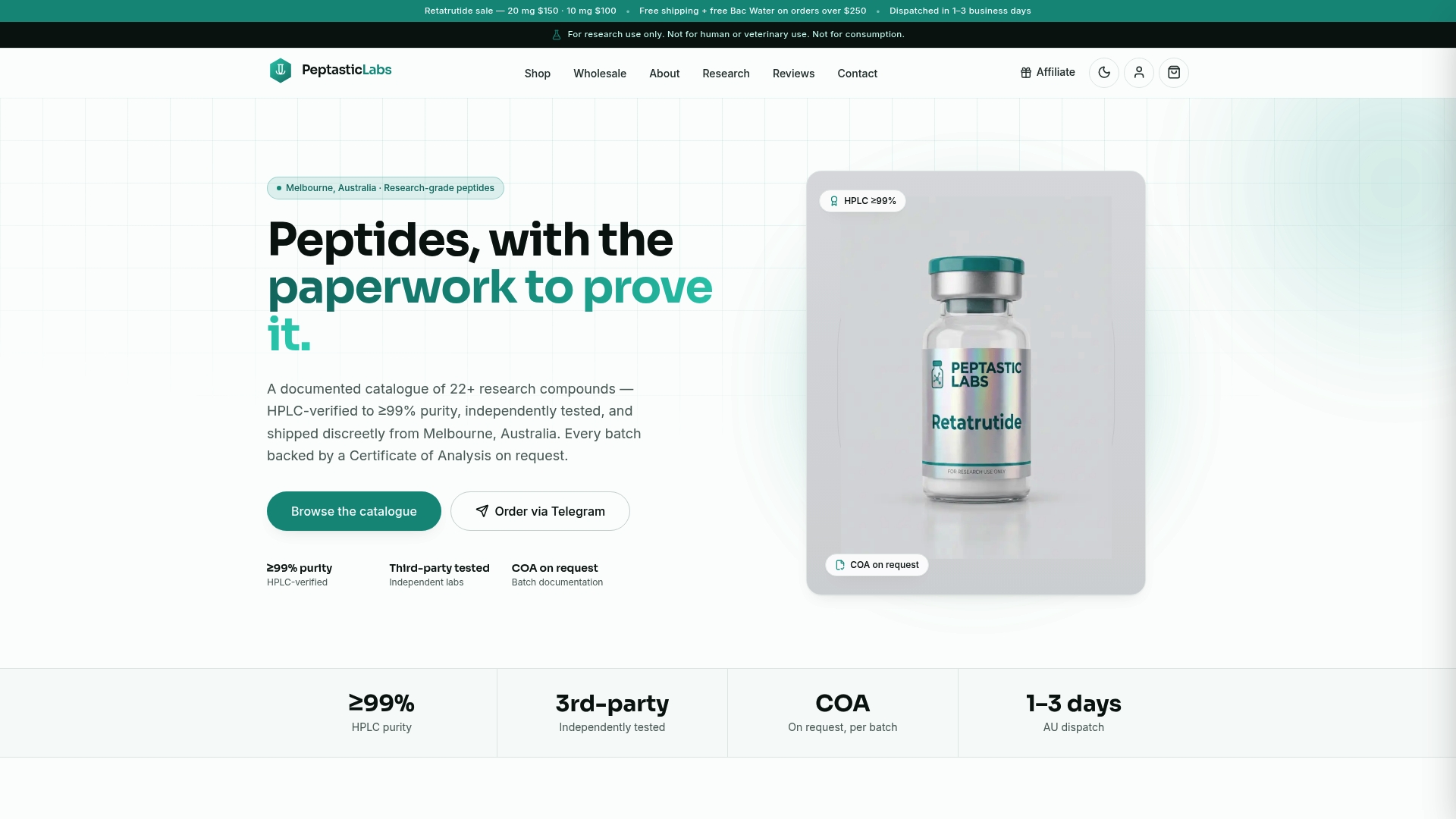
Researchers starting their first peptide protocol can review compound-specific data, reconstitution guidance, and dosing references through the Peptasticlabs research library. Verified purity and full batch documentation are the foundation of any protocol worth running.
FAQ
What are the best peptides for beginners?
BPC-157, Ipamorelin, and GHK-Cu are the three most recommended starter compounds for enthusiasts. Each targets a distinct goal: tissue repair, GH optimization, and skin health, respectively.
Should beginners stack peptides from day one?
No. Starting with one compound isolates effects and prevents attribution confusion. Introduce a second compound only after completing and documenting a full solo cycle.
What biomarkers should I track on a first peptide cycle?
Baseline and post-cycle draws of IGF-1, CMP, and glucose provide objective data for GH-axis and metabolic monitoring. Functional metrics like pain scores and photos supplement lab data.
Is GHK-Cu safe for beginners with no injection experience?
GHK-Cu applied as a topical serum at 0.5–1% concentration requires no injections and has a favorable safety profile. Individuals with a cancer history should consult a physician before use due to its angiogenic mechanism.
How do I know if a peptide source is reliable?
Source only from suppliers that provide HPLC verification at ≥99% purity and third-party Certificates of Analysis per batch. Documentation at that level is the minimum standard for research-grade compounds.