Ipamorelin is a pentapeptide agonist at the growth hormone secretagogue receptor (GHSR-1a), and it is one of the most selective GH-releasing compounds ever characterized in preclinical models. Researchers select it because it triggers robust GH secretion without the ACTH, cortisol, or prolactin spikes typical of older secretagogues.
Its research applications span GH-axis physiology, bone remodeling, muscle-catabolism models, and gastrointestinal motility studies including postoperative ileus. Two figures anchor most protocol decisions:
- In vitro potency (EC50) in rat pituitary cell cultures runs in the low nanomolar range.
- Selective GH release persists in animal models without meaningful ACTH or cortisol elevation, even at doses far above the GH-effective dose.
Peptastic Labs documents its research-grade ipamorelin with independent purity verification, giving laboratories a traceable starting point for reproducible dosing work.
Key Takeaways
Ipamorelin's defining research value is a rare combination of nanomolar potency and pharmacological selectivity that lets researchers isolate GH-axis effects from stress-hormone confounds.
| Point | Details |
|---|---|
| Definition | Ipamorelin is a pentapeptide GHSR-1a agonist studied preclinically for GH-axis, bone, muscle, and GI motility research. |
| Potency data | In vitro EC50 runs approximately 1.3 nanomolar in rat pituitary cell cultures. |
| Selectivity advantage | Animal models show minimal ACTH or cortisol rise even at doses over 200 times the GH ED50. |
| Reference dosing example | Published rat studies used 100 µg/kg subcutaneously daily for 21 days with preserved GH responsiveness. |
| Sourcing checklist | Confirm ≥99% HPLC purity, request a Certificate of Analysis, and verify batch documentation before ordering. |
| Core limitation | Ipamorelin remains research-use-only, with no approved human or bodybuilding application. |
| Documented supplier | Peptastic Labs provides independently tested, HPLC-verified ipamorelin with COAs available for laboratory procurement. |
Table of Contents
- What Is Ipamorelin's Bodybuilding Use in Research Terms?
- How Does Ipamorelin Trigger GH Release at the Cellular Level?
- What Do the Potency and Selectivity Data Show?
- Where Does Ipamorelin Fit Into Preclinical Study Design?
- What Dosing and Protocol Examples Appear in Published Studies?
- What Quality Standards Matter When Sourcing Research-Grade Ipamorelin?
- What Are the Regulatory Limits Researchers Should Know?
- What Animal Dosing Regimens and Durations Appear Most Often?
- What Do Preclinical Models Show About Muscle and Catabolism Outcomes?
- What Dosing Protocols and Cycle Lengths Show Up in the Literature?
- What Side Effects and Safety Signals Appear in the Data?
- Is Ipamorelin Legal for Bodybuilding or Human Use?
- How Does Ipamorelin Compare to Other Growth Hormone Secretagogues?
- Why This Compound Gets Chosen Over Flashier Alternatives
- Sourcing Research-Grade Ipamorelin for Your Next Protocol
- Frequently Asked Questions
- Sources
What Is Ipamorelin's Bodybuilding Use in Research Terms?
When researchers ask what is ipamorelin bodybuilding use, they usually mean something narrower than the term suggests: it is not a performance supplement, but a tool compound used in preclinical models that mimic muscle wasting, catabolic stress, and GH-axis suppression. Those models inform basic science on how growth hormone secretagogues might eventually support muscle-related therapies. The GHSR-1a receptor ipamorelin activates is expressed on pituitary somatotrophs and hypothalamic neurons, and its distinct signaling profile makes it a favored tool for isolating GH effects from confounding stress hormones. That isolation matters enormously in catabolism studies, where cortisol interference can muddy an otherwise clean dataset.
How Does Ipamorelin Trigger GH Release at the Cellular Level?
Ipamorelin binds GHSR-1a on somatotroph cell membranes and activates phospholipase C (PLC), which generates inositol trisphosphate (IP3) and mobilizes intracellular calcium. That calcium surge triggers exocytosis of GH-containing secretory granules, releasing growth hormone into circulation. In vitro work confirms this PLC/Ca2+ cascade directly in rat pituitary cell cultures.
The pathway differs mechanistically from growth hormone releasing hormone (GHRH), which works through a separate GHRH receptor coupled to adenylate cyclase and cyclic AMP (cAMP) production. Because ipamorelin and GHRH converge on GH release through non-overlapping second-messenger systems, they produce additive or synergistic effects when studied together.
- GHSR-1a agonism (ipamorelin): PLC → IP3 → intracellular Ca2+ → GH granule exocytosis
- GHRH receptor agonism: adenylate cyclase → cAMP → protein kinase A activation → GH synthesis and release
Pro Tip: When designing a combination protocol, track GH pulse amplitude rather than just peak concentration. Amplitude changes reveal whether the two pathways are truly acting additively in your model, not just producing two separate small spikes that look additive on a coarse timescale.
What Do the Potency and Selectivity Data Show?
The numbers matter more here than in most peptide categories, because ipamorelin's entire research value rests on its potency-to-selectivity ratio.
Key figures: In vitro EC50 in rat pituitary cells measures in the low nanomolar range. In vivo ED50 values run around tens of nmol/kg in rats and low nmol/kg in swine, indicating notable species-dependent sensitivity.
That swine-versus-rat gap is not a rounding error. It reflects real differences in receptor density, metabolic clearance, and pituitary responsiveness across species, and it is the exact reason cross-species extrapolation requires caution rather than simple unit conversion.
Selectivity is the other half of the story. Preclinical data show minimal ACTH or cortisol elevation even at doses exceeding 200 times the GH ED50, a margin far wider than older secretagogues like GHRP-6 typically demonstrate. Emax comparisons against GHRP-6 in several preclinical models also favor ipamorelin on the selectivity axis, though absolute GH output between the two compounds varies by assay conditions.
Key caveats researchers should hold onto:
- Species differences in ED50 mean a rat protocol cannot be scaled directly to another species by body weight alone.
- Animal-to-human inference remains limited, particularly for chronic dosing outcomes.
- Assay conditions (cell line, incubation time, hormone assay method) shift EC50 readings between labs, so cross-study comparisons need matched methodology.
Where Does Ipamorelin Fit Into Preclinical Study Design?
Ipamorelin's selectivity profile makes it useful across several distinct experimental domains, each with its own standard endpoints.
- GH-axis physiology. Researchers measure pulse frequency and amplitude to characterize how ipamorelin modifies natural secretory rhythms compared to baseline or GHRH-only conditions.
- Bone remodeling. Rodent studies typically track bone mineral content and periosteal growth using DXA or pQCT imaging, since GH signaling directly influences osteoblast activity.
- Muscle and anti-catabolic models. Glucocorticoid-induced catabolism protocols test whether ipamorelin counteracts muscle protein breakdown, a model directly relevant to conditions marked by wasting.
- Gastrointestinal motility. Postoperative ileus models, gastric emptying rate, and fecal output measurements have been used to explore ipamorelin's effects on gut motility independent of its GH activity.
- Combination protocols. Pairing ipamorelin with a GHRH analog such as CJC-1295 lets researchers probe whether distinct intracellular pathways produce additive GH pulse amplitude, a design choice grounded in the mechanistic split described earlier.
Each domain uses different primary endpoints, so protocol design should specify the readout before selecting a dosing regimen.
What Dosing and Protocol Examples Appear in Published Studies?
Published rodent work gives researchers a concrete starting point rather than a guess. One study administered 100 µg/kg subcutaneously once daily for 21 days in young female rats, producing measurable body weight gain and preserved GH responsiveness across the full treatment window, without the receptor desensitization commonly seen with chronic GHRH exposure.
Other designs use continuous subcutaneous infusion to maintain steady-state receptor engagement, or single intravenous bolus dosing to capture acute pulse dynamics for pharmacokinetic modeling. Route selection changes the pharmacodynamic picture substantially:
- Subcutaneous bolus dosing produces a discrete GH pulse suited to studying pulse amplitude and clearance.
- Continuous infusion better models sustained receptor occupancy but risks flattening the natural pulsatile GH pattern.
- Intravenous bolus dosing gives the fastest onset, useful for acute mechanistic studies but less representative of chronic exposure conditions.
Chronic administration carries its own wrinkle: some regimens show partial receptor desensitization over extended dosing periods. Researchers commonly mitigate this with intermittent dosing windows or alternate-day schedules, monitoring GH responsiveness during pilot phases before committing to a full study timeline.
Pro Tip: Build a pilot arm into any chronic protocol specifically to check for desensitization at week two and week three. A single endpoint measurement at study close will not tell you whether responsiveness declined and then plateaued.
Suggested controls include a vehicle-only group, a GHRH-analog-only arm, and, where feasible, a combination arm, with GH concentration, body weight, and the domain-specific endpoint (bone density, muscle mass, GI transit time) as primary readouts.
What Quality Standards Matter When Sourcing Research-Grade Ipamorelin?
Reproducibility starts with purity, and a peptide that tests below stated purity introduces a confound before the experiment even begins.
Complete batch documentation should include:
- HPLC purity results with retention time data
- Mass spectrometry confirmation of molecular identity
- Batch or lot number tied to a specific COA
- Storage conditions and stability data for the tested batch
Peptastic Labs verifies its full catalog, including ipamorelin, to ≥99% purity via HPLC and makes Certificates of Analysis available on request, giving laboratories the documentation trail reproducibility review requires.
Storage matters just as much as sourcing. Lyophilized peptide should stay frozen and protected from light until reconstitution, and reconstituted solution generally needs refrigeration with a defined use window to avoid degradation between dosing sessions.
What Are the Regulatory Limits Researchers Should Know?
Ipamorelin is sold and studied strictly as a research-use-only compound. It has not been approved for clinical or human use, and its clinical development for indications like postoperative ileus did not demonstrate consistent efficacy in trials, which is part of why it remains a laboratory tool rather than a therapeutic.
Institutional oversight is non-negotiable for animal work:
- Studies require approval from an institutional animal ethics body (IACUC in the US, HREC-equivalent structures elsewhere) before dosing begins.
- Protocols need defined humane endpoints, not just study-completion criteria.
- Animal data carries real translational limits. Species-specific ED50 differences discussed earlier are one clear example of why results don't transfer cleanly to other contexts.
- Check institutional policy and local regulations before ordering or administering any GHS compound, since research-use-only status carries specific handling and documentation obligations.
What Animal Dosing Regimens and Durations Appear Most Often?
The 21-day, 100 µg/kg subcutaneous protocol in young female rats remains the most frequently cited chronic regimen in the literature, largely because it demonstrated sustained GH responsiveness across three full weeks without the desensitization pattern seen in some GHRH-only designs. Shorter acute studies, often single-dose or multi-dose over a few days, are more common when the research question centers on pulse dynamics or receptor binding kinetics rather than cumulative physiological change.
Swine studies tend to use lower nmol/kg doses relative to rats, consistent with the ED50 gap noted earlier, and duration in larger-animal models is often shorter due to cost and logistical constraints rather than any pharmacological ceiling. Duration choice should track the endpoint: pulse-amplitude questions can resolve in days, while bone or muscle-mass endpoints typically require weeks to show measurable change.
A recurring design feature across published regimens is the inclusion of a washout or pilot phase before the main dosing period, used to establish each animal's baseline GH responsiveness. This baseline matters because individual variation in pituitary sensitivity can be substantial even within an inbred rodent strain, and without it, treatment effects can be over or underestimated. Researchers building a new protocol should treat the 21-day rat regimen as a reference point for chronic-exposure study design, not a template to copy without adjusting for species, strain, and the specific catabolic or anabolic endpoint under investigation.
What Do Preclinical Models Show About Muscle and Catabolism Outcomes?
Muscle-related findings in ipamorelin research come almost entirely from anti-catabolic and body-composition models rather than anything resembling athletic performance testing. The clearest data point is the 21-day rat study, where chronic dosing produced measurable body weight gain alongside preserved GH responsiveness, an outcome relevant to catabolic-state research generally.
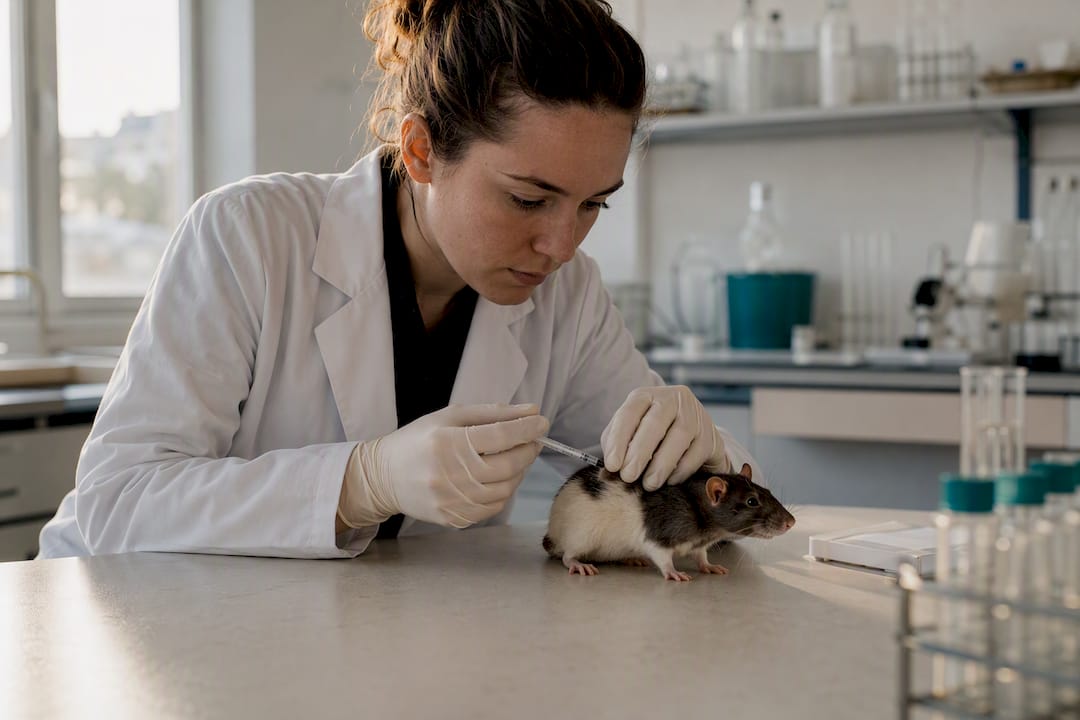
Glucocorticoid-induced catabolism models are the standard framework for probing muscle-specific effects. In these designs, researchers induce a catabolic state pharmacologically, then test whether ipamorelin's GH-driven signaling counteracts protein breakdown or supports lean mass preservation relative to untreated controls. This model class is directly relevant to wasting conditions studied in a research context, not to voluntary muscle-building outcomes in healthy subjects.
It is worth being precise here: no data in the reviewed preclinical literature characterizes ipamorelin as producing bodybuilding-style hypertrophy in healthy animals. The muscle-relevant findings are anti-catabolic in framing, tied to GH-axis restoration in compromised or stressed physiological states, not to muscle growth beyond normal baseline. Researchers designing protocols around muscle endpoints should specify whether the model is testing catabolism prevention or genuine anabolic growth, since ipamorelin's evidence base speaks far more strongly to the former.
What Dosing Protocols and Cycle Lengths Show Up in the Literature?
The published dosing pattern most researchers reference, around 100 µg/kg subcutaneously once daily for multiple weeks, comes from controlled rodent studies, not from any established human protocol. There is no peer-reviewed, dose-ranging human cycle length or dosing schedule for ipamorelin, because it has not advanced through the clinical approval pathway for bodybuilding-related or general therapeutic use.
Where secondary sources describe "cycles" measured in weeks or months for human use, those figures are not derived from controlled trials. They extrapolate from animal dosing by body weight scaling, a method the species-specific ED50 differences discussed earlier make unreliable. A regimen calibrated in rats does not translate to another species, including humans, through simple weight-based math.
For laboratory purposes, cycle duration should be set by the experimental question and the model's known timeline for the endpoint of interest. Bone or muscle endpoints generally need several weeks of consistent dosing to produce measurable change, while pulse-dynamics questions can be answered in a matter of days. Any protocol drawing on human-oriented cycle claims found outside peer-reviewed sources should be treated as unverified rather than adapted directly into a research design.
What Side Effects and Safety Signals Appear in the Data?
The safety picture that matters most for research purposes is ipamorelin's selectivity profile: minimal ACTH, cortisol, and prolactin elevation even at doses far above the GH-effective range in animal models. That selectivity is precisely why it gets chosen over less selective secretagogues when a study needs to isolate GH effects from stress-hormone confounds.
That said, animal safety data does not equate to a human safety profile, and no controlled human trial data establishes a side-effect profile for bodybuilding-style use. Extrapolating "no cortisol spike in rats" into "no risk in humans" skips several steps of translational validation that simply have not been done.
Within animal studies themselves, chronic dosing regimens have shown signs of partial receptor desensitization in some designs, meaning GH responsiveness can decline with sustained exposure even without changes in stress-hormone markers. That is a pharmacodynamic observation relevant to protocol design, not a claim about broader physiological risk in any species. Researchers evaluating ipamorelin for any downstream application should treat the compound's favorable rodent and swine selectivity data as a starting hypothesis for further controlled study, not as a substitute for actual human safety trials, which do not currently exist for this indication.
Is Ipamorelin Legal for Bodybuilding or Human Use?
Ipamorelin holds research-use-only status. It has not received approval from a national regulatory authority for human therapeutic use, and its early clinical development for indications such as postoperative ileus did not produce consistent efficacy results, which is a major reason it never advanced to approved clinical status.
That regulatory position carries direct consequences for anyone considering it outside a laboratory context. Products labeled research-use-only are manufactured and sold for use by qualified researchers in controlled settings, not for human administration of any kind, and using them outside that scope sits outside the intended and legally supported use case. Regulatory frameworks and enforcement practices around unapproved secretagogues vary by country and even by state or territory, so anyone encountering this compound should check their own jurisdiction's current rules and their institution's policies before proceeding, rather than relying on general claims found on forums or retail sites.
For laboratories, the practical takeaway is straightforward: procurement, storage, and use should stay within an institutional research framework with the appropriate ethics approvals in place, exactly as outlined for animal studies elsewhere in the preclinical literature.
How Does Ipamorelin Compare to Other Growth Hormone Secretagogues?
Ipamorelin sits in a specific niche among growth hormone secretagogues (GHS) and GHRH analogs, distinguished mainly by its selectivity rather than raw potency. Older GHRPs like GHRP-6 stimulate GH release but tend to produce more pronounced ACTH, cortisol, and prolactin elevation alongside it, along with appetite-stimulating effects mediated through separate receptor activity that ipamorelin largely avoids.
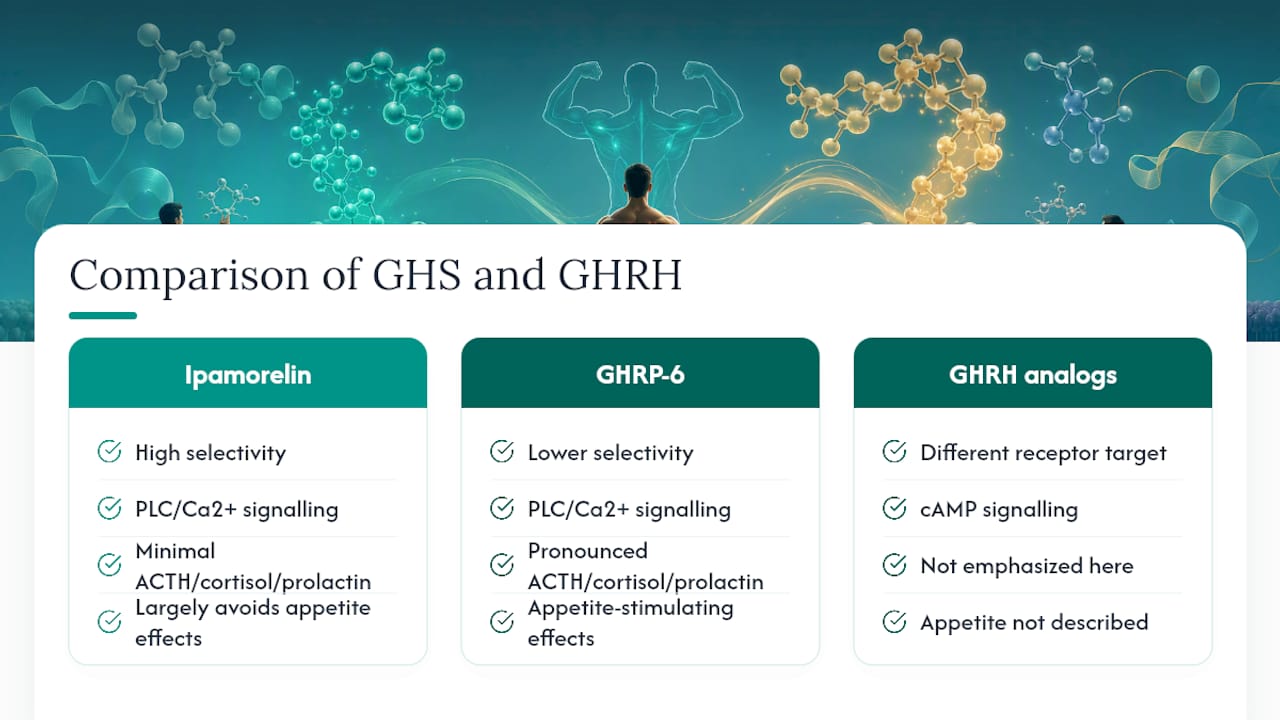
GHRH analogs such as CJC-1295 work through an entirely different receptor and second-messenger pathway (cAMP rather than PLC/Ca2+), which is precisely why researchers pair the two: distinct mechanisms can produce additive effects on GH pulse amplitude in combination protocols, an approach documented in preclinical review literature. Sermorelin, another GHRH analog, follows the same cAMP-based mechanism as CJC-1295 but with a shorter half-life, making it useful for different pulse-timing study designs.
The practical distinction for protocol selection comes down to research goal. Studies isolating pure GH-axis effects without stress-hormone confounds tend to favor ipamorelin. Studies probing combined GHRH/GHS synergy pair it with an analog like CJC-1295. Neither approach is inherently superior; the choice depends entirely on what the experimental question requires isolating or combining.
Why This Compound Gets Chosen Over Flashier Alternatives
The conventional framing of ipamorelin online treats it as interchangeable with any GH secretagogue, differing only in dose. That framing misses what actually matters in the preclinical literature: selectivity, not raw GH output, is the reason serious labs reach for it. A compound that spikes GH but also drags cortisol and prolactin along for the ride introduces variables into a dataset that a selective agent avoids entirely.
Where the standard advice falls short is treating animal ED50 figures as universally transferable. The rat-to-swine gap in this article is not a footnote; it is a warning against lazy dose scaling by body weight alone. Any protocol that skips a pilot phase to establish species and strain-specific responsiveness is building on an assumption the data does not support.
What should researchers prioritize first? Documentation, not dosing charts. A peptide with an unverified purity claim invalidates an otherwise well-designed study before the first injection. Potency figures and selectivity data are only as trustworthy as the material tested, which is why sourcing discipline deserves at least as much attention as the pharmacology itself.
Sourcing Research-Grade Ipamorelin for Your Next Protocol
Getting a reliable EC50 or ED50 replication depends entirely on what arrives in the vial, and that is where Peptastic Labs fits into the picture this article has been building.
For labs running combination studies with a GHRH analog, the CJC-1295 (no DAC) plus ipamorelin blend is built specifically for that dual-pathway design discussed earlier, with both compounds independently tested and batch-documented. Researchers exploring adjacent GH-axis or metabolic questions can also browse the full research peptide catalog for related tool compounds. Request a Certificate of Analysis before your next order and confirm the batch documentation matches what your protocol's reproducibility standards require.
Frequently Asked Questions
What is ipamorelin bodybuilding use in a research context? It refers to ipamorelin's role as a preclinical tool compound in muscle-catabolism and GH-axis models, not as a human performance product. Researchers use it to study GH secretion, anti-catabolic pathways, and related endpoints in animal models.
How does ipamorelin help muscle growth in preclinical studies? Ipamorelin's GH-stimulating action has been tested primarily in glucocorticoid-induced catabolism models, where it counteracts muscle protein breakdown rather than driving hypertrophy beyond normal baseline in healthy animals.
Is ipamorelin safe for muscle-related animal research?
What is a typical ipamorelin dosage used in bodybuilding-adjacent research? The most cited chronic regimen uses 100 µg/kg subcutaneously daily for 21 days in rats, a figure specific to that species and study design rather than a universal dosing standard.
How does ipamorelin compare to other peptides used in GH-axis research? It offers greater selectivity than older GHRPs like GHRP-6 and works through a different signaling pathway than GHRH analogs such as CJC-1295, which is why the two are sometimes studied together.
Where can researchers buy ipamorelin for laboratory use? Qualified researchers should source it from suppliers offering independent HPLC purity verification and Certificates of Analysis, such as Peptastic Labs, rather than unverified retail sources.
This article is general information, not a substitute for advice from a qualified doctor. Consult a qualified healthcare professional about your own circumstances before acting on anything here.
Sources
Researchers building a protocol should start with the primary studies behind the figures cited throughout this piece:
- Chronic in vivo Ipamorelin treatment stimulates body weight gain and growth hormone (GH) release in vitro in young female rats (European Journal of Anatomy)
- Growth hormone secretagogues: history, mechanism of action, and clinical development - Ishida - 2020