Yes: preclinical evidence supports research-grade BPC-157 as a reagent that promotes repair in muscle, tendon, ligament, and bone models. This BPC-157 injury recovery gym guide is written for institutional labs, not for self-administration.
This guide covers only HPLC-verified, batch-documented BPC-157 intended for laboratory study. It does not cover human dosing, gym self-treatment, or performance protocols. What follows:
- Evidence summary across tissue-repair models
- Mechanism of action and recommended assay endpoints
- Sourcing and quality-control checklist
- Lab handling and documentation practices
- Regulatory and ethics reminders
- A documented supplier option
Key Takeaways
Research-grade BPC-157 shows measurable, reproducible repair effects across tendon, muscle, and myotendinous junction models in animal studies, provided the source material is HPLC-verified and batch-documented.
| Point | Details |
|---|---|
| Evidence is preclinical only | Tendon, muscle, and junction repair data come from rodent models; no controlled human trial data exists yet. |
| Mechanism centers on angiogenesis | FBXO22-dependent BACH1 stabilization drives endothelial proliferation, measurable via CD31 microvessel density. |
| Match endpoints to injury model | Sampling timepoints should follow the closest published model rather than a generic 2 to 4 week default. |
| Demand raw documentation | Require the raw HPLC trace, mass spec confirmation, and batch-specific CoA, not a summary purity claim. |
| Secure ethics approval first | Institutional animal ethics and regulatory clearance must precede any in vivo dosing work. |
| Peptastic Labs offers documented supply | Its BPC-157 listing provides ≥99% HPLC-verified purity with batch documentation and CoA available on request. |
Table of Contents
- What Counts as Research-Grade BPC-157?
- What Does the Preclinical Evidence Show for Tissue Repair?
- How Does BPC-157 Drive Tissue Repair at the Molecular Level?
- What Should Labs Require Before Ordering BPC-157?
- How Should Labs Handle and Document BPC-157 on Arrival?
- What Dosing Protocols Appear in Preclinical BPC-157 Models?
- What Safety Signals Exist for BPC-157 in Preclinical Models?
- How Does BPC-157 Compare With Other Peptide Approaches for Musculoskeletal Repair?
- How Do Physical Therapy Variables Interact With BPC-157 Study Design?
- What Recovery Timelines Appear Across BPC-157 Animal Studies?
- Where to Source Research-Grade BPC-157 With Full Documentation
- Frequently Asked Questions
- Sources
What Counts as Research-Grade BPC-157?
BPC-157 is a 15 amino-acid peptide fragment, synthesized rather than extracted, and its research value depends entirely on how it was made and verified.
This guide is written for institutional labs and qualified researchers running tissue-repair experiments, not for individual buyers seeking injury advice. It explicitly excludes:
- Human dosing recommendations or injection protocols
- Gym or athlete self-treatment guidance
- Any performance-enhancement framing
Everything below assumes a controlled laboratory context with documented material provenance, consistent with how Peptastic Labs presents its own catalog entries.
What Does the Preclinical Evidence Show for Tissue Repair?
The strongest data come from rodent models that isolate a single injury type and measure recovery against untreated or corticosteroid-compromised controls. Three lines of evidence stand out.
- Achilles tendon transection. A rat model of Achilles detachment found that BPC-157 improved functional index scores, increased load-to-failure on biomechanical testing, and produced better collagen I organization on histology, with outcomes tracked from day 1 through day 21 post-injury using intraperitoneal administration.
- Quadriceps muscle-to-bone reattachment. Rats with surgically detached quadriceps treated with BPC-157 showed consistent recovery across macroscopic, microscopic, MRI, and biomechanical endpoints. Per-oral and parenteral regimens in the 10 µg/kg to 10 ng/kg range restored normal walking patterns and produced reattachment fibers integrating into new bone by the three-month mark.
- Myotendinous junction defects. Rodent models of disabled myotendinous junctions treated with BPC-157 showed restored junction architecture and reduced inflammatory infiltrate, with functional recovery documented between 28 and 42 days using both per-oral and intraperitoneal dosing.
BPC-157's dose ranges span roughly three orders of magnitude across these studies (10 ng/kg to 10 µg/kg), which matters more than it might look at first glance: rodent regimens are not interchangeable across injury models, and a dose effective for tendon-to-bone healing is not automatically the right starting point for a myotendinous junction study.
Delivery routes reported across the literature include intraperitoneal, subcutaneous, and per-oral, each with distinct absorption kinetics. The evidence base has real limits worth stating plainly: every study cited here is an animal model, regimens vary by lab, formulation stability differs between suppliers, and controlled human trials remain scarce. Treat these findings as strong hypothesis-generating data, not confirmed clinical outcomes.
How Does BPC-157 Drive Tissue Repair at the Molecular Level?
The best-supported mechanism runs through a specific protein interaction rather than a vague "healing peptide" claim. BPC-157 interacts with FBXO22 to stabilize BACH1, and that stabilization upregulates growth factors that drive endothelial cell proliferation. The downstream effect is measurable: increased CD31 microvessel density that correlates with dose in both cell and animal models.
For labs designing mechanism-focused studies, this pathway suggests specific readouts rather than generic tissue scoring:
- CD31 immunohistochemistry for microvascular density counts
- Collagen I quantification alongside biomechanical load testing
- eNOS and COX-2 expression as secondary markers of vascular and inflammatory activity
- BACH1 protein levels as a direct pathway confirmation
Recommended timepoints track the tendon and myotendinous junction literature: early inflammatory-phase sampling (days 1 to 7), mid-repair sampling (days 14 to 21), and functional endpoint testing beyond day 28. Vehicle controls and untreated injury controls both matter here, since angiogenic response varies with surgical technique alone.
Pro Tip: Run a CD31 count on your vehicle-control group before the full study. Baseline microvessel density varies enough between animal cohorts that a mismatched control can mask a real treatment effect.
What Should Labs Require Before Ordering BPC-157?
Reproducibility starts before the peptide ever reaches the bench. A supplier dossier that is missing any of the following is a reason to ask more questions, not a reason to proceed anyway.
- Raw HPLC purity trace, not just a summary purity percentage
- Mass spectrometry confirmation matching the expected peptide mass
- A Certificate of Analysis listing the full impurity profile
- A batch number tied to that specific CoA
- Manufacture date and expiry, both stated clearly
Common impurities worth checking for include des-Gly variants, and retention-time markers on the HPLC trace should fall within the range the supplier states for that batch. A vague purity claim with no accompanying trace, or a CoA that does not reference a specific batch number, is a red flag regardless of how the product page reads.
A single summary purity number tells you almost nothing about reproducibility. The raw HPLC trace and the batch-specific CoA are what let another lab replicate your result with confidence.
Peptastic Labs' BPC-157 product listing documents ≥99% HPLC-verified purity with batch documentation available on request, which is the standard this checklist is built around: request the raw trace and the CoA before you commit material to a study design, not after.
How Should Labs Handle and Document BPC-157 on Arrival?
Traceability has to start at the loading dock, not at the first experiment. Follow a consistent sequence every time a new batch arrives.
- Match the physical CoA against the product label and batch number before opening the vial.
- Photograph the HPLC trace for your internal records, even when the supplier has already provided one.
- Log the ambient or shipping temperature on arrival, since lyophilized peptides tolerate transit differently than reconstituted solutions.
- Assign an internal batch ID that cross-references the supplier's batch number in your lab management system.
- Store lyophilized material per the supplier's stability guidance and log every freeze-thaw or reconstitution event going forward.
Every sample used in a given experiment should carry a direct link back to its supplier batch ID in your methods documentation, including thaw-cycle counts and reconstitution buffer composition. Reviewers increasingly expect exact reagent identifiers in published methods sections, not just a supplier name.
Pro Tip: Keep a single running spreadsheet that ties batch ID, reconstitution date, freeze-thaw count, and experiment ID together. It takes ten minutes to set up and saves hours when a reviewer asks which batch produced an outlier result.
Regulatory and Ethics Reminders for Institutional Work
In vivo work requires institutional animal ethics approval and local regulatory clearance before any dosing begins. If your project intends to move toward human clinical work, that requires an entirely separate regulatory pathway. This guide does not cover human dosing.
- Secure ethics committee sign-off before ordering material for in vivo studies
- Document every approval number in lab records and in any resulting publication
- Treat clinical translation as a distinct regulatory track, not an extension of bench research
What Dosing Protocols Appear in Preclinical BPC-157 Models?
The dosing data available for BPC-157 comes entirely from rodent injury models, and researchers designing experiments around gym-related injury patterns (tendon strain, muscle detachment, ligament injury) should treat published regimens as starting points for animal study design, not as human dosing guidance. Reported ranges in tendon and muscle-reattachment models span roughly 10 ng/kg to 10 µg/kg, delivered by intraperitoneal, subcutaneous, or per-oral routes depending on the study.
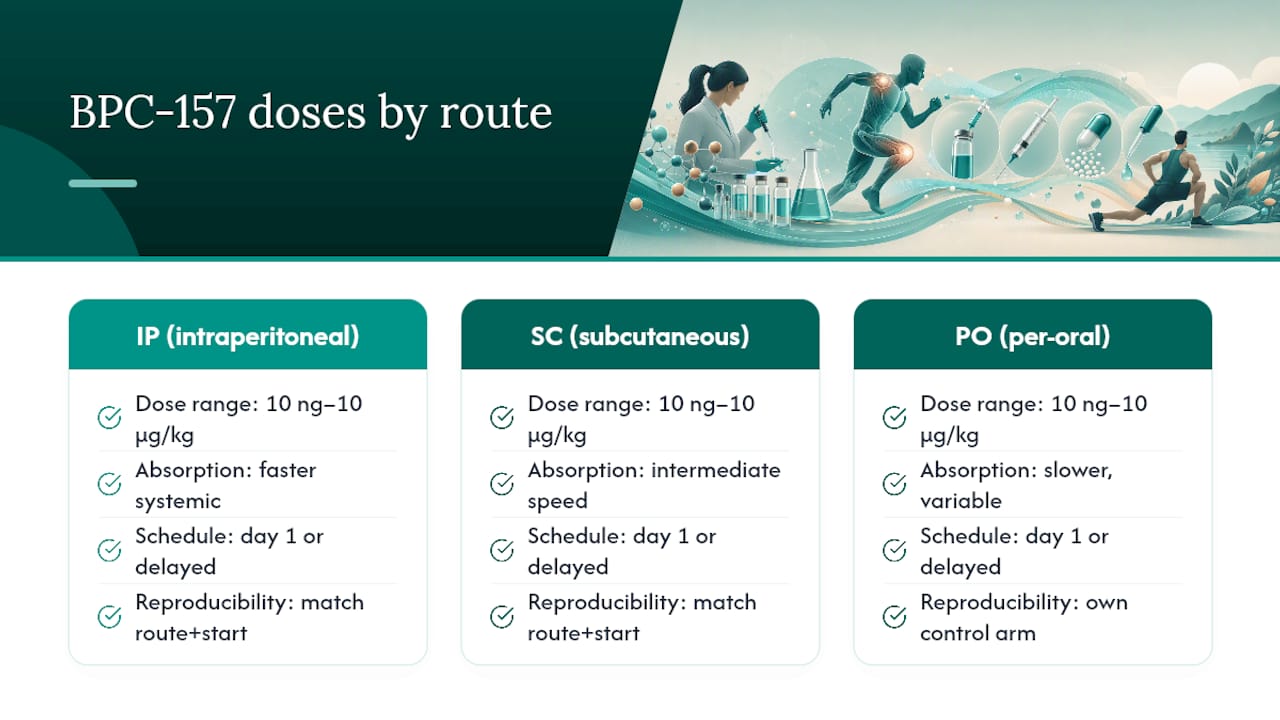
What varies most between studies is not the dose itself but the schedule: some protocols use daily dosing from day 1 post-injury, others begin after an initial inflammatory window. That difference in timing appears to matter as much as the dose magnitude for endpoints like collagen organization and biomechanical load-to-failure. A lab replicating a tendon-transection design should match both the dose range and the dosing start-point of the reference study it is building on, not just the total dose. Route of administration also affects comparability, as absorption kinetics differ between intraperitoneal and per-oral regimens, so a study attempting to reproduce oral-regimen outcomes with injectable dosing needs its own control arm rather than a direct comparison to the published oral data.
Any experimental design intending to model gym-type injuries (acute tendon strain, muscle-tendon junction stress) should specify the exact dose, route, and schedule in the methods section, referencing the specific published regimen the design is based on. That specificity is what makes a study's outcomes usable by other labs.
What Safety Signals Exist for BPC-157 in Preclinical Models?
Toxicology data reported in translational development work indicates no acute toxicity in standard animal models, with pharmacokinetic profiling in rodent and canine species showing dose-proportional exposure and rapid metabolism to smaller peptide fragments and amino acids. That is a favorable preclinical safety signal, not a clearance for any particular use case.
Researchers should still build standard safety monitoring into any in vivo protocol: body weight tracking, behavioral observation, and necropsy or histopathology on treated versus control tissue where the study design allows it. Formulation matters here too. Peptide stability in solution degrades over time and with freeze-thaw cycling, and a degraded sample can introduce confounding results that look like a safety signal but are actually a formulation artifact.
No controlled human trial data exists to support broader safety claims beyond the animal-model findings summarized in the preclinical tissue-repair literature. Any safety statement in a study write-up should be scoped explicitly to the animal model and dosing regimen tested, not generalized. This is also why documentation matters as much as the biology: a safety finding tied to an unverified or contaminated peptide sample is not a finding about BPC-157 at all.
How Does BPC-157 Compare With Other Peptide Approaches for Musculoskeletal Repair?
BPC-157's evidence base is distinguished by breadth across tissue types: tendon, muscle, ligament, and bone models all show measurable repair endpoints, which is not universally true of other investigational peptides used in musculoskeletal research. Growth-factor-based peptides like IGF-1 LR3 work through a more classical growth-signaling pathway, while BPC-157's angiogenic mechanism through FBXO22 and BACH1 stabilization gives it a distinct molecular target for mechanism studies.
Standard treatments for musculoskeletal injury in a clinical setting (physical therapy, NSAIDs, corticosteroid injection) work through entirely different mechanisms, and one preclinical finding is worth flagging directly: BPC-157 has been shown in the Achilles transection model to oppose corticosteroid-related tissue aggravation rather than compound it. That makes it mechanistically distinct from corticosteroid-based approaches rather than a substitute for them in any clinical sense.
For labs comparing peptide candidates in a tissue-repair research program, the practical distinction is evidentiary maturity. BPC-157 has multiple independent animal models across different labs and injury types. Related tissue-repair peptides like TB-500 have their own separate evidence base worth reviewing on its own terms rather than assuming mechanistic overlap. Treat any cross-peptide comparison as a question for your specific research design, not a general ranking of which compound is "better."
How Do Physical Therapy Variables Interact With BPC-157 Study Design?
Animal injury models rarely include a rehabilitation-exercise arm, which is a real gap between preclinical BPC-157 data and how musculoskeletal injuries get treated in practice. Human tendon and muscle injuries are almost always managed alongside graded loading and physical therapy, yet the rodent literature summarized above tests BPC-157 largely in isolation from mechanical rehabilitation protocols.
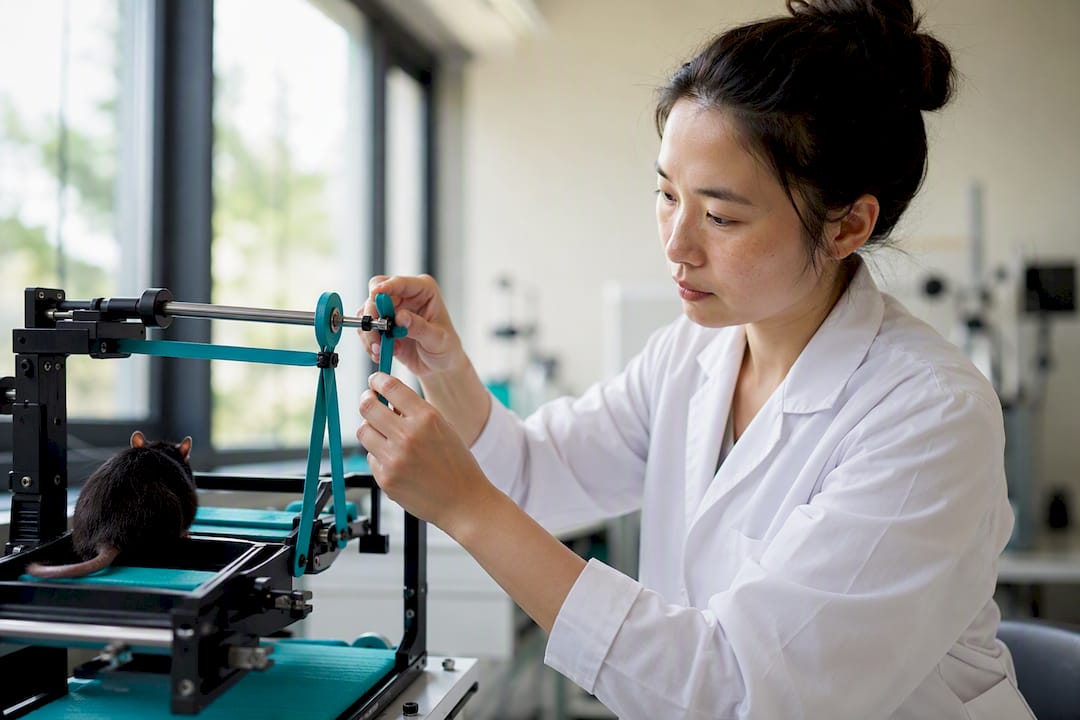
That gap matters for study design more than it might first appear. A lab intending to model gym-related injury recovery patterns should consider whether a controlled loading or exercise arm belongs in the design, since mechanical loading itself drives collagen remodeling through pathways that could interact with, mask, or amplify a peptide's angiogenic effect. Few published BPC-157 studies isolate this variable cleanly.
Researchers designing combination protocols (peptide treatment plus mechanical loading) should treat the interaction as an open question rather than assume additive effects. This is squarely a controlled-study question, not one this guide can answer with existing preclinical data. Any claim about how BPC-157 interacts with rehabilitation-style loading in a research context needs its own dedicated control arm and a clearly defined loading protocol logged in the methods section.
What Recovery Timelines Appear Across BPC-157 Animal Studies?
Timepoints across the reviewed literature cluster in a fairly consistent pattern. Early functional and biomechanical changes in the Achilles transection model appeared within the day 1 to day 21 window, while myotendinous junction defect models showed functional recovery specifically at 28 to 42 days. The quadriceps muscle-to-bone reattachment model extended furthest, with reattachment fiber integration into new bone documented after an extended healing period.
That spread tells researchers something practical about study design: the injury model dictates the appropriate endpoint window far more than the peptide dose does. A tendon-transection design that only samples through day 14 will miss the biomechanical endpoints that distinguished treatment from control in the published Achilles model. A muscle-reattachment design needs to run long enough to capture bone integration, which the data suggests takes considerably longer than tendon-level repair.
Labs planning a new BPC-157 study should set sampling timepoints against the closest matching published model rather than a generic 2 to 4 week default, and should plan for at least one timepoint beyond the published recovery window to confirm the effect holds rather than reverses.
Prioritizing Reproducibility Over Speed in BPC-157 Research
The temptation in early-stage peptide research is to scale up before the basics are locked down. That is backwards. A small, tightly controlled pilot with verified material, matched controls, and one clearly defined primary endpoint will tell you more than a larger study built on unverified peptide or a vague set of secondary measures.
Run the pilot first. Confirm the batch. Then scale.
Where to Source Research-Grade BPC-157 With Full Documentation
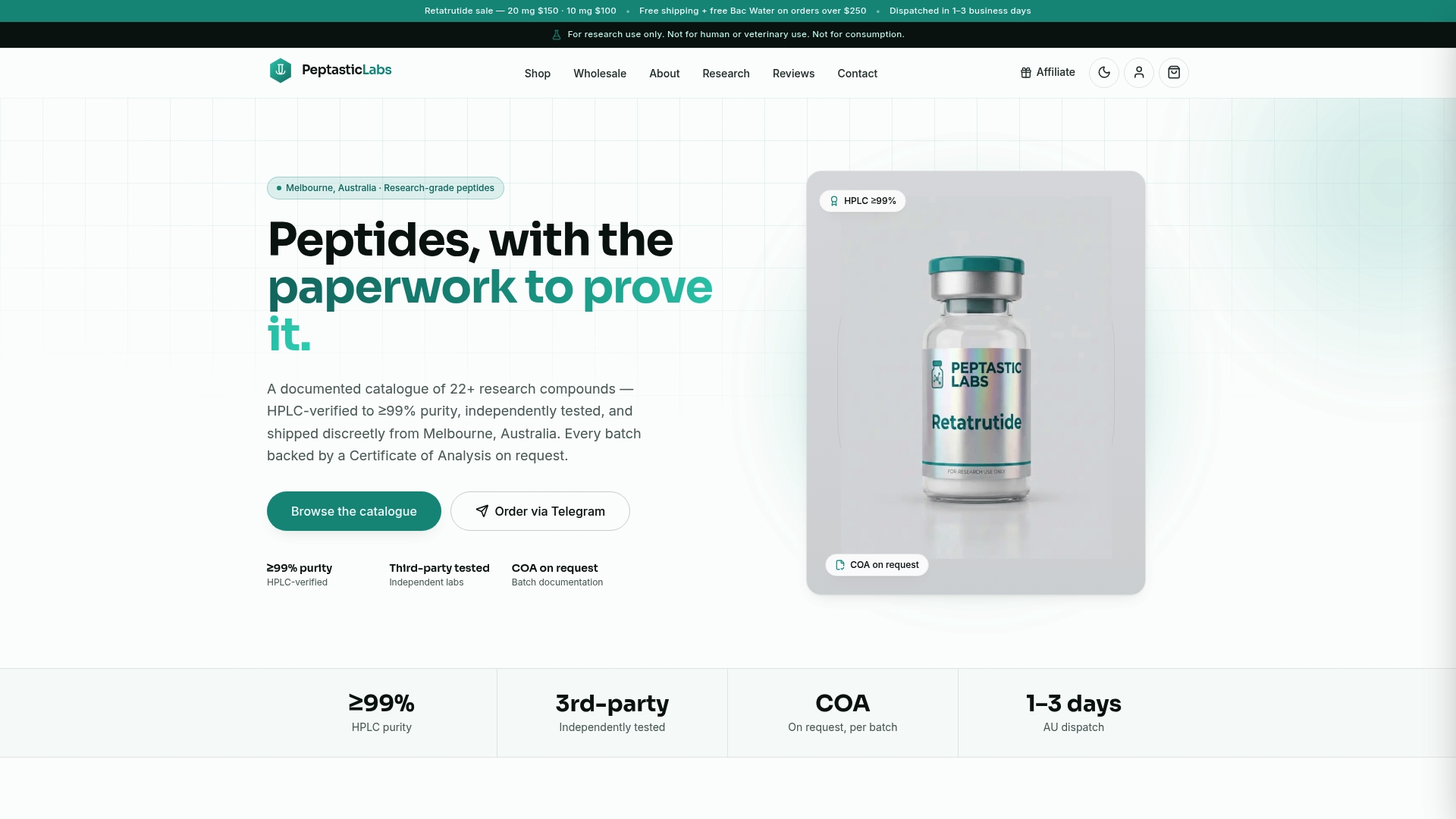
That documentation standard is the point of this entire guide: a peptide is only as useful to your study as the paperwork behind it. Before integrating any batch into a protocol, request the raw HPLC trace and the batch-specific CoA directly, and compare the retention-time markers against what the supplier states for that lot. Peptastic Labs' BPC-157 product page lists current specifications and the request process for that documentation.
For labs sourcing multiple tissue-repair compounds for a broader research program, the full Peptastic Labs catalogue covers over 22 independently tested peptides across metabolic, cognitive, tissue-repair, and longevity categories, each with the same batch-documentation standard. If your project needs bulk quantities, request wholesale terms directly rather than ordering standard retail lots for a large study. Verify the batch, confirm the CoA, then place your order.
Frequently Asked Questions
Is BPC-157 approved for human use? No. The evidence summarized here comes from animal models. Human clinical use follows a separate regulatory pathway entirely outside the scope of this guide.
What purity level should research-grade BPC-157 meet? Mass spectrometry confirmation of peptide mass should accompany that trace.
Which animal models show the strongest BPC-157 tissue-repair evidence? Rat Achilles tendon transection, quadriceps muscle-to-bone reattachment, and myotendinous junction defect models each show consistent functional, biomechanical, and histological improvement with BPC-157 treatment.
What documentation should a lab request before ordering a batch? Request the raw HPLC purity trace, mass spec confirmation, a Certificate of Analysis with impurity profile, and a batch number tied to that specific CoA before integrating material into a study.
Does BPC-157 interact with physical therapy or mechanical loading in research settings? Few published animal studies test BPC-157 alongside controlled mechanical loading, so that interaction remains an open question requiring its own dedicated study design with a loading-protocol control arm.
How long do preclinical BPC-157 studies typically run before showing measurable recovery? Timepoints vary by injury model: tendon transection studies show functional changes within 21 days, myotendinous junction models by 28 to 42 days, and muscle-to-bone reattachment models by roughly three months.
Sources
- Achilles Detachment in Rat and Stable Gastric Pentadecapeptide BPC 157: Promoted Tendon‑to‑Bone Healing and Opposed Corticosteroid Aggravation
- Stable Gastric Pentadecapeptide BPC 157 as Therapy After Surgical Detachment of the Quadriceps Muscle from Its Attachments for Muscle-to-Bone Reattachment in Rats
- BPC157 drives angiogenesis through FBXO22-dependent stabilization of BACH1
- From Regeneration to Analgesia: The Role of BPC-157 in Tissue Repair and Pain Management
- Stable Gastric Pentadecapeptide BPC 157 as a Therapy for the Disable Myotendinous Junctions in Rats