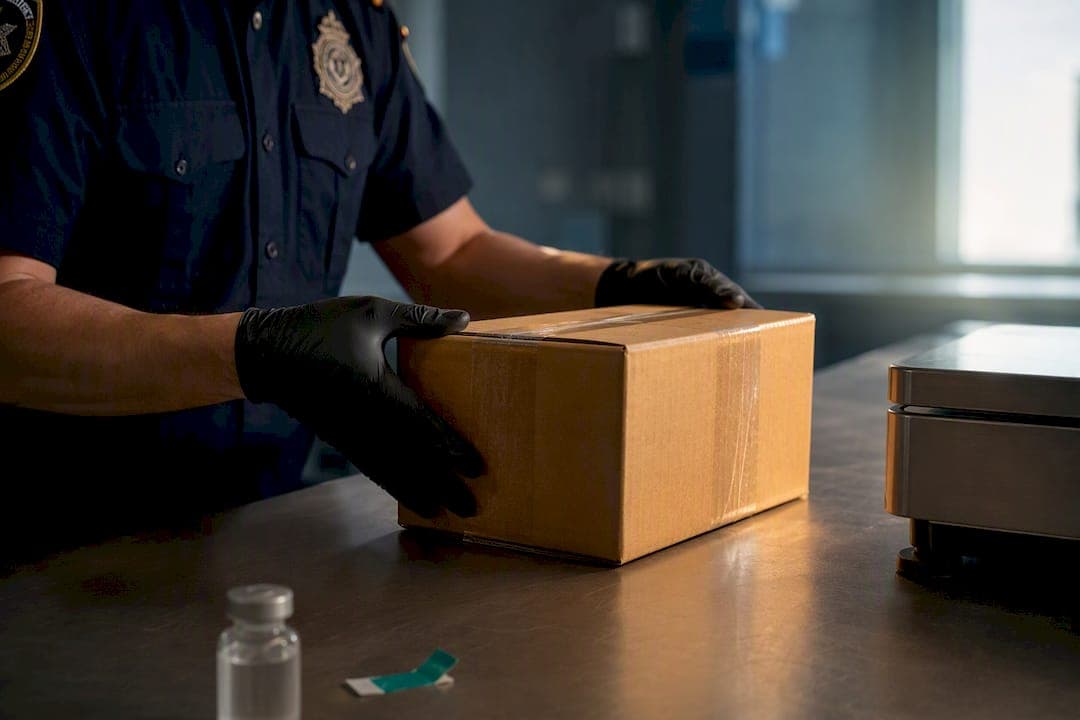
Most peptides entering Australia are classified under Chapter 29 (organic chemicals, HS 2937 for hormones and polypeptides) or Chapter 30 (pharmaceutical and immunological products, 3002 variants), depending on purity, presentation, and declared use. Collagen-derived food peptides sometimes fall under Chapter 21 codes like 21069099 instead. Before any shipment moves, confirm the compound's Therapeutic Goods Administration scheduling status and either lodge for a binding Australian Border Force ruling or secure the correct import permit.
TL;DR:
- Most peptides imported into Australia are classified under Chapter 29 or 30; food peptides like collagen often fall under Chapter 21 codes.
- Correct tariff classification depends on the peptide’s form, declared purpose, and packaging, with changes based on whether it’s bulk, dosed, or marketed for therapy or food.
- Getting the proper import permits and ensuring documentation like Certificates of Analysis and accurate use claims prevents shipment delays and legal issues.
- TGA scheduling determines if the peptide requires a prescription, is controlled, or is prohibited, affecting its import and sale legality.
- Filing a binding tariff ruling with the ABF using thorough evidence protects against reclassification risks and penalties.
Table of Contents
- How Australia Classifies Peptides Under the Harmonized System
- What HS Codes Do Australian Importers Actually Use?
- What Changes a Peptide's Tariff Classification?
- How Do You Get Peptides Through Australian Customs?
- How Does TGA Scheduling Affect Peptide Imports?
- How Do You Request a Binding Tariff Ruling from the ABF?
- Pre-Shipment Checklist for Peptide Importers
- A Supplier's View on Getting Peptide Paperwork Right
- Where to Verify Peptide Classification and Scheduling
- Sources
- FAQ
How Australia Classifies Peptides Under the Harmonized System
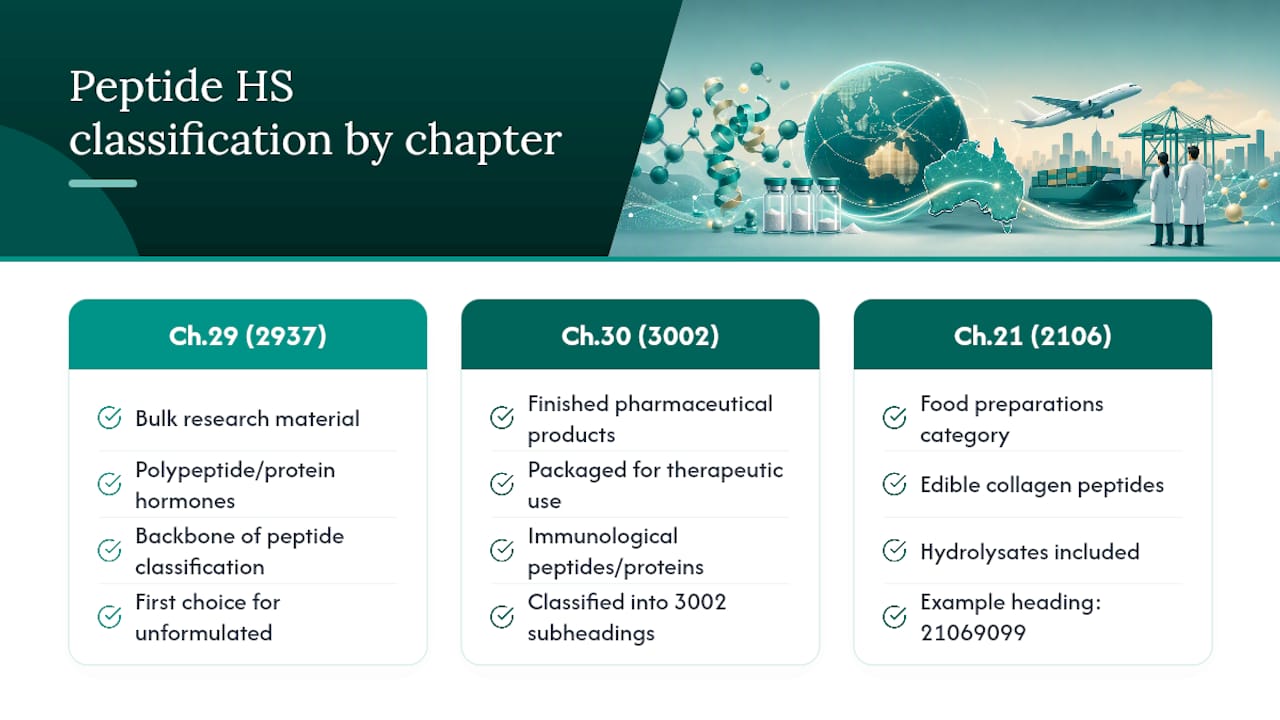
Tariff classification for peptides in Australia hinges on three questions: what the molecule is, how it's presented, and what it's declared to be used for. The same peptide sequence can land in three different chapters depending on the answers.
Chapter 29 covers organic chemicals, and this is where most synthetic polypeptides and structural hormone analogues sit when they arrive as bulk research material rather than a finished dose form. The UNSD Harmonized System entry for 293712 specifically covers polypeptide hormones, protein hormones, glycoprotein hormones, and their derivatives. This heading is the backbone of most peptide classification work in Australia, and it's the code customs brokers reach for first when a shipment is an unformulated research compound.
Chapter 30 applies to pharmaceutical and immunological products. According to the ABF's own Chapter 30 tariff notes, immunological products specifically include peptides and proteins other than goods already classified under 2937. In practice, this means a peptide sold as a finished pharmaceutical product, packaged for therapeutic administration, typically moves out of Chapter 29 territory and into 3002 subheadings.
Chapter 21 handles food preparations, and it catches a category many importers don't expect: edible collagen peptides and hydrolysates. Trade data reviewed by Volza shows Australian shipments of collagen peptide frequently use 21069099, a heading meant for food preparations, not pharmaceuticals. If your peptide is marketed as a nutritional or cosmetic ingredient rather than a therapeutic agent, this is often the correct home for it, not 2937 or 3002.
The logic connecting all three chapters is consistent even when the outcome varies: customs looks past the molecule's chemical identity to its form and its stated purpose. Get either wrong on your import declaration, and you've likely got the wrong chapter too.
What HS Codes Do Australian Importers Actually Use?
Knowing the chapter is only half the job. Importers need the specific eight-digit code that matches their consignment, and that requires matching product form to precise tariff language.
The table below maps the codes most commonly encountered in Australian peptide trade, along with the typical use-case behind each one.
| HS/tariff code | Short description | Typical Australian use-case | Source/authority |
|---|---|---|---|
| 2937 | Polypeptide hormones and derivatives, bulk form | Research-grade synthetic peptides, unformulated | UNSD HS 293712 |
| 2937 | Other hormones, primarily used as hormones, not put up in measured doses | Bulk hormone-related peptides not packaged for retail therapeutic sale | ABF tariff schedule |
| 3002.13 | Immunological products, unmixed, not put up in measured doses | Immunological peptide/protein preparations in bulk | ABF Chapter 30 |
| 3002.15 | Immunological products, put up in measured doses or retail packaging | Peptides packaged as finished therapeutic doses | ABF Chapter 30 |
| 21069099 | Food preparations not elsewhere specified | Collagen peptide powders and hydrolysates marketed as food or cosmetic ingredients | Volza HS lookup, Australia |
Notice how 3002.13 and 3002.15 describe the same category of goods in two different physical states. That distinction, bulk versus dosed, is what separates a research chemical import from a pharmaceutical import in the eyes of the ABF.
Packaging changes the code more often than chemistry does. A peptide sequence sold as loose lyophilized powder for laboratory reconstitution generally sits in 2937 or 3002.13. The identical molecule, pressed into single-dose vials with dosing instructions on the box, typically shifts to 3002.15. Claims matter just as much: a collagen peptide marketed with skin-health or joint-health claims can draw scrutiny even under a food code if those claims start to sound therapeutic.
What Changes a Peptide's Tariff Classification?
Three variables drive almost every classification decision customs officers make on a peptide shipment, and getting ahead of them before you ship saves weeks of delay.
Composition and chain length come first. A true polypeptide hormone or protein fits naturally into 2937 or 3002. A small-molecule peptide mimetic or a heavily modified analogue can sometimes fall outside those headings entirely, depending on how far it's departed from a natural peptide structure. This is a genuine gray area, and it's exactly the kind of question a binding ruling exists to settle.
Presentation language is decisive in Chapter 30. The phrase "put up in measured doses" or "for retail sale" appears repeatedly in the tariff notes for Chapter 30, and it's not decorative language. It's the legal trigger that moves a product from a bulk chemical code into a pharmaceutical dosage code.
Declared intended use steers both the ABF's tariff decision and the TGA's regulatory response simultaneously. Consider how differently the same molecule is treated depending on its stated purpose:
- Therapeutic use declared on the invoice or labeling usually invites Chapter 30 classification and TGA scheduling review.
- Research use only framing keeps many peptides in Chapter 29, but does not exempt the shipment from TGA or ABF scrutiny.
- Cosmetic use claims can pull a peptide toward Chapter 30 immunological subheadings if the product is a finished, dosed preparation, or leave it in Chapter 29 if it's a raw ingredient.
- Food or nutritional use claims, especially for collagen peptides, tend to point toward Chapter 21 food preparation codes instead.
Get the declared use wrong on paperwork and the classification, the required permits, and the TGA scrutiny can all shift at once.
How Do You Get Peptides Through Australian Customs?
Every peptide consignment entering Australia passes through the Australian Border Force's Integrated Cargo System (ICS), the electronic platform used to lodge import declarations, match tariff codes, and flag consignments for inspection. Getting a peptide shipment through cleanly comes down to matching the declared HS code to the actual goods and having the right permit on file before the cargo lands.
Here's the practical sequence most Australian importers follow:
- Confirm the HS code using the chapter logic above, then check it against the ABF's eight-digit concordance table, which maps international HS revisions to Australia's own tariff structure.
- Check whether a Permit to Import is required. Many anabolic agents and peptide hormones require a specific Permit to Import Anabolic Agents and Peptide Hormones, and this applies regardless of whether the shipment is labeled "for research use."
- Lodge the entry in the ICS with the correct tariff classification, country of origin, and declared value, attaching supporting documentation electronically where the system allows.
- Prepare arrival documentation in advance, since ABF officers or biosecurity staff can request it at the border with little notice.
Documents typically requested at arrival include a Material Safety Data Sheet (MSDS), a Certificate of Analysis confirming identity and purity, and, where the peptide is registered as a therapeutic good, either its Australian Register of Therapeutic Goods (ARTG) listing or Special Access Scheme (SAS)/Authorised Prescriber paperwork. Personal importers relying on a prescription need that prescription to match the declared substance exactly, not just a general authorization.
Pro Tip: Keep a digital folder per shipment containing the COA, MSDS, and permit or prescription documentation before the goods leave the supplier. ABF requests for evidence often carry short response windows, and importers scrambling to source paperwork after a hold notice lose days they didn't need to lose.
For labs building this process for the first time, a documented checklist of what to attach to each import entry is worth setting up once and reusing for every order.
How Does TGA Scheduling Affect Peptide Imports?
Tariff classification tells the ABF what a product is. TGA scheduling tells the ABF and the importer whether it's legal to bring in at all, and the two systems interact constantly.
Australia's Poisons Standard sorts substances into schedules, and peptides span several of them:
- Schedule 4 (prescription only) covers many therapeutic peptides, meaning import generally requires a prescription, SAS approval, or Authorised Prescriber status rather than open retail sale.
- Schedule 8 (controlled drug) applies to substances like human growth hormone, which carries tighter controls and documentation requirements than a standard Schedule 4 peptide.
- Schedule 9 (prohibited substance) applies to peptides such as Melanotan II, meaning import is effectively barred outside narrow, tightly controlled circumstances.
Scheduling status can shift over time as the TGA reviews new evidence, so resources like the Peptide Register's scheduling monitoring are useful for checking current status rather than relying on memory or an old product listing.
Whether a peptide has ARTG registration, versus reliance on the SAS or Authorised Prescriber pathways, materially changes both its legal import status and how customs treats the paperwork. An ARTG-listed product moving through commercial channels is a very different customs event than an unregistered peptide arriving without prescription backing.
Enforcement is not theoretical. Reporting on TGA enforcement trends indicates the agency has actively pursued fines and penalties tied to peptide importation, and Schedule 4 and higher classifications carry real seizure and penalty risk when paperwork doesn't match the declared substance. A "research use only" label on the box does not change the schedule a peptide sits in under the Poisons Standard.
How Do You Request a Binding Tariff Ruling from the ABF?
Guessing at a classification and hoping it holds is the most expensive mistake an importer can make, because a post-entry reclassification can trigger back duty, penalties, and shipment holds on every future consignment using that code. A binding ruling removes that risk for good.
- Assemble a full evidence packet before submitting anything: the peptide's chemical identity and sequence, a Certificate of Analysis confirming purity, an MSDS, a clear written statement of intended use, and packaging photos or samples if the ABF requests them.
- Submit the classification request through the ABF's tariff classification channels, referencing the specific heading you believe applies and why, using the eight-digit concordance table as your starting reference point rather than your final answer.
- Expect an informal response first for straightforward questions, but escalate to a formal binding ruling request when the classification affects an ongoing supply chain or high-value consignments, since informal advice doesn't carry the same legal protection.
- Update your internal coding and customs declarations once the ruling arrives, and keep the ruling document on file to reference for every future shipment of that exact product.
The concordance table itself carries a built-in warning: it's explicitly described by the ABF as a guide only, with final classification governed by the Customs Tariff Act 1995. Treat it as a starting point for research, not a substitute for a ruling when real money is on the line.
Pre-Shipment Checklist for Peptide Importers
A clean shipment comes down to matching documentation to declared use before the goods ever leave the supplier's warehouse.
- Validated Certificate of Analysis confirming sequence identity and purity percentage.
- MSDS listing full composition and handling information.
- Labeling that plainly states intended use and matches what's declared on the customs entry, with no mismatch between marketing copy and import paperwork.
- ARTG entry, SAS approval, or a matching prescription on file if the peptide falls under Schedule 4 or higher.
- Quantities appropriate to the import pathway. Personal importation under the Personal Importation Scheme carries strict quantity limits, while commercial consignments require the full permit and classification package regardless of volume.
Watch for red flags that routinely trigger holds: therapeutic claims splashed across marketing material for a product declared as a research chemical, syringes or administration devices bundled into a "research use only" shipment, and bulk volumes moving without an import permit on file. Each of these tends to draw the exact scrutiny an importer is trying to avoid.
A Supplier's View on Getting Peptide Paperwork Right
Every delayed shipment we've heard about in this space traces back to the same root cause: documentation that doesn't match the declared use, or a scheduling check skipped because the label said "research use only." That label carries no legal weight with customs. It never has.
The suppliers doing this well treat batch traceability and Certificates of Analysis as standard practice, not a favor extended to demanding customers. A COA showing sequence and purity, paired with an MSDS and a clear use statement, is what lets an evidence packet move through ABF review without a second look. Verify TGA scheduling and seek ABF advice before you commit to a purchase, not after the shipment is already in transit. That order of operations is the entire difference between a routine clearance and a seized consignment.
— Tintastic
Where to Verify Peptide Classification and Scheduling
Bookmark these primary sources before preparing any ABF request or customs declaration:
- Australian Customs Tariff eight-digit concordance, for mapping HS revisions to Australia's tariff structure.
- Permit to Import Anabolic Agents and Peptide Hormones, for permit eligibility and application steps.
- The Peptide Register, for tracking current TGA scheduling status across common peptides.
For documentation practices tied to purity reporting, the research-grade peptide guide explains how COAs and HPLC results are typically structured.
Sources
- Permit to Import Anabolic Agents and Peptide Hormones
- Australian Customs Tariff eight-digit concordance (HS 2017 → HS 2022)
- Peptidelaws
FAQ
Do Peptides Get Through Australian Customs?
Yes, peptides regularly clear Australian customs when the HS code matches the product's composition and declared use, and any required TGA pathway or import permit is already in place. Shipments most often get held when documentation doesn't match the declared intended use or when a required Permit to Import is missing.
What Does the HS Code 63090000 Represent?
HS code 6309 refers to worn clothing and textile items not related to peptides; any peptide declared under this code is misclassified, likely due to an error.
Is It Legal to Ship Peptides to Australia?
It depends entirely on the specific peptide's TGA scheduling and whether the correct permit or prescription pathway is followed. Schedule 4 peptides generally require prescription or SAS/Authorised Prescriber approval, Schedule 8 peptides face tighter controls, and Schedule 9 substances such as Melanotan II are effectively prohibited from import.
Is It Legal to Sell Peptides in Australia?
Selling peptides in Australia legally requires matching the product's TGA schedule to the correct sale pathway, meaning many therapeutic peptides cannot be sold at retail without ARTG registration or a prescription-backed supply chain. Research-grade peptides sold for laboratory use fall outside consumer retail rules but still carry customs and labeling obligations on the import side.
How Do I Get a Binding Classification for a Specific Peptide?
Submit a request to the ABF with the peptide's chemical identity, purity data from a Certificate of Analysis, an MSDS, and a written statement of intended use, then reference the applicable heading using the eight-digit concordance table as your starting point. Escalate to a formal binding ruling when the classification affects an ongoing or high-value supply chain, since that ruling carries legal certainty an informal answer does not.