
Peptide MOQ is the minimum quantity of a single, analytically verified peptide batch a supplier will sell for research use, typically ranging from a few milligrams to gram scale. It rarely blocks legitimate lab procurement outright. Before ordering, confirm the supplier can provide a Certificate of Analysis and batch documentation, then contact procurement directly to discuss quantities that match your protocol and budget.
TL;DR:
- Peptide minimum order quantities are mainly driven by the fixed costs of batch verification, packaging, and documentation, not the raw material price.
- Larger batch orders can reduce overall costs and improve traceability, while small aliquots still require matching certificates and provenance.
- Regulatory import requirements in Australia demand detailed documentation, including Certificates of Analysis and approval paperwork, even for research-only labels.
- Handling complex compounds, modified sequences, or high-purity targets often increases minimum order sizes due to additional synthesis and analytical steps.
- Peptastic Labs offers flexible options like small-batch synthesis and prepared aliquots, with full documentation to support institutional and import compliance.
Table of Contents
- What MOQ means for research-grade peptides
- Typical MOQ ranges and what drives them
- Regulatory and import factors that shape MOQ decisions
- How labs reduce effective MOQ without cutting corners
- Why reproducibility matters more than the lowest MOQ price
- How Peptastic Labs supports flexible procurement for research labs
- Sources
- FAQ
What MOQ means for research-grade peptides
For research-grade peptides, MOQ is the smallest amount of a specific, analytically verified batch a supplier will release as a single order. This differs from manufacturing MOQ tied to finished consumer products. Here, the number reflects what it costs to verify, package, and document one batch to research standards, not just the raw material used to make it.

Per-batch analytical work, sterile handling, and paperwork drive the minimum more than material cost alone. High-performance liquid chromatography (HPLC) verification, mass spectrometry confirmation, lyophilization, and vial sealing all happen once per batch regardless of size, so suppliers set a floor that keeps those fixed costs from swallowing the sale.
Packaging formats typically fall into a few tiers:
- Milligram vials suit pilot experiments or dose-response screening where researchers need confirmed identity and purity but limited volume.
- Tens to hundreds of milligrams support small studies, assay development, or repeated in vitro work over weeks.
- Gram-scale lots fit larger preclinical work, method validation across multiple runs, or institutional stockpiling for a shared project.
Choosing the right tier up front avoids paying for capacity a protocol will never use.
Typical MOQ ranges and what drives them
MOQ ranges vary by supplier and compound, but general patterns map to common research stages. Pilot tests often draw on small batches, small studies commonly use moderate amounts, repeated assays or method development call for larger quantities, and larger preclinical batches use still more. These are illustrative starting points for planning a budget, not fixed industry rules, since actual minimums depend on the specific peptide and supplier. These figures are illustrative starting points for planning a budget, not fixed industry rules, since actual minimums depend on the specific peptide and supplier.
Several technical factors push minimums upward. Longer sequences, uncommon or modified residues, and higher purity targets such as ≥99% HPLC purity all add synthesis steps and analytical work. Sterile vialization for cell culture or in vivo use adds further cost because it requires validated aseptic processing rather than standard lyophilization.
Fixed per-batch costs create a nonlinear price curve. HPLC and mass spectrometry runs, stability checks, and vial or lyophilization work happen once per batch no matter the quantity, so suppliers set a per-batch floor and small orders absorb proportionally more of that cost.
That floor explains why doubling an order rarely doubles the price, and why a 10 mg vial can cost nearly as much per milligram as a 500 mg lot. Researchers planning multi-phase work often save by ordering a larger batch once and having it split into smaller aliquots rather than placing several small orders over time.
Regulatory and import factors that shape MOQ decisions
Supply obligations under Australian law shape what a lab can legally order and how suppliers structure their minimums to cover compliance work. A peptide classed as a therapeutic good must be included in the Australian Register of Therapeutic Goods before it can be imported, manufactured, supplied, exported, or advertised, and that status does not change based on how the product is labeled.
A "research use only" disclaimer does not remove these obligations. The TGA has warned that unapproved peptide products with unclear labeling carry significant safety and legal risk, and that suppliers and prescribers remain responsible for meeting Commonwealth and state requirements regardless of the disclaimer used.
Institutional shipments typically require several supporting documents:
- A Certificate of Analysis confirming identity and purity for the specific batch.
- HPLC and mass spectrometry reports verifying analytical results.
- A Safety Data Sheet (SDS) for each compound.
- The compound's CAS number.
- An institutional covering letter, ideally signed by a group leader, stating end use, quantities, and responsible personnel, a practice ANSTO recommends to reduce delays.
- Any required permits or approval under Special Access Scheme routes when a compound's status demands it.
Missing or vague paperwork is a common reason shipments get held, delayed, or refused at the border, not the peptide itself. Our internal guide to import documentation walks through each of these in more detail.
Pro Tip: Prepare your covering letter and SDS package before the order ships, not after customs asks for it.
How labs reduce effective MOQ without cutting corners
Several practical tactics let labs access smaller quantities while keeping traceability intact. Requesting aliquots prepared from a single validated bulk batch is one of the most reliable: every aliquot shares one Certificate of Analysis, so provenance stays clean even when the physical quantity per researcher is small. Pooling orders across research groups within an institution is another common approach, as is negotiating a small-batch synthesis run when a standard catalog size doesn't fit the protocol.
Meeting MOQ requirements is only half the job. Documented storage conditions, chain-of-custody records, and single-use aliquoting to avoid repeated freeze-thaw cycles all protect the integrity of whatever quantity you receive.
Before placing an order, confirm the supplier can provide:
- A per-batch Certificate of Analysis backed by HPLC and mass spectrometry data.
- Third-party verification where the supplier offers it.
- Clear vial labeling that matches the CoA batch number.
- Documented stability data appropriate to your storage and use timeline.
Pro Tip: Ask for the batch number on the vial to match the CoA before you open it, not after the experiment starts.
Why reproducibility matters more than the lowest MOQ price
A slightly higher per-milligram cost is often the right trade when it buys a Certificate of Analysis, verified purity, and a documented batch history that protects reproducibility. Institutions carry real risk when a compound's identity or purity can't be traced.
Labs working with smaller budgets can still access validated material through aliquots or shared orders, but provenance and internal approvals need to be documented every time, not assumed. Before accepting a nonstandard supply arrangement, check with procurement, legal, and ethics offices rather than relying on a supplier's assurance alone.
— Tintastic
How Peptastic Labs supports flexible procurement for research labs
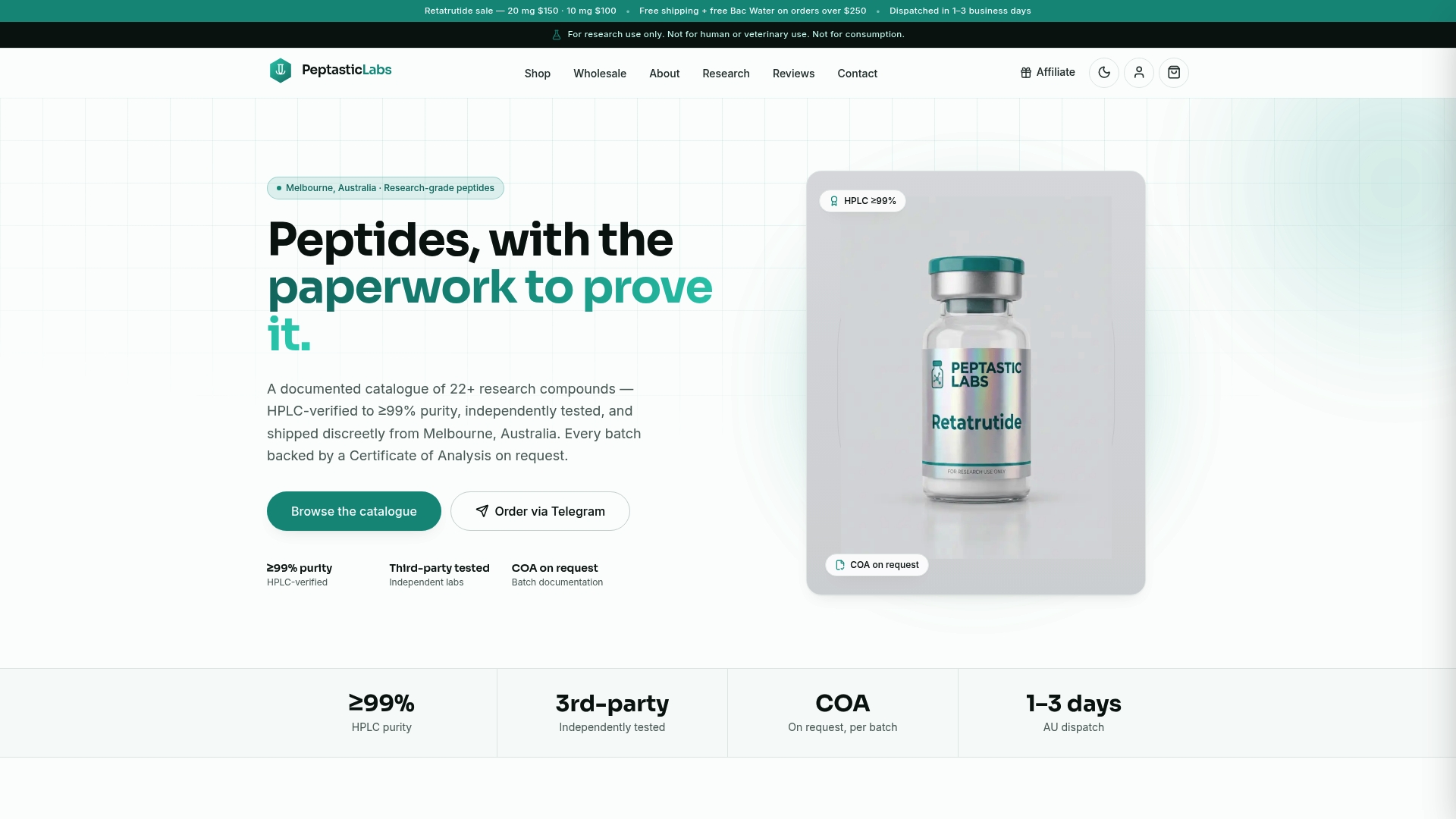
Meeting MOQ requirements without sacrificing documentation is the core problem this guide addresses, and it's the problem Peptastic Labs is built around. Every compound in the catalogue is independently tested to ≥99% purity via HPLC, with batch documentation and a Certificate of Analysis available on request for institutional buyers who need to satisfy internal or import requirements.
For labs navigating the gap between catalog sizes and protocol needs, several practical options apply:
- Aliquot preparation from a single validated bulk batch, preserving one CoA across multiple smaller quantities.
- Small-batch synthesis discussions for compounds or purities not listed in standard catalog sizes.
- Support with institutional paperwork, including documentation formatted for import and procurement review.
Arrangements for larger or recurring institutional orders may be available. Researchers can review the full product catalogue or the research page for technical background, then contact Peptastic Labs directly to discuss quantities, documentation, and procurement timelines for a specific project.
Sources
For readers verifying the regulatory points above, the TGA's guidance on therapeutic peptide products and its safety alert on unapproved peptide products cover import and supply obligations directly. ANSTO's transport documentation guidance details what a shipment's paperwork should include, and further commentary on importation rules for peptides addresses personal importation limits.
This article is general information, not a substitute for advice from a qualified doctor. Consult a qualified healthcare professional about your own circumstances before acting on anything here.
- How we regulate therapeutic peptide products | Therapeutic Goods Administration (TGA)
- Transport of samples 2: Biological samples, Deuterated materials, Radioactive materials (ANSTO)
FAQ
What is peptide MOQ in simple terms?
Peptide MOQ is the smallest quantity of a single, analytically verified batch a supplier will sell for research use. It's set mainly by the fixed cost of per-batch testing, packaging, and documentation rather than the raw material itself.
Does a "research use only" label change import rules?
No. The TGA has stated that a "research use only" disclaimer does not remove a product's regulatory obligations if it qualifies as a therapeutic good. Suppliers and buyers remain responsible for meeting the same import and supply requirements regardless of labeling.
What documents does a lab need to import research peptides?
Typical documentation includes a Certificate of Analysis, HPLC and mass spectrometry reports, a Safety Data Sheet, the compound's CAS number, and an institutional covering letter describing end use and responsible personnel. ANSTO guidance recommends including these details up front to reduce delays at the border.
Can a lab get a smaller quantity than the listed MOQ?
Often, yes. Aliquots prepared from a single validated bulk batch, pooled orders across research groups, or a negotiated small-batch synthesis run can all provide smaller usable quantities while keeping one Certificate of Analysis as the provenance record.
Does Peptastic Labs offer documentation for institutional procurement?
Yes. Peptastic Labs provides batch documentation and a Certificate of Analysis on request for compounds listed in its catalogue, supporting institutional review and import paperwork for qualified researchers.