
Peptides are defined as short chains of amino acids that regulate metabolic, vascular, and recovery functions directly relevant to aerobic capacity. The role of peptides in VO2 max research is not about replacing training. It is about supporting the biological infrastructure that makes training adaptations possible. Recent 2026 studies on lactotripeptides and AMPK/PGC-1α pathways show that specific peptide compounds influence mitochondrial biogenesis, fatigue reduction, and vascular function. These are the same physiological systems that determine how efficiently your body uses oxygen during exercise. Understanding which peptides do what, and at what dose, is where the science gets specific.
How do peptides influence metabolic pathways linked to VO2 max?
Peptides affect aerobic capacity by activating the same metabolic pathways that endurance training targets. The two most studied are AMPK (AMP-activated protein kinase) and PGC-1α (peroxisome proliferator-activated receptor gamma coactivator 1-alpha). These pathways govern mitochondrial biogenesis, the process by which muscle cells build new mitochondria to produce more energy aerobically.
Research on peptides derived from Theragra chalcogramma milt shows that these compounds upregulate AMPK and PGC-1α expression, promoting mitochondrial density and reducing oxidative stress. That matters because more mitochondria per muscle fiber means greater capacity to sustain high-intensity output before fatigue sets in. The binding energy of these peptides ranged from -9.1 to -5.5 kcal/mol in molecular docking studies, indicating strong target affinity at the receptor level.

Molecular size is a key variable. Peptides below 1000 Da accounted for 91.6% of the bioactive fraction in that study. Smaller peptides absorb more efficiently into systemic circulation, which is why low-molecular-weight compounds consistently show stronger metabolic effects in both animal and cell-based models.
Plant-derived bioactive peptides add another layer. These compounds activate AMPK pathways and scavenge reactive oxygen species, reducing exercise-induced oxidative damage and accelerating glycogen resynthesis after training. Glycogen recovery speed directly affects how quickly an athlete can train again at full intensity.
- AMPK activation: Signals the cell to increase fat oxidation and mitochondrial production
- PGC-1α upregulation: Drives the actual construction of new mitochondria in muscle tissue
- ROS scavenging: Reduces cellular damage from high-intensity training, preserving muscle function
- Glycogen resynthesis: Speeds recovery between sessions, allowing more training volume over time
Pro Tip: If you are evaluating peptides for metabolic research, prioritize compounds with molecular weights below 1000 Da. They show consistently stronger systemic bioavailability and target engagement in current literature. The mTOR pathway research from Peptasticlabs covers adjacent signaling mechanisms worth reviewing alongside AMPK data.
What specific peptides have shown potential for endurance and aerobic capacity?
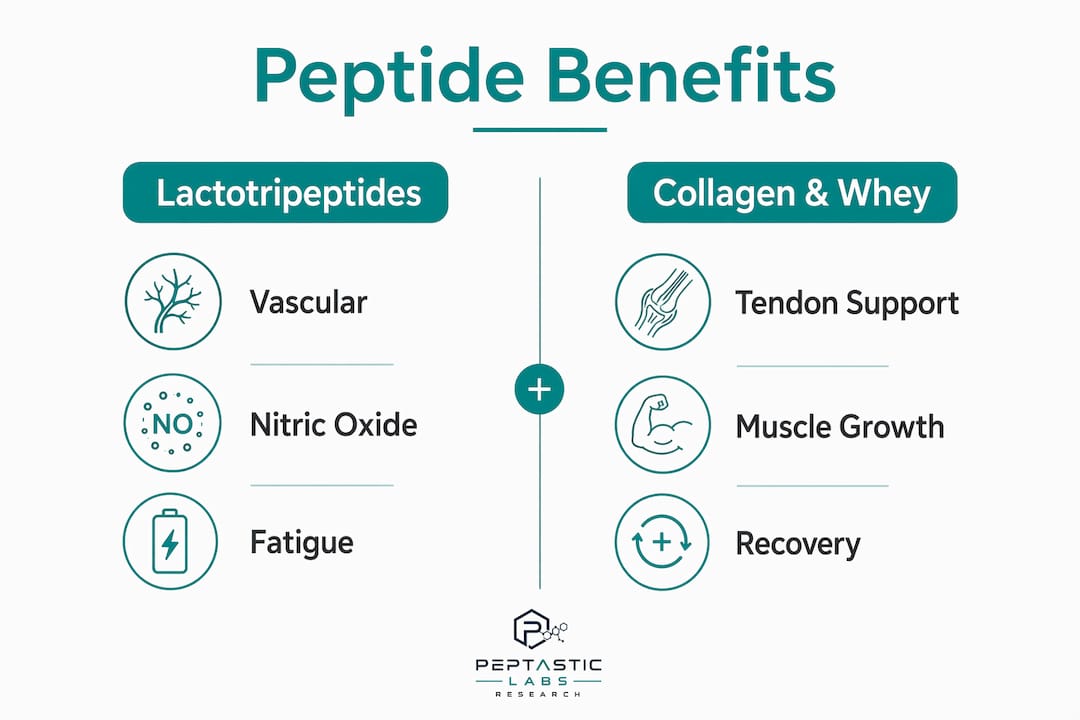
Not all peptides work the same way. The type of peptide determines which physiological system it targets, and that specificity matters when you are building a supplementation protocol around endurance goals.
Lactotripeptides (LTP)
Lactotripeptides are milk-derived peptides with a well-documented effect on vascular function. They promote nitric oxide production and vasodilation, which improves muscle pump and blood flow during high-intensity training. A 4-week study in resistance-trained men found that 3.4 mg/day LTP produced statistically significant improvements in training motivation, fatigue reduction, and lean body mass compared to placebo (p<0.05). That dose outperformed the 1.7 mg/day group on every measured marker.
Collagen peptides
Collagen peptides combined with vitamin C target connective tissue rather than muscle fiber directly. A 15g dose taken 60 minutes before exercise improves tendon stiffness and explosive power output. Stiffer tendons transfer force more efficiently, which reduces energy waste during each stride or pedal stroke. Expert Leonidas Karagounis has noted that collagen peptides should be viewed primarily as connective tissue aids rather than direct VO2 max enhancers. That framing is accurate and prevents misapplied expectations.
Whey-derived peptides
Whey peptides show more promise for hypertrophy than collagen. Research confirms that whey outperforms collagen for increasing muscle fiber size. Combined with micronutrients, whey peptides also reduce inflammatory cytokines including TNF-α, producing synergistic anti-fatigue benefits that isolated whey or micronutrients alone do not replicate.
| Peptide type | Primary target | Key benefit for athletes |
|---|---|---|
| Lactotripeptides | Vascular and neuromuscular | Improved muscle pump, motivation, lean mass |
| Collagen + vitamin C | Tendons and connective tissue | Tendon stiffness, explosive power, injury resilience |
| Whey-derived peptides | Muscle fiber and inflammation | Hypertrophy support, reduced fatigue cytokines |
| Plant bioactive peptides | Mitochondria and oxidative stress | Glycogen recovery, ROS reduction, AMPK activation |
Pro Tip: Collagen and whey peptides serve different functions. Use collagen pre-workout for tendon support and whey post-workout for muscle recovery. Stacking them without a clear protocol wastes both compounds. The peptide types guide from Peptasticlabs breaks down these distinctions with research references.
How do peptides complement traditional VO2 max training?
Peptides are supportive tools, not primary drivers of VO2 max improvement. That distinction is not a limitation. It is a clarification that helps athletes use peptides correctly.
High-intensity interval training (HIIT) remains the most validated method for increasing VO2 max directly. HIIT improves VO2 max by 7–10% over 8 weeks in trained individuals. No peptide compound currently replicates that training-induced cardiac and pulmonary adaptation. What peptides do is build and maintain the metabolic infrastructure that makes those training adaptations more durable and more accessible.
Direct human clinical trials linking peptide intake to VO2 max increases remain limited. Current evidence shows that peptides reliably improve fatigue markers and recovery speed, but the direct VO2 max connection requires more controlled human trials to confirm. Researchers and athletes should treat current findings as mechanistic evidence, not outcome guarantees.
The practical integration looks like this:
- Build your training base first. HIIT, tempo runs, and zone 2 work drive the cardiac output and stroke volume increases that raise VO2 max. Peptides do not substitute for this.
- Use peptides to protect training quality. Lactotripeptides reduce fatigue between sessions. That means you can sustain higher training volume without accumulated breakdown.
- Target connective tissue with collagen. Tendons and ligaments adapt more slowly than muscle. Collagen peptides with vitamin C support this slower adaptation cycle and reduce injury risk during high-volume training blocks.
- Monitor recovery markers, not just performance. Resting heart rate, heart rate variability (HRV), and perceived exertion during standard workouts give you data on whether peptide protocols are supporting recovery as intended.
- Adjust dose based on evidence. The LTP data shows dose-dependent effects. Higher doses within studied ranges produce measurably better outcomes. Guessing on dose produces guesswork on results.
Practical guidance for athletes: peptide timing, dosing, and selection
Timing and dose determine whether a peptide protocol produces results or just costs money. The research is specific enough to give athletes a clear starting framework.
- Lactotripeptides: 3.4 mg/day for a minimum of 4 weeks. Lower doses (1.7 mg/day) show weaker effects across fatigue, motivation, and lean mass markers. Consistency over the full study period matters more than any single dose.
- Collagen peptides + vitamin C: 15g collagen taken with vitamin C, approximately 60 minutes before exercise. This timing window optimizes collagen synthesis and tendon mechanical properties by aligning peak amino acid availability with exercise-induced tissue remodeling signals.
- Whey peptides: Best used post-workout to support muscle protein synthesis and reduce inflammatory markers. Combine with micronutrients for synergistic anti-fatigue effects rather than using isolated whey peptides alone.
- Plant bioactive peptides: Useful for athletes with high training loads where oxidative stress accumulates. These compounds act as multi-target metabolic regulators, addressing fatigue through several mechanisms simultaneously.
The most common mistake athletes make is treating peptides as performance enhancers in the same category as stimulants. Peptides work over weeks, not hours. Their benefits accumulate through consistent use aligned with structured training, not through acute pre-workout dosing (except collagen, which has a specific pre-exercise timing rationale).
Pro Tip: Track your HRV and session RPE (rate of perceived exertion) weekly when starting a peptide protocol. These two metrics will show you whether recovery is improving before you see changes in performance outputs. For a broader overview of compounds relevant to endurance research, the 2026 starter compounds guide from Peptasticlabs is a useful reference.
Key Takeaways
Peptides support VO2 max performance by improving mitochondrial function, vascular efficiency, and recovery speed, but HIIT training remains the primary driver of direct VO2 max gains.
| Point | Details |
|---|---|
| Peptides target metabolic infrastructure | AMPK and PGC-1α activation builds mitochondrial density, supporting aerobic capacity over time. |
| Dose and timing are non-negotiable | LTP at 3.4 mg/day for 4 weeks and collagen at 15g pre-workout are the evidence-backed protocols. |
| Peptide type determines function | Collagen supports tendons, whey supports muscle, and LTP supports vascular function and motivation. |
| Direct VO2 max evidence is limited | Human trials confirming peptide-driven VO2 max increases are still needed; current data is mechanistic. |
| Peptides complement training, not replace it | HIIT drives 7–10% VO2 max gains over 8 weeks; peptides protect the recovery capacity that sustains that training. |
Where the science actually stands on peptides and endurance
The gap between peptide marketing and peptide science is real, and it is worth naming directly. Most claims about peptides "boosting" VO2 max are extrapolated from mechanistic studies, not controlled human trials measuring maximal oxygen uptake. That does not make the research unimportant. It means the research is telling us something more specific: peptides build the conditions for performance rather than performance itself.
What I find genuinely promising is the multi-target profile of plant-derived bioactive peptides. Single-target supplements have a ceiling. A compound that simultaneously activates AMPK, scavenges ROS, and accelerates glycogen resynthesis addresses three separate bottlenecks in endurance performance at once. That is a different category of intervention than a simple amino acid supplement.
The lactotripeptide data is also more credible than most peptide research because it uses a placebo-controlled design in trained subjects, not sedentary populations. Trained athletes are harder to move on performance markers. Statistically significant improvements in that population carry more weight.
My recommendation for practitioners and researchers: treat current peptide evidence as a foundation, not a conclusion. The AMPK and PGC-1α pathway data is solid. The connective tissue data for collagen is solid. The direct VO2 max link needs more human trials. Build protocols on what is confirmed, and track outcomes rigorously so you contribute to the evidence base rather than just consuming it.
— Tintastic
Peptasticlabs: research-grade peptides for metabolic and endurance research

Peptasticlabs supplies research-grade peptides verified to ≥99% purity via HPLC, with full batch documentation and Certificates of Analysis available on request. For researchers and athletes studying metabolic performance, the catalog includes compounds relevant to mitochondrial function, tissue repair, and vascular health. Every compound undergoes third-party testing before release. If your research protocol requires documented purity and consistent batch quality, Peptasticlabs' verified catalog is built for that standard. For specific compounds relevant to recovery and tissue support, the BPC-157 product page and Sermorelin product page include full specification documentation.
FAQ
What is the role of peptides in VO2 max research?
Peptides influence VO2 max research by activating AMPK and PGC-1α pathways that drive mitochondrial biogenesis and reduce oxidative stress. They support the metabolic infrastructure underlying aerobic capacity rather than directly increasing maximal oxygen uptake.
Which peptides are most studied for endurance performance?
Lactotripeptides, collagen peptides combined with vitamin C, and whey-derived peptides are the most studied compounds for endurance-related outcomes. Each targets a different system: vascular function, connective tissue, and muscle recovery respectively.
Do peptides directly increase VO2 max?
Current evidence does not confirm that peptides directly raise VO2 max in human clinical trials. HIIT training produces documented 7–10% VO2 max improvements over 8 weeks; peptides improve the recovery and metabolic conditions that support that training.
What is the correct dose of lactotripeptides for athletes?
Research shows 3.4 mg/day of lactotripeptides for 4 weeks produces statistically significant improvements in fatigue, motivation, and lean mass. The lower dose of 1.7 mg/day shows weaker effects across all measured markers.
When should collagen peptides be taken for exercise benefits?
Collagen peptides combined with vitamin C should be taken approximately 60 minutes before exercise. This timing aligns peak amino acid availability with exercise-induced tissue remodeling signals, optimizing tendon stiffness and connective tissue adaptation.