
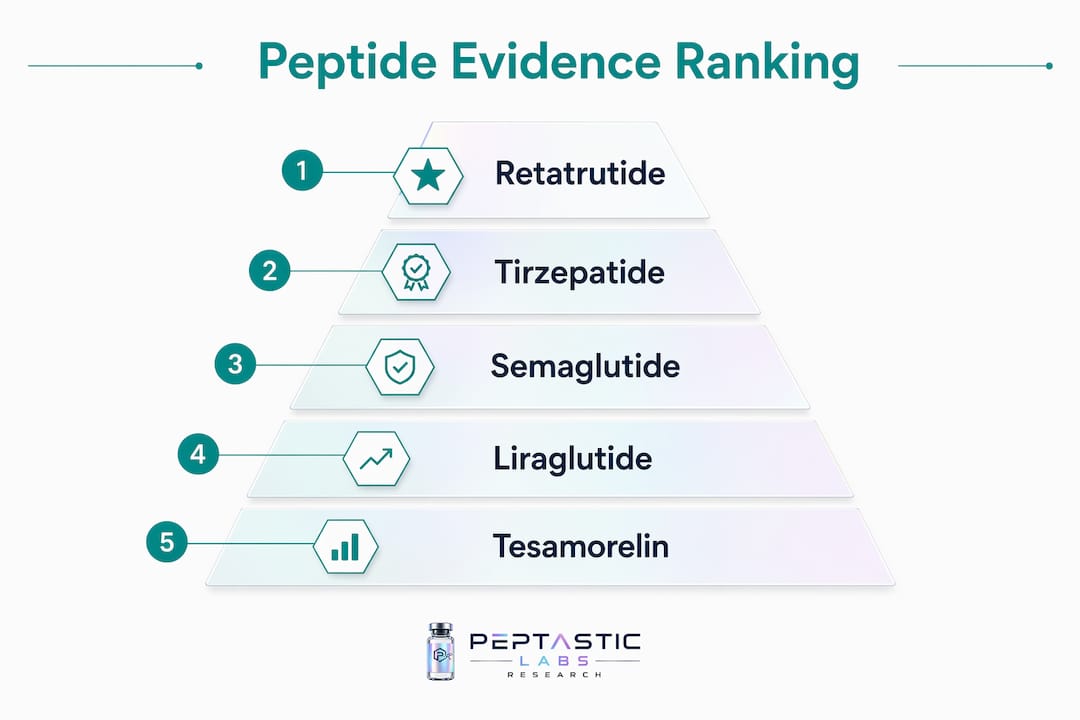
For maximum weight-loss magnitude in a human trial, tirzepatide leads all approved agents with −22.5% mean body weight at 72 weeks (SURMOUNT-1, 15 mg arm). Retatrutide posted −24.2% at 48 weeks in Phase 2, making it the largest single-molecule readout published to date, though it remains investigational. Semaglutide anchors the GLP-1 monoagonist tier at −14.9% over 68 weeks (STEP-1). Below these three, the evidence drops sharply: tesamorelin holds a narrow FDA approval for visceral fat in HIV-associated lipodystrophy, and the remaining peptides commonly cited in obesity peptide studies — AOD-9604, CJC-1295, Ipamorelin, BPC-157, MOTS-c, and HGH Fragment 176–191 — are supported primarily by preclinical or mechanistic data, not Phase 3 human weight-loss trials; for detailed procurement in non-U.S. settings, see our tesamorelin peptide Australia: research-grade buying guide. Peptasticlabs supplies research-grade, HPLC-verified material for the full compound list, with Certificates of Analysis available on request.
Quick-reference: what to pick for which research question
- Maximum weight-loss magnitude (approved): Tirzepatide (GLP-1/GIP dual agonist, Phase 3 SURMOUNT-1)
- Regulatory-ready GLP-1 benchmark: Semaglutide (Phase 3 STEP-1, FDA-approved for obesity)
- Largest published effect size (investigational): Retatrutide (Phase 2, tri-agonist GLP-1/GIP/glucagon)
- Visceral adipose tissue endpoint, defined population: Tesamorelin (FDA-approved for HIV-associated lipodystrophy only)
- GLP-1 monoagonist with long Phase 3 record: Liraglutide (SCALE trials, FDA-approved for obesity)
- GH-axis adjunct for body-composition endpoints: CJC-1295 / Ipamorelin (preclinical/mechanistic; research use only)
- Adipocyte-targeted mechanistic research: AOD-9604, HGH Fragment 176–191 (preclinical; no Phase 3 human data)
- Mitochondrial/metabolic flexibility mechanistic studies: MOTS-c (early-phase human data only)
- Tissue-repair adjunct in metabolic protocols: BPC-157 (preclinical only; no human obesity RCT)
Table of Contents
- How do the top peptides for obesity research rank by evidence?
- How were these peptides ranked?
- What is the difference between FDA-approved and research-grade obesity peptides in the U.S.?
- How do you match a peptide's mechanism to your research question?
- What safety signals and drug interactions should researchers monitor?
- How should you evaluate and source research-grade peptides?
- What are the key gaps and emerging directions in obesity peptide research?
- Key Takeaways
- A perspective on evidence standards in obesity peptide research
- Peptasticlabs: research-grade peptides with verified purity and full documentation
- Useful sources for obesity peptide research
How do the top peptides for obesity research rank by evidence?
The table below maps all 11 compounds across the dimensions most relevant to investigators designing obesity or metabolic trials. Profiles follow in order of evidence strength.
| Compound | Mean % Body-Weight Change (Human Trials) | Level of Evidence | FDA Status (U.S.) | Studied Population | Mechanism | Key Safety Signals | Route / Dosing (Trial) | Research-Grade Sourcing |
|---|---|---|---|---|---|---|---|---|
| Tirzepatide | −22.5% at 72 wk (SURMOUNT-1) | Phase 3 RCT | Approved (obesity, T2D) | Obesity, T2D | GLP-1/GIP dual agonist | GI (nausea, vomiting, diarrhea); pancreatitis risk | SC weekly; 5–15 mg | Commercial Rx; research-grade via vetted suppliers |
| Retatrutide | −24.2% at 48 wk (Phase 2) | Phase 2 RCT | Investigational (IND) | Obesity | GLP-1/GIP/glucagon tri-agonist | GI; HR increase; under Phase 3 evaluation | SC weekly; up to 12 mg | Research-grade; COA required |
| Semaglutide | −14.9% at 68 wk (STEP-1) | Phase 3 RCT | Approved (obesity, T2D) | Obesity, T2D, CV risk | GLP-1 monoagonist | GI; gallbladder events; rare thyroid C-cell signal | SC weekly; 2.4 mg (obesity) | Commercial Rx; research-grade available |
| Liraglutide | −5–8% (SCALE trials) | Phase 3 RCT | Approved (obesity, T2D) | Obesity, T2D | GLP-1 monoagonist | GI; HR increase; thyroid C-cell signal | SC daily; 3.0 mg (obesity) | Commercial Rx; research-grade available |
| Tesamorelin | ~15–18% VAT reduction in HIV-associated lipodystrophy populations (Phase 3 trials) | Phase 3 RCT | Approved (HIV-LD only) | HIV-associated lipodystrophy | GHRH analog → GH/IGF-1 axis | Fluid retention; glucose elevation; arthralgias | SC daily; 2 mg | Commercial Rx (Egrifta); research-grade via vetted suppliers |
| AOD-9604 | No published Phase 3 human data | Preclinical / Phase 2 (limited) | Not approved | Preclinical obesity models | GH C-terminal fragment; lipolysis stimulation | Limited human safety data | SC; dose varies by protocol | Research-grade; COA required |
| CJC-1295 | No published Phase 3 human data | Preclinical / mechanistic | Not approved | Healthy adults (GH studies) | GHRH analog; GH pulse amplification | Limited; GH-related fluid retention | SC; dose varies | Research-grade; COA required |
| Ipamorelin | No published Phase 3 human data | Preclinical / mechanistic | Not approved | Healthy adults (GH studies) | GH secretagogue (ghrelin receptor) | Minimal reported; GH-related signals | SC; dose varies | Research-grade; COA required |
| BPC-157 | No published human obesity RCT | Preclinical only | Not approved | Animal models | Cytoprotective; angiogenic; NO modulation | Limited human data; GI tolerability studied | SC or oral (animal studies) | Research-grade; COA required |
| MOTS-c | No published Phase 3 human data | Early-phase human / preclinical | Not approved | Healthy adults; metabolic syndrome models | Mitochondrial-derived peptide; AMPK activation | Minimal reported in early studies | SC (human studies); dose varies | Research-grade; COA required |
| HGH Fragment 176–191 | No published Phase 3 human data | Preclinical / Phase 1 (limited) | Not approved | Preclinical obesity models | GH C-terminal fragment; adipocyte lipolysis | Limited human safety data | SC; dose varies | Research-grade; COA required |
Statistic callout: Retatrutide's −24.2% at 48 weeks (Phase 2, 12 mg arm) exceeds tirzepatide's SURMOUNT-1 readout of −22.5% at 72 weeks — but the comparison is not head-to-head, and retatrutide's Phase 3 data are not yet published.
Tirzepatide
SURMOUNT-1 enrolled adults with obesity (BMI ≥30 or ≥27 with at least one weight-related comorbidity) and no diabetes. The 15 mg arm produced −22.5% mean body weight at 72 weeks versus −2.4% for placebo. Tirzepatide's dual GLP-1/GIP agonism appears to drive larger effect sizes than GLP-1 monoagonism alone, consistent with the pattern that incretin tri- and dual-agonists occupy the upper bound of published human weight-loss readouts. FDA-approved for obesity (Zepbound) and T2D (Mounjaro). Primary safety signals: GI adverse events (nausea, vomiting, diarrhea), dose-dependent and most prominent during escalation; rare pancreatitis and gallbladder events.
Retatrutide (LY3437943)
The Phase 2 trial of this GLP-1/GIP/glucagon tri-agonist produced −24.2% mean body weight at 48 weeks in the 12 mg arm, the largest published effect size for any single obesity molecule. The glucagon receptor component is hypothesized to drive additional hepatic energy expenditure beyond what dual incretin agonism achieves. Retatrutide remains investigational in the U.S.; Phase 3 data are pending. Researchers using this compound require IND-enabling documentation and should source material with full COA and third-party verification.

Semaglutide
STEP-1 demonstrated −14.9% mean body weight at 68 weeks with 2.4 mg subcutaneous weekly dosing in adults with obesity. Semaglutide (Wegovy) is FDA-approved for chronic weight management and serves as the current GLP-1 monoagonist benchmark in obesity trial design. The STEP program also includes cardiovascular outcome data (STEP-HFpEF, SELECT), making semaglutide the most extensively characterized incretin agent for cardiometabolic endpoints. GI adverse events and rare thyroid C-cell signal are the primary monitoring considerations.
Liraglutide
The SCALE Obesity and Prediabetes trial established liraglutide 3.0 mg (Saxenda) as an FDA-approved obesity treatment, with mean weight loss of approximately 5–8% over 56 weeks versus placebo. Effect size is lower than semaglutide or tirzepatide, but liraglutide's longer Phase 3 record and daily dosing make it a useful comparator arm in trials examining dosing frequency or GLP-1 receptor occupancy. Safety profile mirrors the GLP-1 class: GI events, modest heart-rate increase, and a thyroid C-cell signal requiring label-based contraindication screening.
Tesamorelin
Tesamorelin is a synthetic GHRH analog that stimulates endogenous GH release, reducing visceral adipose tissue by approximately 15–18% in HIV-associated lipodystrophy populations across Phase 3 trials. FDA-approved as Egrifta for this specific indication. Applying tesamorelin as a general obesity agent overstates its evidence base; its validated endpoint is visceral fat reduction in a defined population, not systemic weight loss in general obesity. For investigators studying visceral adipose tissue as a primary endpoint in HIV-LD or related metabolic conditions, it is the only GH-axis peptide with Phase 3 human data.
AOD-9604
AOD-9604 is a synthetic fragment of the C-terminal region of human growth hormone, designed to retain lipolytic activity while minimizing IGF-1-mediated effects. Phase 2 trials in obesity were conducted in the early 2000s, but no Phase 3 human weight-loss RCT has been published. Research-grade peptides like AOD-9604 are marketed largely through compounding or research vendors without the Phase 3 evidence base required for clinical obesity treatment. Suitable for mechanistic adipocyte research; not appropriate as a primary clinical obesity agent.
CJC-1295
CJC-1295 is a GHRH analog with an extended half-life achieved through DAC (Drug Affinity Complex) technology. It amplifies GH pulsatility rather than driving acute GH spikes. Human studies have examined GH secretion endpoints in healthy adults, not obesity-specific weight-loss outcomes. No Phase 3 obesity RCT exists. CJC-1295 is used in research protocols examining GH-axis modulation and body-composition endpoints, typically combined with a GH secretagogue such as Ipamorelin.
Ipamorelin
Ipamorelin is a selective GH secretagogue acting at the ghrelin receptor (GHSR-1a), producing GH release with minimal cortisol or prolactin co-stimulation. Human data are limited to GH pharmacokinetic studies and small body-composition trials. No published Phase 3 obesity RCT. In research settings, Ipamorelin is frequently co-administered with CJC-1295 to amplify and sustain GH pulses for body-composition studies. The GH-axis peptides function as adjuncts for lean-mass preservation rather than primary weight-loss agents.
BPC-157
Body Protection Compound 157 is a synthetic pentadecapeptide derived from a gastric protein sequence. Its proposed mechanisms include cytoprotection, angiogenesis, and nitric oxide modulation. All published efficacy data come from animal models; no human obesity RCT has been conducted. BPC-157 is relevant to metabolic research as a tissue-repair adjunct or gut-integrity compound, not as a primary obesity treatment peptide. Regulatory status in the U.S. has been subject to scrutiny; procurement for any human-use study requires current regulatory verification.
MOTS-c
MOTS-c is a mitochondrial-derived peptide that activates AMPK signaling, improving insulin sensitivity and metabolic flexibility in preclinical models. Early-phase human studies have examined metabolic and exercise-related endpoints in small cohorts. No Phase 3 obesity RCT exists. MOTS-c is one of the most scientifically compelling emerging metabolic peptides for mechanistic research, particularly for investigators studying mitochondrial contributions to energy homeostasis and insulin resistance.
HGH Fragment 176–191
HGH Fragment 176–191 is a 16-amino-acid peptide corresponding to the lipolytic domain of human growth hormone. Preclinical studies demonstrate adipocyte lipolysis stimulation without IGF-1 receptor activation. Phase 1 human safety data exist, but no Phase 3 weight-loss RCT has been published. Like AOD-9604, it is appropriate for mechanistic adipocyte research rather than clinical obesity treatment protocols.
How were these peptides ranked?
The single-sentence principle: rank by human trial effect size, gated first by level of evidence, then by U.S. regulatory status and accessibility.
Compounds without at least one published Phase 2 randomized human weight-loss or visceral-fat endpoint are excluded from the top tiers regardless of preclinical signal strength. This gate reflects the clinical research standard that rodent or mechanistic human data cannot be extrapolated directly to human obesity efficacy.
Ranking principle: "Human Phase 2/3 effect size is the primary sort key. A large preclinical signal with no human RCT does not outrank a modest but replicated Phase 3 readout. Evidence phase gates effect size; effect size then sorts within tier."
The weighting scheme applied:
- Effect size (% body-weight or VAT change in human trials): 40% — primary differentiator within each evidence tier
- Trial phase and sample size: 25% — Phase 3 multi-site RCTs weighted above Phase 2; single-arm or open-label studies weighted below
- Safety signals and tolerability: 15% — compounds with serious unresolved safety signals are penalized relative to those with well-characterized profiles
- Regulatory status and U.S. accessibility: 15% — FDA-approved agents score higher than investigational IND-stage compounds, which score higher than research-only peptides
- Study quality and reproducibility: 5% — peer-reviewed publication in high-impact journals, pre-registered protocols, and independent replication
Handling investigational compounds: Retatrutide's Phase 2 readout of −24.2% at 48 weeks is the largest published single-molecule effect size. Because Phase 3 data are not yet available, retatrutide is ranked second overall rather than first, despite the raw magnitude advantage. The ranking reflects the principle that a single Phase 2 readout, however large, carries more uncertainty than a replicated Phase 3 program.
Tie-breaking: When two compounds share an evidence tier (e.g., both Phase 3 approved), the higher mean % body-weight change in the pivotal trial determines rank order. Liraglutide ranks below semaglutide on this basis.
What is the difference between FDA-approved and research-grade obesity peptides in the U.S.?
FDA-approved GLP-1 peptides are the evidence-backed clinical options for obesity treatment; most peptides marketed as research compounds lack Phase 3 human data and are not approved for therapeutic use.
Current U.S. status by category:
-
FDA-approved for obesity (chronic weight management):
- Semaglutide 2.4 mg SC weekly (Wegovy)
- Tirzepatide 5–15 mg SC weekly (Zepbound)
- Liraglutide 3.0 mg SC daily (Saxenda)
-
FDA-approved for a narrow metabolic indication (not general obesity):
- Tesamorelin 2 mg SC daily (Egrifta) — visceral fat reduction in HIV-associated lipodystrophy only
-
Investigational / IND-stage (Phase 3 pending):
- Retatrutide (LY3437943) — Phase 3 enrollment ongoing; not approved
- Cagrilintide (amylin analog) — Phase 2/3 data emerging; not approved
-
Research-only peptides (no U.S. approval; preclinical or limited Phase 1/2 human data):
- AOD-9604, HGH Fragment 176–191, CJC-1295, Ipamorelin, BPC-157, MOTS-c
Practical procurement notes for investigators:
For FDA-approved agents used in clinical trials, standard IND exemption rules apply when the drug is used within its approved indication and labeling. Off-label use in a clinical trial typically requires a full IND submission to the FDA. Investigators should consult their institution's IRB and regulatory affairs office before initiating any protocol.
For investigational compounds (retatrutide, cagrilintide), an IND is required for human-use studies in the U.S. Researchers sourcing these compounds for in vitro or preclinical work should obtain material with full COA documentation and confirm the supplier's permitted-use statement.
Compounding policy for GLP-1 agents shifted in 2025–2026 following FDA shortage-list updates. The 503A compounding pathway for semaglutide and tirzepatide has been subject to ongoing regulatory action; current compounding status must be verified directly with the FDA's shortage database and the relevant 503A/503B pharmacy before procurement. Several research-grade peptides also face regulatory scrutiny under current FDA guidance, and permitted-use pathways should be confirmed before any human-use study is initiated.
This section provides general regulatory orientation, not legal or regulatory advice. Confirm current status with FDA primary sources or qualified regulatory counsel.
How do you match a peptide's mechanism to your research question?
The answer is direct: align the peptide's primary mechanism to the metabolic endpoint your study is powered to detect.
Incretin-based peptides drive appetite suppression and slow gastric emptying via GLP-1 receptor activation, producing the largest systemic weight-loss readouts in human trials. GIP co-agonism (tirzepatide) adds adipocyte-level insulin sensitization and may reduce GI tolerability burden relative to pure GLP-1 agonism. Glucagon receptor co-agonism (retatrutide) adds hepatic energy expenditure, which is the proposed mechanism behind the tri-agonist's larger effect size. The pattern holds across published data: tri-agonist > dual-agonist > mono-GLP-1 in available human readouts.
GH-axis peptides (CJC-1295, Ipamorelin, tesamorelin) act through GH/IGF-1 signaling to modulate body composition rather than drive appetite suppression. They are appropriate as adjuncts for lean-mass preservation endpoints, not as primary weight-loss agents. Mitochondrial peptides like MOTS-c target AMPK-mediated metabolic flexibility, making them relevant for mechanistic studies examining insulin sensitivity and energy homeostasis rather than body-weight change as a primary endpoint.
Mechanism-to-endpoint matching checklist:
| Primary Research Endpoint | Preferred Peptide Class | Suggested Trial Endpoints / Outcome Measures |
|---|---|---|
| Maximum systemic weight loss | Incretin dual/tri-agonist (tirzepatide, retatrutide) | % body-weight change, BMI, waist circumference |
| GLP-1 monoagonist benchmark | Semaglutide or liraglutide | % body-weight change, glycemic endpoints, CV outcomes |
| Visceral adipose tissue reduction (defined population) | Tesamorelin (HIV-LD) | VAT by CT or MRI, trunk fat %, lipid panel |
| Lean-mass preservation / body recomposition | GH-axis adjuncts (CJC-1295/Ipamorelin) | DXA lean mass, fat mass, IGF-1 levels |
| Adipocyte lipolysis (mechanistic) | AOD-9604, HGH Fragment 176–191 | In vitro lipolysis assays, fat-cell turnover markers |
| Mitochondrial / metabolic flexibility | MOTS-c | AMPK activity, insulin sensitivity (HOMA-IR), VO2 max |
| Tissue repair adjunct in metabolic protocols | BPC-157 | Gut integrity markers, inflammatory cytokines |
Pro Tip: When designing a body-composition trial that combines an incretin primary agent with a GH-axis adjunct, power the study for DXA-measured lean mass as a co-primary endpoint alongside % body-weight change. Without a pre-specified lean-mass endpoint and a DXA schedule at baseline, week 24, and week 48, the adjunct's contribution will be statistically undetectable against the incretin's dominant weight-loss signal.
What safety signals and drug interactions should researchers monitor?
GI adverse events — nausea, vomiting, and diarrhea — are the most common cause of discontinuation with GLP-1 receptor agonists and should be the primary tolerability endpoint in any incretin trial. Other class-specific signals require systematic monitoring based on mechanism.
Adverse events by class:
-
GLP-1/GIP/glucagon agonists (semaglutide, tirzepatide, liraglutide, retatrutide):
- Common: nausea, vomiting, diarrhea, constipation (dose-dependent, typically transient)
- Less common: gallbladder events (cholelithiasis, cholecystitis), heart-rate increase
- Rare but serious: acute pancreatitis, thyroid C-cell tumors (rodent signal; label contraindication for personal/family history of MTC or MEN2)
- Retatrutide-specific: additional heart-rate increase signal attributed to glucagon receptor agonism
-
GH-axis peptides (tesamorelin, CJC-1295, Ipamorelin):
- Fluid retention, peripheral edema, arthralgias
- Glucose elevation (GH-mediated insulin resistance); monitor fasting glucose and HbA1c
- Potential IGF-1 elevation; monitor IGF-1 levels at baseline and during treatment
-
Mitochondrial peptides (MOTS-c):
- Limited human safety data; no serious signals reported in early-phase studies
- Monitor standard metabolic panel and inflammatory markers
-
BPC-157, AOD-9604, HGH Fragment 176–191:
- Human safety data are sparse; adverse event profiles are not well-characterized
- No human use in clinical protocols without current regulatory clearance
Recommended monitoring checklist:
- Baseline: fasting glucose, HbA1c, lipid panel, hepatic function panel, renal function, CBC, pregnancy test (where applicable), personal/family history of MTC or MEN2 (GLP-1 agents), ECG (heart-rate baseline for glucagon agonists)
- Ongoing (every 12 weeks minimum for incretin trials): body weight, waist circumference, GI symptom diary, fasting glucose, hepatic panel
- GH-axis protocols: IGF-1 at baseline, week 12, and week 24; fasting glucose; fluid retention assessment
- Dose escalation: GI symptom severity score at each escalation step; hold escalation if Grade 2 or higher GI events persist beyond 2 weeks
- Contraindications: personal or family history of MTC or MEN2 (all GLP-1 class agents); active pancreatitis; pregnancy (all peptide agents); uncontrolled diabetes with severe gastroparesis
Drug interactions to flag:
- Incretin agents slow gastric emptying, which can reduce oral drug absorption and alter peak plasma concentrations of co-administered medications (e.g., oral contraceptives, thyroid medications, narrow-therapeutic-index drugs). Timing of oral medications relative to injection should be standardized in trial protocols.
- GH-axis peptides may attenuate insulin sensitivity; co-administration with insulin or sulfonylureas requires glucose monitoring intensification.
- No well-characterized pharmacokinetic interactions have been published for BPC-157, MOTS-c, or HGH Fragment 176–191 in human studies.
How should you evaluate and source research-grade peptides?
Request a Certificate of Analysis (COA) with HPLC purity ≥99%, mass spectrometry identity confirmation, and third-party verification before accepting any research-grade peptide lot. These are minimum acceptance criteria, not aspirational standards.
Supplier evaluation checklist — COA fields to request:
- Assay / HPLC chromatogram: purity ≥99% by area, with the chromatogram itself (not just a summary number)
- Identity confirmation: mass spectrometry (MS) or amino acid analysis confirming molecular weight and sequence
- Specification basis: USP or in-house validated specification with acceptance limits stated
- Microbial testing: total aerobic count, absence of specified pathogens
- Endotoxin limits: LAL or equivalent assay; critical for any in vivo or cell-culture application
- Stability data: storage conditions (typically −20°C or −80°C), shelf life, and freeze-thaw cycle guidance
- Batch number and lot traceability: full batch documentation linking synthesis to testing
- Permitted-use statement: explicit statement that the material is supplied for research use only, not for human therapeutic use
Peptasticlabs maintains a catalog of over 22 independently tested compounds, each verified to ≥99% purity via HPLC, with full batch documentation and COAs available on request. Third-party verification is part of the standard quality-control process, not an optional add-on. For investigators who need to demonstrate supplier qualification in an IND or IRB submission, this documentation chain is the relevant evidence package.
Pro Tip: If your research program has any prospect of transitioning to IND-enabling or clinical-grade manufacturing, request the supplier's DMF (Drug Master File) status or their willingness to provide a letter of access to a Type II DMF. A supplier that cannot provide this documentation creates a regulatory gap that will require re-sourcing at a later stage, at significant cost and timeline risk.
The role of peptides in immune modulation and other non-metabolic applications follows the same sourcing standards. Purity, identity, and batch traceability are non-negotiable regardless of the research application.
What are the key gaps and emerging directions in obesity peptide research?
Several agents show strong mechanistic signals but require larger, longer Phase 3 data or mechanistic human studies before their place in the evidence hierarchy can be established. Retatrutide, cagrilintide-based combinations, and MOTS-c are the three highest-priority gaps.
-
Retatrutide Phase 3 durability: Phase 2 data at 48 weeks are compelling, but 72-week and longer Phase 3 readouts with cardiovascular outcome data are needed to confirm whether the tri-agonist effect-size advantage over tirzepatide is sustained and safe at scale.
-
Cagrilintide combination protocols: Cagrilintide (amylin analog) combined with semaglutide (CagriSema) has shown additive weight-loss signals in Phase 2. Head-to-head data against tirzepatide and retatrutide are needed to determine whether amylin co-agonism adds meaningful effect size beyond what incretin dual/tri-agonism achieves alone.
-
MOTS-c mechanistic human studies: Preclinical AMPK activation data are strong, but adequately powered human trials with metabolic imaging endpoints (hepatic steatosis by MRI-PDFF, VAT by CT) and insulin sensitivity measures (euglycemic clamp or HOMA-IR) are absent from the published literature.
-
Visceral adipose tissue as a primary endpoint beyond HIV-LD: Tesamorelin's VAT data are restricted to HIV-associated lipodystrophy. Trials examining GH-axis peptides in non-HIV metabolic syndrome populations with VAT as the primary imaging endpoint would fill a meaningful gap.
-
Non-incretin mechanisms for GI-tolerability-limited populations: Research moving beyond incretins to mitochondrial peptides (MOTS-c), UGN-GUCY2C axis compounds, and novel chimeric constructs (e.g., GEP44) addresses a real clinical need: patients who cannot tolerate GLP-1-class GI adverse events. Mechanistic human studies with metabolic imaging and standardized GI tolerability endpoints are the priority design.
-
Long-term weight-loss sustainability and regain: Most published trials run 48–72 weeks. Data on weight regain after discontinuation, and on maintenance dosing strategies, are limited for all agents except semaglutide (SELECT extension data).
-
Head-to-head comparative trials: No published Phase 3 head-to-head RCT directly compares tirzepatide versus semaglutide at maximum approved doses with pre-specified body-composition endpoints. The SURMOUNT and STEP programs used different populations and durations, making indirect comparisons imprecise.
Recommended trial design elements for future obesity peptide studies:
- Duration: 48–72 weeks minimum for comparability with the SURMOUNT/STEP benchmark programs
- Primary endpoint: % body-weight change from baseline
- Secondary endpoints: VAT by CT or MRI, hepatic steatosis by MRI-PDFF, lean mass by DXA, cardiometabolic biomarkers (fasting glucose, HbA1c, lipid panel, hsCRP)
- Standardized estimands: pre-specify the treatment policy estimand and the hypothetical estimand for handling intercurrent events (discontinuation, rescue medication)
- GI tolerability: standardized patient-reported outcome instrument at each visit; dose-escalation hold criteria pre-specified in the protocol
For investigators designing metabolic endpoint studies, aligning outcome measures with established benchmarks from the SURMOUNT and STEP programs strengthens cross-study comparability and manuscript positioning.
Key Takeaways
Tirzepatide and semaglutide are the strongest evidence-backed options for obesity research, with retatrutide leading all published effect sizes but remaining investigational; research-grade peptides without Phase 3 human data should be treated as mechanistic tools, not clinical obesity agents, and sourced only with HPLC-verified COA documentation.
| Point | Details |
|---|---|
| Top approved agents by effect size | Tirzepatide (−22.5% at 72 wk, SURMOUNT-1) leads approved compounds; semaglutide (−14.9% at 68 wk, STEP-1) is the GLP-1 monoagonist benchmark. |
| Largest published effect size (investigational) | Retatrutide posted −24.2% at 48 weeks in Phase 2; Phase 3 data are pending and required before clinical use. |
| Research-grade peptides require evidence gating | AOD-9604, CJC-1295, Ipamorelin, BPC-157, MOTS-c, and HGH Fragment 176–191 lack Phase 3 human obesity RCTs and are appropriate only for mechanistic or preclinical research. |
| Safety monitoring priority | GI adverse events are the leading cause of discontinuation for GLP-1 agents; dose-escalation protocols and GI symptom monitoring are critical trial design elements. |
| Sourcing standard for research use | Peptasticlabs supplies ≥99% HPLC-verified, batch-documented research-grade peptides with COAs available on request for qualified investigators. |
A perspective on evidence standards in obesity peptide research
The obesity peptide field has a persistent credibility problem: the compounds with the most commercial visibility are often the ones with the least human trial evidence. AOD-9604, HGH Fragment 176–191, and BPC-157 generate substantial online interest, but none has a published Phase 3 human weight-loss RCT. Meanwhile, tirzepatide and semaglutide, which have the most rigorous evidence bases in the field's history, are sometimes treated as interchangeable with research-only peptides in popular coverage.
The ranking presented here privileges Phase 3 human data because that is the appropriate standard for any compound being considered for clinical application. A large preclinical signal is a hypothesis, not a finding. Investigators who design protocols around preclinical-only peptides without acknowledging this distinction are not just making a scientific error; they are creating a regulatory and ethical exposure for their institutions.
The more interesting question is not which peptide produces the largest number in a single trial, but which mechanism class is most appropriate for a given research question. Incretin dual and tri-agonists are the right tools for systemic weight-loss endpoints. GH-axis peptides are adjuncts for body-composition studies. Mitochondrial peptides like MOTS-c are mechanistic tools for metabolic flexibility research. Treating these as interchangeable because they all appear on the same "best peptides" list is a category error that produces poorly designed studies and uninterpretable results.
The field's next productive step is not another GLP-1 monoagonist. It is head-to-head Phase 3 data comparing the leading approved agents, longer-duration maintenance trials, and adequately powered mechanistic studies for the non-incretin compound classes that currently lack human evidence.
Disclosure: This article is published by Peptasticlabs, which supplies research-grade peptides including several compounds discussed here. The rankings and evidence assessments are based on published human trial data and are not influenced by commercial considerations. This article is general scientific information, not medical or regulatory advice; confirm current regulatory status and consult qualified professionals before initiating any human-use study.
Peptasticlabs: research-grade peptides with verified purity and full documentation
Researchers who need verified material for obesity and metabolic peptide studies can source from Peptasticlabs without the documentation uncertainty that complicates procurement from unvetted vendors.

Every compound in the Peptasticlabs catalog is independently tested to ≥99% purity via HPLC, with batch documentation and Certificates of Analysis available on request. The catalog covers the full range of compounds relevant to metabolic research: incretin-adjacent peptides, GH-axis secretagogues, mitochondrial peptides, and tissue-repair compounds. Bulk and wholesale ordering is available for institutional procurement, with third-party verification options for investigators who need supplier qualification documentation for IND or IRB submissions.
Purchaser qualification: Peptasticlabs supplies qualified researchers and institutions for laboratory research purposes only. All orders are subject to permitted-use confirmation.
To request a COA, arrange a bulk quote, or initiate an institutional procurement review, contact Peptasticlabs directly at peptasticlabs.com.
Useful sources for obesity peptide research
The following primary trials, regulatory pages, and systematic reviews are the core references for validating the rankings and building citations in protocols and manuscripts.
-
SURMOUNT-1 (tirzepatide, Phase 3): Jastreboff et al., NEJM 2022. The pivotal Phase 3 RCT establishing −22.5% mean body-weight reduction at 72 weeks with tirzepatide 15 mg. Primary citation for tirzepatide efficacy claims. [Peer-reviewed Phase 3 trial]
-
STEP-1 (semaglutide, Phase 3): Wilding et al., NEJM 2021. Established −14.9% mean body-weight reduction at 68 weeks with semaglutide 2.4 mg. The GLP-1 monoagonist benchmark. [Peer-reviewed Phase 3 trial]
-
Retatrutide Phase 2 readout: Jastreboff et al., NEJM 2023. −24.2% at 48 weeks (12 mg arm). The largest published single-molecule effect size; Phase 3 data pending. [Peer-reviewed Phase 2 trial]
-
FDA prescribing information — Egrifta (tesamorelin): FDA label for visceral fat reduction in HIV-associated lipodystrophy. Defines the approved indication and contraindications. [Regulatory primary source]
-
FDA prescribing information — Wegovy (semaglutide 2.4 mg) and Zepbound (tirzepatide): Current FDA labels for chronic weight management indications, contraindications, and REMS requirements. [Regulatory primary source]
-
PMC systematic review — anti-obesity peptides evaluated in silico, in vitro, and in vivo: Covers computational screening of natural bioactive peptides targeting pancreatic lipase, PPARγ, and PPARα. Useful for investigators designing mechanistic studies on novel peptide scaffolds. [Peer-reviewed systematic review]
-
Nature — novel metabolic peptide mechanisms (GEP44 and non-incretin pathways): Documents emerging non-incretin targets including mitochondrial AMPK modulation and chimeric peptide constructs. Relevant for research-gaps section and future trial design. [Peer-reviewed primary research]
-
Medical News Today — GLP-1 safety signals summary: Accessible summary of GI adverse event patterns and discontinuation rates for incretin-class agents. [Review / regulatory summary]
-
WeightLossRankings — regulatory status and compounding notes: Documents the evidence gap for research-grade peptides marketed without Phase 3 data and notes 2025–2026 compounding policy changes. [Review source; verify against FDA primary sources for current status]
-
PeptidesDefined — evidence cautions for marketed research peptides: Cautions against extrapolating preclinical data to human obesity efficacy; useful framing for IRB protocol justification sections. [Review source]
Statistic callout: The STEP-1 and SURMOUNT-1 trials together represent the two most-cited Phase 3 obesity RCTs in the peptide literature; any new obesity peptide trial should pre-specify its primary endpoint and duration to enable direct comparison with these benchmarks.
For COA and supplier verification documentation, contact Peptasticlabs directly. For IND-enabling regulatory guidance, consult FDA's IND application resources at fda.gov or a qualified regulatory affairs professional.