
Peptide sequence integrity is defined as the accurate preservation and verification of the amino acid order and molecular identity of a peptide, which directly determines its biological function and research validity. For researchers working in metabolic, cognitive, tissue repair, and immunology applications, a peptide with an incorrect or degraded sequence is not a lower-quality reagent. It is a different molecule entirely. Understanding why peptide sequence integrity matters requires distinguishing it from purity scores, recognizing the limits of single-method analysis, and demanding supplier documentation that confirms identity at the batch level. Peptasticlabs verifies each compound to ≥99% purity via HPLC and provides batch-specific Certificates of Analysis, setting a documentation standard that supports reproducible research.
Why peptide sequence integrity matters more than purity alone
Chromatographic purity and sequence integrity are related but not interchangeable. HPLC area percent measures the relative proportion of the main peak in a chromatogram. It does not confirm that the dominant peak corresponds to the correct peptide sequence.
A peptide verified at 98% purity by HPLC can contain only 70–80% active peptide mass. Residual trifluoroacetate counterions, moisture, and inorganic salts contribute to total mass without appearing as separate chromatographic peaks. That gap between reported purity and actual peptide content is a direct source of dosing error in quantitative research.
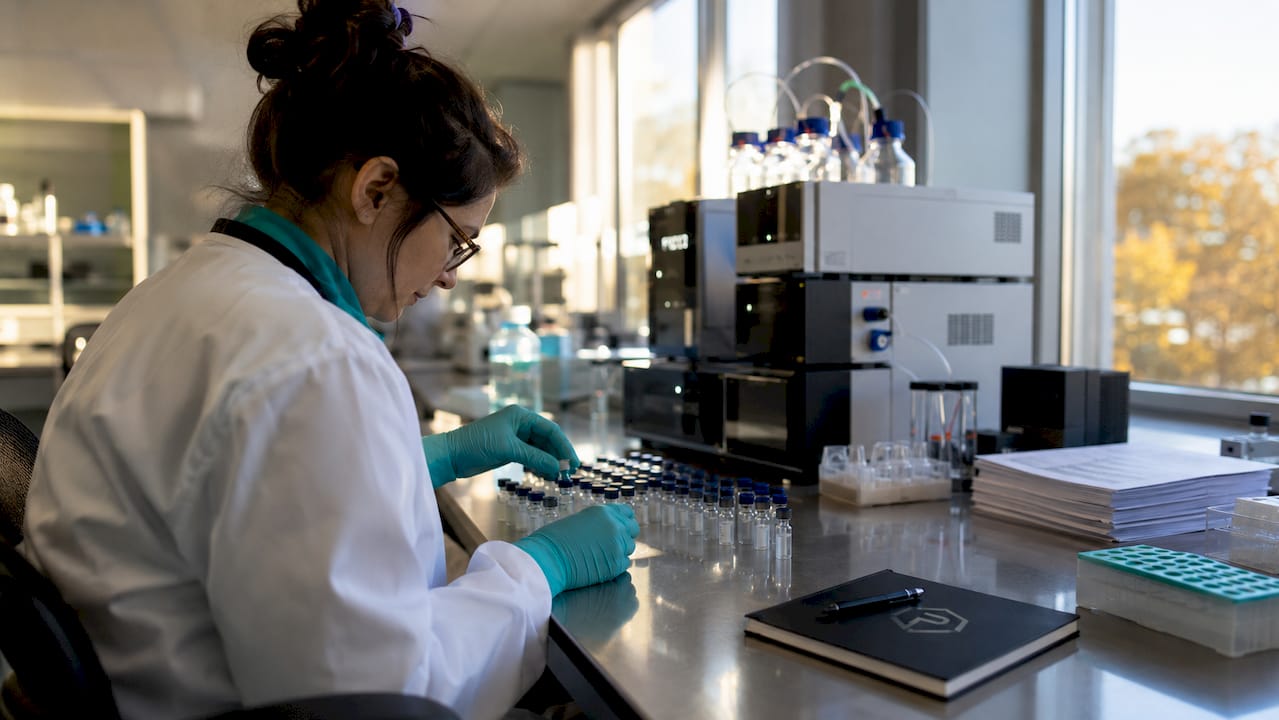
Synthesis byproducts complicate this further. Truncated sequences, deletion peptides, and incompletely deprotected residues can co-elute with the target peptide under standard HPLC conditions. Their presence inflates the apparent purity of the main fraction while introducing structurally distinct molecules into the sample.
Pro Tip: Always request both HPLC area percent and absolute peptide content by mass from your supplier. These are distinct measurements, and conflating them is one of the most common sources of dosing variability in peptide research.
| Measurement | What it confirms | What it misses |
|---|---|---|
| HPLC area percent | Relative peak proportion in chromatogram | Counterions, moisture, co-eluting impurities |
| Absolute peptide content | Actual peptide mass per total weight | Sequence identity, side-chain modifications |
| Mass spectrometry | Molecular mass and identity | Quantitative purity, counterion contribution |
The practical implication is clear. Researchers who rely on HPLC purity alone risk working with a sample whose true peptide content and sequence identity are both unconfirmed. Sequence integrity requires identity verification, not just chromatographic separation.
What analytical methods verify peptide sequence integrity?
Multi-method validation is the current standard for confirming peptide identity. No single technique covers all failure modes, and regulatory guidance from bodies including USP, ICH Q6A, and FDA analytical frameworks reflects this.
High-Performance Liquid Chromatography remains the primary tool for quantitative purity assessment. Reverse-phase HPLC under USP <621> conditions separates peptide components and generates the area percent purity figure reported on most Certificates of Analysis. It is fast, reproducible, and well-suited to batch release testing.
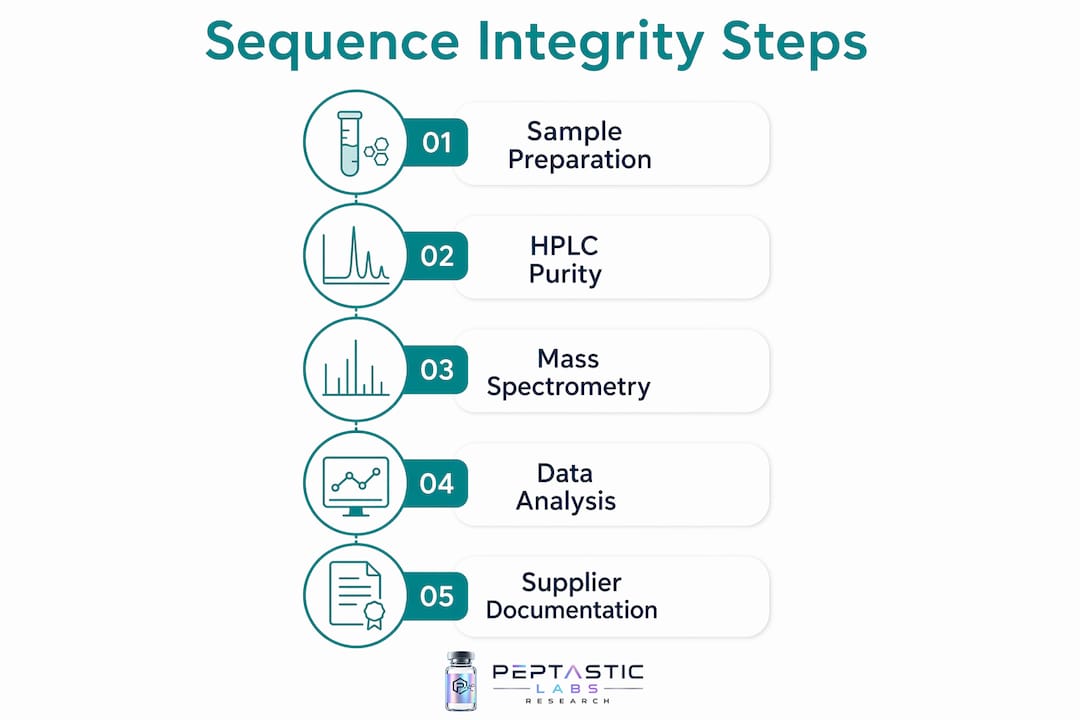
Mass spectrometry confirms molecular identity by measuring the molecular mass of the dominant species. A match between expected and observed mass rules out gross sequence errors, missing residues, and incomplete deprotection. Mass spectrometry is the mandatory second analytical step that HPLC cannot replace.
Tandem mass spectrometry, or MS/MS, extends this further. It fragments the parent ion and maps the resulting fragment ions to specific sequence positions. This approach identifies:
- Amino acid deletions at specific positions
- Side-chain modifications including oxidation of methionine or tryptophan
- Sequence transpositions introduced during solid-phase synthesis
- Incomplete removal of protecting groups
- Racemization at chiral centers
Pro Tip: When reviewing a Certificate of Analysis, check that mass spectrometry data includes the observed m/z value and the charge state, not just a pass/fail notation. A numeric match is the only confirmation that carries scientific weight.
Single-method approaches create blind spots. Mass spectrometry identifies deletions and modifications that chromatographic methods miss entirely. Combining HPLC with at least one mass spectrometric technique is the minimum standard for research-grade peptide release. For applications where sequence-level confidence is critical, MS/MS sequencing provides the highest level of identity confirmation currently available.
How does supplier transparency protect peptide sequence integrity?
Supplier documentation is the primary mechanism by which researchers verify that a peptide's sequence integrity was confirmed before the material reached their lab. Without batch-specific records, there is no traceable link between the analytical data and the vial in use.
A complete Certificate of Analysis should include the peptide name, full sequence, batch number, synthesis date, physical form, HPLC purity, mass spectrometry identity data, and the specific analytical methods used. Batch-specific documentation supports traceability and reproducible research outcomes. Generic or lot-pooled CoAs do not meet this standard because they cannot confirm the identity of any individual batch.
Researchers benefit from requesting the following from any supplier before placing an order:
- Batch-specific CoA with HPLC chromatogram and mass spectrum attached
- Disclosure of synthesis method, including resin type and coupling chemistry
- Confirmation of counterion form and any salt conversion steps applied
- Cold-chain handling records documenting temperature during transit
- Third-party testing certificates where independent verification was performed
Cold-chain handling deserves specific attention. Transparent storage and cold-chain records prevent degradation that directly compromises sequence integrity during transport. A peptide that was correctly synthesized and verified can arrive in a degraded state if temperature excursions occurred between dispatch and receipt.
Transparent sourcing records also reduce the time needed to reconstruct material histories during audits and sponsor due diligence reviews. For researchers working under GLP or GCP conditions, this documentation is not optional. For independent researchers, it is the fastest way to identify the source of unexpected experimental results.
Peptasticlabs provides batch-specific Certificates of Analysis on request, with HPLC and mass spectrometry data attached. Researchers can review the CoA documentation standard to understand what a complete analytical record should contain before evaluating any supplier.
How does peptide degradation compromise sequence integrity?
Reconstitution is the largest stability event in the peptide lifecycle. When a lyophilized peptide powder is dissolved in aqueous solution, restored molecular mobility and water availability activate multiple degradation pathways simultaneously.
Five degradation pathways operate in solution: hydrolysis, deamidation, oxidation, aggregation, and adsorption. Each pathway is driven by different environmental factors, which means no single storage condition neutralizes all of them at once.
| Degradation pathway | Primary driver | Structural consequence |
|---|---|---|
| Hydrolysis | pH extremes, elevated temperature | Peptide bond cleavage, truncated fragments |
| Deamidation | Neutral to alkaline pH, heat | Asparagine/glutamine conversion, charge shift |
| Oxidation | Dissolved oxygen, light exposure | Methionine/tryptophan modification, mass shift |
| Aggregation | High concentration, temperature cycling | Loss of monomeric active species |
| Adsorption | Low concentration, surface contact | Effective dose reduction, variable recovery |
pH and temperature are the two variables with the greatest combined influence on degradation rate. Most peptides show minimum hydrolysis rates at pH 3–5, while deamidation accelerates above pH 7. Temperature cycling, even within a standard laboratory freezer, accelerates aggregation in concentrated solutions.
Cold storage slows degradation but does not stop it. Degradation proceeds via multiple chemical pathways even under optimal conditions, which means reconstituted peptides should be used promptly. Aliquoting before freezing reduces the number of freeze-thaw cycles each portion undergoes, which directly limits aggregation and oxidation exposure.
The practical research consequence is significant. A peptide that was sequence-verified at synthesis can produce inconsistent results if reconstitution and storage conditions are not controlled. Researchers who observe unexplained variability between experimental runs should treat reconstitution handling as a primary variable before attributing the result to biological factors.
Key Takeaways
Peptide sequence integrity requires both identity verification by mass spectrometry and chromatographic purity by HPLC, supported by batch-specific supplier documentation and controlled post-reconstitution handling.
| Point | Details |
|---|---|
| Purity does not equal identity | HPLC area percent confirms relative peak proportion, not correct amino acid sequence. |
| Mass spectrometry is mandatory | MS confirms molecular mass and identifies deletions or modifications that HPLC misses. |
| Batch-specific CoAs are required | Generic lot documentation cannot confirm the identity or quality of an individual vial. |
| Reconstitution activates degradation | Five simultaneous pathways begin at dissolution; prompt use and aliquoting limit damage. |
| Cold chain records matter | Temperature excursions during transit can compromise integrity before the vial is opened. |
Sequence integrity verification: what the field still gets wrong
Researchers consistently underestimate the gap between chromatographic purity and confirmed sequence identity. I have reviewed CoAs from multiple supplier categories, and the pattern is consistent: HPLC data is present, mass spectrometry data is absent or reduced to a pass/fail notation, and absolute peptide content is never disclosed. That documentation profile does not support reproducible research.
The second persistent error is treating cold storage as a preservation guarantee. Freezing slows degradation. It does not arrest it. Researchers who reconstitute a full vial, store the remainder at 4°C for two weeks, and then attribute variable results to biological noise are missing the most likely explanation. The peptide changed between experiments.
My view is that the field needs to treat multi-method analytical validation as a baseline expectation, not a premium feature. Suppliers who provide only HPLC data are not meeting the minimum standard for research-grade material. Researchers who accept that documentation are accepting unknown sequence identity. The role of peptide sequences in biology is too specific for that level of uncertainty to be acceptable.
Selecting a supplier who discloses synthesis methods, provides batch-specific mass spectrometry data, and documents cold-chain handling is not a preference. It is a methodological requirement for any research where the peptide sequence is the independent variable.
— Tintastic
Peptasticlabs: verified sequence integrity for research-grade peptides
Researchers who require confirmed sequence identity and documented purity have a direct option through Peptasticlabs.
Peptasticlabs supplies over 22 independently tested compounds, each verified to ≥99% purity via HPLC and confirmed by mass spectrometry for molecular identity. Batch-specific Certificates of Analysis are available on request and include the analytical methods, observed mass data, and purity figures needed to support traceable research. Cold-chain handling and third-party verification are part of the standard quality process. Researchers working in metabolic, cognitive, tissue repair, longevity, immunology, and cosmetic applications can review the full catalog and request documentation directly at Peptasticlabs. For researchers evaluating supplier standards, the research documentation portal provides detailed quality assurance information.
FAQ
What is peptide sequence integrity?
Peptide sequence integrity is the accurate preservation and verification of the amino acid order and molecular identity of a synthesized peptide. A peptide with a correct sequence and confirmed identity will behave as expected in biological and chemical assays.
Does high HPLC purity confirm correct peptide sequence?
No. HPLC area percent confirms the relative proportion of the main chromatographic peak, not the identity of that peak. Mass spectrometry is required to confirm molecular identity.
What should a Certificate of Analysis include for peptides?
A complete CoA should include the peptide name, full amino acid sequence, batch number, synthesis date, HPLC purity value, observed mass by mass spectrometry, and the specific analytical methods used for each measurement.
How quickly do peptides degrade after reconstitution?
Degradation begins immediately upon reconstitution through hydrolysis, deamidation, oxidation, aggregation, and adsorption. The rate depends on pH, temperature, concentration, and oxygen exposure, making prompt use and proper aliquoting critical.
Why does supplier transparency affect research reproducibility?
Batch-specific documentation allows researchers to trace the analytical history of each vial used in an experiment. Without it, there is no way to confirm that two vials from the same supplier contain peptides with identical sequence integrity and purity profiles.