
Cosmetic peptides research supports modest but reproducible collagen-stimulating and repair effects for a short list of well-characterized compounds. Palmitoyl Pentapeptide-4 (Matrixyl), GHK-Cu, and PEP5 (AAQPR) hold the strongest in vitro and topical clinical data. Injectable peptide claims run well ahead of the safety evidence. Reliable results depend on research-grade material, documented purity by HPLC/MS, and study designs built around the right endpoints.
TL;DR:
- Topical peptide benefits are modest but reproducible, with Matrixyl, PEP5, and GHK-Cu showing the strongest evidence, particularly when delivered with proper formulation.
- Laboratory assays confirm activity when using research-grade, verified peptides, but results can vary significantly depending on formulation stability and delivery method.
- In vitro and ex vivo models reveal that peptide mechanism strongly influences assay design and interpretation, with misaligned endpoints leading to inconclusive data.
- Clinical trials support only incremental improvements, with structural collagen changes typically requiring at least 12 weeks of consistent treatment to measure reliably.
- Injectable peptides lack robust safety and efficacy data, demanding cautious application and long-term safety studies before broader clinical adoption.
Table of Contents
- What Are the Main Mechanisms Behind Cosmetic Peptides Research?
- What Do In Vitro and Ex Vivo Models Actually Show?
- Does Clinical Trial Evidence Back Up the Lab Results?
- How Does Formulation Affect Whether a Peptide Actually Works?
- What Safety and Quality Standards Should Researchers Require?
- How Should Future Cosmetic Peptide Studies Be Designed?
- A Researcher's View on Where the Evidence Actually Stands
- How Peptastic Labs Supports Rigorous Peptide Research
- Sources
- FAQ
What Are the Main Mechanisms Behind Cosmetic Peptides Research?
Peptides used in dermal research fall into a handful of functional classes, and each one signals skin cells through a distinct pathway. Understanding which class you're working with determines which assay, concentration range, and endpoint actually makes sense.
Matrikines are peptide fragments that mimic pieces of degraded extracellular matrix proteins, mainly collagen and elastin breakdown products. When fibroblasts encounter these fragments, they interpret them as damage signals and upregulate new matrix synthesis. Palmitoyl Pentapeptide-4, marketed as Matrixyl, is the archetypal matrikine and works largely through this feedback loop, activating TGF-β/Smad2/3 signaling to drive procollagen transcription in dermal fibroblasts.
Signal peptides operate one step upstream. Rather than mimicking a breakdown product, they engage cell-surface receptors directly to trigger a cascade that ends in increased collagen, elastin, or glycosaminoglycan output. The distinction matters for assay design: matrikine activity often shows up fastest in degradation-fragment competition assays, while signal peptide activity is better captured with receptor-binding or downstream transcription panels.
Enzyme-inhibitory peptides work through a different logic entirely. Instead of stimulating new synthesis, they block the matrix metalloproteinases (MMPs), particularly MMP-1 and MMP-9, that break existing collagen down. A 2025 review identifying 102 commercially available cosmetic peptides found matrikine and enzyme-inhibitory activities were the two most studied mechanisms in vitro and ex vivo, ahead of every other functional category.
Copper peptides, of which GHK-Cu is the best known, act through a different route again. The copper ion itself modulates gene expression tied to wound repair and matrix remodeling, and GHK-Cu has decades of published tissue-repair literature behind it. One caution worth flagging early: not every copper tripeptide behaves identically. AHK-Cu and GHK-Cu are frequently conflated in marketing copy despite meaningfully different sequences and complex stability, and researchers should always specify the exact peptide and copper complex under study rather than treating "copper peptide" as a single category.
Lipopeptides add a fatty acid chain, usually palmitic acid, onto a short bioactive sequence. This single modification changes two things at once: it makes the molecule more lipophilic, and it allows self-assembly into ordered structures like nanotapes or micelles once the peptide reaches an aqueous or lipid-rich environment. C16-KTTKS, the palmitoylated version of the KTTKS matrikine, is the clearest working example. Palmitoylation is not cosmetic packaging. Without a fatty acid tail, most short hydrophilic peptides simply cannot cross the stratum corneum in meaningful quantities, and lipidation is one of the few strategies with a documented mechanism for improving that transport.
Summarizing the functional landscape:
- Matrikines signal via degradation-fragment mimicry, driving collagen synthesis through TGF-β/Smad2/3 pathways.
- Signal peptides engage cell-surface receptors directly to trigger matrix protein transcription.
- Enzyme inhibitors suppress MMP-1/MMP-9 activity, slowing collagen breakdown rather than boosting synthesis.
- Copper peptides (GHK-Cu, distinct from AHK-Cu) modulate wound-repair gene expression through copper-dependent mechanisms.
- Lipopeptides combine a bioactive sequence with a fatty acid tail, improving penetration and enabling self-assembly behavior that can itself affect bioactivity.
The practical takeaway for anyone designing a study: mechanism dictates model. A matrikine and an enzyme inhibitor will show activity on completely different assay readouts, and treating "cosmetic peptide" as one undifferentiated category in a study protocol is a common design mistake that produces uninterpretable data.
What Do In Vitro and Ex Vivo Models Actually Show?
Laboratory models remain the backbone of cosmetic peptides research, largely because they're fast, controllable, and cheap relative to clinical trials. They also come with well-documented interpretation traps that researchers need to plan around before they ever run an assay.
The standard model set looks like this:
- Human dermal fibroblast collagen assays measure procollagen I or III output after peptide exposure, typically via ELISA or hydroxyproline quantification. This is the workhorse assay for matrikines and lipopeptides alike, and it's where most concentration-response data originates.
- HaCaT keratinocyte assays assess epidermal-layer effects, including barrier protein expression and inflammatory markers, since many peptides act on both epidermal and dermal compartments simultaneously.
- Ex vivo organ-culture skin models use excised human or porcine skin explants to test penetration and biological response in an intact tissue architecture, which fibroblast monolayers can't replicate.
- Hair follicle organ-culture models extend the same ex vivo logic to hair growth peptides, tracking follicle survival, anagen-phase duration, and dermal papilla cell activity, a growing area given rising interest in the best hair growth peptides for research applications.
Representative results give a sense of what these models can actually demonstrate. C16-KTTKS and related lipopeptide analogues stimulate collagen production in human fibroblasts in a concentration-dependent manner, with small sequence changes producing meaningfully different potency and toxicity profiles. Separately, the AAQPR peptide (PEP5) has been shown to increase collagen output in dermal fibroblasts specifically through Smad2/3 signaling, giving researchers a defined mechanistic anchor rather than a vague "collagen-boosting" claim.
None of this translates cleanly to human skin without caveats, and four pitfalls come up repeatedly in the literature.
Bell-shaped dose-response curves. Many peptides stimulate collagen synthesis at low-to-moderate concentrations, then flatten or reverse at higher doses. A concentration that looks optimal in one plate can sit right at the edge of a cytotoxic threshold, so a single-point concentration test tells you almost nothing about the compound's real working range.
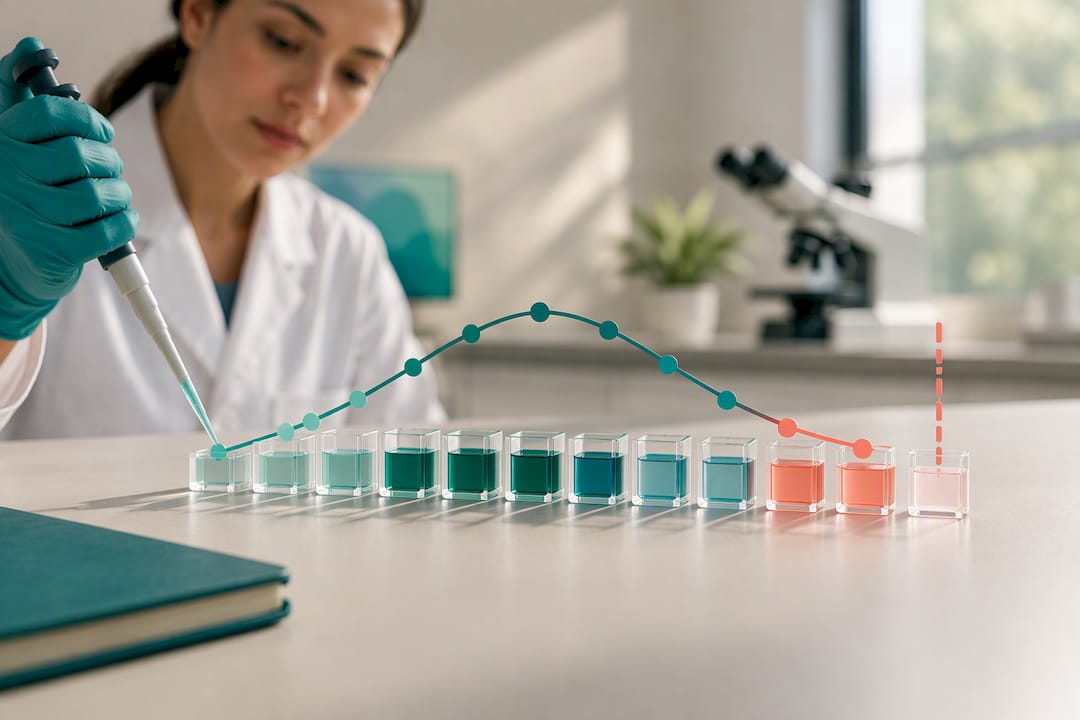
Cytotoxicity thresholds that shift with formulation. The same peptide sequence can show a different toxicity ceiling depending on vehicle, pH, and co-formulated ingredients, which means in vitro cytotoxicity data generated in isolation may not predict behavior in a finished formulation.
Self-assembly altering bioactivity. Lipopeptides that form nanotapes or micellar structures don't necessarily present their active sequence the same way a free peptide would. Aggregation state can increase, decrease, or have no effect on receptor engagement, and this is rarely characterized in early-stage screening.
Microbiome interactions. Some lipidated peptide analogues have measurable effects on skin commensal bacteria, an interaction that standard fibroblast or keratinocyte assays simply cannot detect. This is an underexplored variable that could confound topical trial outcomes if left unmeasured, and it deserves more attention than it currently gets in cosmetic peptide protocols.
Pro Tip: Run a full concentration curve, not a single test dose, before drawing conclusions from any fibroblast collagen assay. A compound that looks inert at 10 micromolar might be actively cytotoxic at 50 and genuinely active at 2.
Does Clinical Trial Evidence Back Up the Lab Results?
Clinical evidence for cosmetic peptides is real but uneven, and the strength of that evidence depends heavily on delivery route. Topical peptide trials show modest, reproducible improvements. Injectable peptide claims sit on a much thinner evidence base.
Matrixyl carries the longest clinical track record of any single cosmetic peptide. Historical randomized trials and independent replications report statistically significant improvements in wrinkle depth and dermal density markers over weeks to months of use, though effect sizes are modest, and a meaningful share of that evidence originates from sponsor-conducted studies rather than fully independent academic trials. That doesn't invalidate the findings, but it does mean replication by unaffiliated labs remains valuable and, in some cases, still lacking.
PEP5 has newer but more mechanistically detailed clinical support. The same 2025 study that demonstrated Smad2/3-mediated collagen induction in fibroblasts also reported that clinical testing showed increased skin hydration and reduced fine wrinkles compared with placebo. That combination of in vitro mechanism plus a matched clinical readout is exactly the kind of evidence chain that's still rare in this field.
The broader synthesis picture is instructive too. The 2025 review cataloging 102 commercially available cosmetic peptides found that matrikine and enzyme-inhibitory activities dominate the published in vitro and ex vivo evidence base, while clinical-stage confirmation lags well behind laboratory characterization for most entries on that list. In plain terms: for every peptide with a solid human trial behind it, there are several with only cell-culture data.
Injectable peptides tell a starker story. Reporting from the University of Queensland highlights that popular injectable peptides, including GHK-Cu, BPC-157, and TB-500, carry limited human safety and efficacy evidence, despite growing consumer demand. The mechanistic case for some of these compounds is plausible based on animal and in vitro work, but plausibility is not the same as demonstrated human safety, and that gap is exactly where regulatory scrutiny tends to concentrate.
The evidence gap in one line: topical peptide trials generally run controlled, placebo-comparison designs over 8 to 24 weeks with defined dermatological endpoints; injectable peptide use in aesthetic contexts largely lacks that same trial infrastructure, according to the University of Queensland's assessment.
Realistic outcome expectations matter here, and researchers designing or interpreting trials should separate two different timescales:
- Surface-level changes (hydration, skin smoothness, mild texture improvement) can show up within 4 to 8 weeks and are typically measured with corneometry or standardized photographic grading.
- Structural collagen changes (dermal thickness, wrinkle depth reduction tied to actual matrix remodeling) require longer exposure, generally 12 weeks or more, and are best confirmed with ultrasound dermal thickness measurement rather than self-reported skin feel.
Conflating those two timelines is one of the more common errors in both academic and marketing-adjacent peptide research. A hydration improvement at week 4 does not confirm collagen remodeling, and treating it as equivalent evidence overstates what the data actually shows.
How Does Formulation Affect Whether a Peptide Actually Works?
A peptide with excellent in vitro activity can fail completely in a finished formulation, and this is where a large share of cosmetic peptide research effort actually goes. Delivery and stability determine whether a bioactive signal ever reaches its target.
Palmitoylation remains the dominant strategy for improving penetration, and the mechanism is straightforward: attaching a fatty acid chain increases lipophilicity enough for the molecule to partition into the lipid-rich stratum corneum rather than sitting on the skin surface. This is also why C16-KTTKS outperforms unmodified KTTKS in most transport-focused comparisons. But lipidation introduces a second variable that's easy to overlook. The same fatty acid chain that improves penetration also drives self-assembly into nanotapes and micelles, and that aggregation state can change how the active sequence is presented to its target receptor, sometimes enhancing bioactivity, sometimes muting it. Characterizing self-assembly behavior at your working concentration isn't optional if you want to explain why a lipopeptide performs differently across formulations.
Vehicle choice and formulation compatibility carry equal weight. A few practical considerations that come up repeatedly in the formulation literature:
- Chelation risk is specific to copper peptides. GHK-Cu can lose bioactivity if formulated alongside strong chelating agents that strip the copper ion from the peptide complex, so ingredient compatibility screening is essential before finalizing a vehicle.
- pH instability affects most short peptides, which can hydrolyze outside a narrow pH window, making accelerated stability testing across pH conditions a baseline requirement rather than an afterthought.
- Encapsulation strategies, including lipid nanoparticles, are increasingly used to protect peptides from degradation and to control release kinetics, particularly for actives with narrow bioactivity ranges.
- Concentration ranges used in published trials typically fall within effective topical ranges for matrikines, though exact amounts vary by peptide and formulation, underscoring why replicating a published protocol requires matching concentration, not just ingredient name.
- Co-formulation with antioxidants may improve outcomes and reduce irritation potential relative to retinoid-based actives, a synergy flagged in recent expert commentary as a priority area for further formulation research.
Measuring whether any of this actually works requires the right assay stack, not just a finished product test. Franz cell diffusion testing remains the standard for quantifying transdermal penetration under controlled conditions. Tape-stripping protocols measure how much peptide actually accumulates in the stratum corneum versus passing through or sitting on the surface. Analytical HPLC/MS stability testing over time, under realistic storage conditions, confirms whether the peptide survives in its active form long enough to matter, since a compound that degrades in the bottle before it ever reaches skin is not a formulation success no matter how promising its cell-culture data looked.
For anyone building out a full cosmetic peptide list for a formulation research program, the mechanistic and delivery notes from this collagen-production research overview are a useful companion reference on how modification chemistry maps onto observed activity.
What Safety and Quality Standards Should Researchers Require?
Topical peptide research carries a comparatively favorable safety profile, but "comparatively favorable" is not the same as "risk-free," and injectable applications sit in an entirely different risk category that researchers should never treat as interchangeable.
For topical use, the most commonly reported adverse events are mild: localized irritation, occasional contact sensitization, and rare allergic reactions tied to specific sequences or excipients rather than the peptide class broadly. These events are generally manageable within standard dermatological safety monitoring and show up at low frequency in controlled trials.
Injectable peptides are a different matter entirely. University of Queensland reporting stresses that human safety data for popular injectable compounds, including GHK-Cu formulated for injection, BPC-157, and TB-500, remains limited, despite rising aesthetic-market demand. Systemic exposure changes the risk calculus completely relative to topical application, and any injectable protocol needs a safety monitoring plan proportional to that uncertainty, not one borrowed from topical-use precedent.
Long-term safety data for many cosmetic peptides, injectable formulations especially, simply does not exist yet at the depth regulators or researchers would prefer. That gap is a research opportunity, not a settled question to work around.
On the regulatory side, Australian researchers need to draw a clear line between cosmetic ingredients and therapeutic goods. The Therapeutic Goods Administration draws a firm distinction between prescription medicines and cosmetic products, and peptides marketed or used for purposes beyond cosmetic application, particularly anything injectable or making therapeutic claims, can fall under medicine regulation with corresponding compliance obligations. Checking a compound's regulatory status before designing a study protocol saves considerable trouble later, and this is an area where guessing is not an acceptable substitute for verification.
None of the mechanistic or clinical promise discussed above matters if the underlying material isn't what the label says it is. A minimum QC dossier for any research-grade peptide should include:
- HPLC purity percentage, ideally ≥99%, confirming the sample is free of synthesis byproducts that can confound bioactivity results.
- Mass spectrometry identity confirmation, verifying the molecule is actually the sequence claimed rather than a structurally similar but functionally different compound.
- A Certificate of Analysis (COA) tied to the specific batch used, not a generic product-level document.
- Documented storage conditions and handling history, since peptide degradation from improper storage can silently invalidate an entire experiment's results.
Skipping any one of these isn't a shortcut. It's a variable you can't account for later when your results don't replicate. Researchers evaluating cosmetic peptide purity and QC documentation standards in more depth will find the reproducibility stakes come up again and again across the literature.
How Should Future Cosmetic Peptide Studies Be Designed?
The gap between what cosmetic peptide research has shown and what it could show comes down mostly to study design discipline. A few structural improvements would move the field forward faster than any new peptide discovery.
- Match endpoints to the biological claim being tested. A study claiming structural dermal change needs ultrasound dermal thickness measurement or histological biopsy data, not a hydration score. Phototrichogram analysis belongs in hair growth peptide studies; standardized wrinkle depth metrics belong in anti-aging matrikine trials. Using the wrong endpoint for the claim is one of the most common design flaws in published cosmetic peptide research.
- Run long enough to capture structural change. Surface-level improvements can appear within weeks, but genuine collagen remodeling generally requires a minimum of 12 to 24 weeks of consistent exposure before structural endpoints become meaningful. Shorter studies should limit their claims accordingly.
- Report full material specifications, not just the peptide name. Exact amino acid sequence, chemical modification (palmitoylation site, D versus L isomer, etc.), final formulation concentration, analytical purity, and storage/handling conditions all belong in the methods section. Without this, replication attempts are guesswork.
- Prioritize head-to-head comparisons over placebo-only designs. The field has abundant peptide-versus-placebo data and very little peptide-versus-peptide data, which makes it nearly impossible to answer the question researchers most want answered: which compound performs best for a given indication.
- Build human dose-response studies, not just in vitro curves. Given how often bell-shaped and cytotoxic-threshold effects show up in cell culture, human dose-ranging data is a conspicuous gap, particularly for newer compounds like PEP5 where mechanistic data outpaces dosing guidance.
- Fund long-term safety studies for injectable peptides specifically. This is the single most urgent gap identified in current reporting, and it should be treated as a research priority rather than a regulatory afterthought.
- Investigate microbiome interactions systematically. Given documented effects of some lipidated peptides on skin commensal bacteria, this variable deserves a standard place in formulation-stage screening rather than occasional mention in supplementary data.
None of these recommendations require novel technology. They require researchers and sponsors to commit to longer timelines, fuller reporting, and comparative designs over convenient placebo-only studies, which is a discipline problem more than a science problem.
A Researcher's View on Where the Evidence Actually Stands
The biggest misconception in cosmetic peptide research isn't about efficacy. It's about uniformity. Too much discussion treats "peptides" as a single category with a single evidence level, when the reality is a spectrum: Matrixyl and PEP5 sit on reasonably solid topical ground, GHK-Cu's tissue-repair mechanism is well documented but frequently misapplied to injectable contexts with far weaker safety data, and dozens of other catalog entries have cell-culture promise and nothing beyond it.
What gets underestimated is how much of the "does it work" question actually resolves into a material-quality question. A study using a peptide of unverified purity, degraded by improper storage, or run at a concentration nobody has characterized for toxicity isn't testing the peptide's biology. It's testing an unknown variable. That's precisely why documentation like HPLC verification and batch-specific Certificates of Analysis, the kind detailed on Peptastic Labs' research page, isn't a compliance box to check. It's the difference between a result that means something and one that doesn't.
Two takeaways for a lab starting a peptide research project: first, decide your endpoint before you decide your peptide, because mismatched endpoints produce unpublishable data regardless of the compound's real activity. Second, never accept a peptide source without batch-specific purity documentation. The mechanism might be sound; the sample in your freezer might not be.
— Tintastic
How Peptastic Labs Supports Rigorous Peptide Research
Every recommendation in this article, matched endpoints, documented purity, verified identity, only holds up if the material behind your study is what the label claims. That's the specific gap Peptastic Labs is built to close: independently HPLC and mass spec tested peptides, full batch documentation, and Certificates of Analysis available on request, so your results reflect the compound's actual biology rather than an unverified variable.

The Cosmetic Science line fits within a broader catalog including Metabolic, Tissue & Repair, Longevity, and related research categories, all held to consistent purity and documentation standards. For labs sourcing GHK-Cu, matrikine compounds, or lipopeptide analogues for formulation work, that batch-level traceability is what makes a reproducibility claim defensible in a manuscript rather than an assumption. Browse the full research-grade peptide catalogue to check current availability, or contact the sales team directly for bulk procurement and wholesale research orders. Reproducible results start with a peptide source you can actually document.
FAQ
Is There Real Research Being Done on Cosmetic Peptides?
Yes. Active research spans mechanistic studies, in vitro fibroblast and keratinocyte assays, ex vivo skin models, and clinical trials, with a 2025 review cataloging 102 commercially available cosmetic peptides and their evidence base. Matrixyl, GHK-Cu, and PEP5 currently have the deepest published research behind them.
Do Peptides in Skincare Actually Work?
Topical peptides show modest, reproducible effects on collagen synthesis and skin hydration in controlled studies, particularly matrikines like Matrixyl and newer compounds like PEP5, which increased hydration and reduced fine wrinkles versus placebo in clinical testing. Results are real but incremental, not dramatic, and depend heavily on formulation quality and delivery.
Do Research-Grade Peptides Actually Work in Laboratory Settings?
Research-grade peptides perform as expected in laboratory assays when purity and identity are verified, which is why HPLC and mass spec documentation matters so much for reproducibility. Peptastic Labs supplies peptides across its Cosmetic Science and related lines with batch-specific Certificates of Analysis available on request, viewable through the full catalogue.
What Do Dermatology Professionals Think of Cosmetic Peptides?
Dermatology-focused reviews generally regard topical peptides as a reasonable alternative to retinoids for patients who cannot tolerate irritation, while flagging that efficacy depends heavily on delivery vehicle and formulation stability. Professional opinion is notably more cautious about injectable peptides, given the limited human safety data.
How Long Does It Take to See Results From Cosmetic Peptides?
Surface-level improvements like hydration can appear within 4 to 8 weeks, but structural changes such as increased dermal collagen typically require 12 to 24 weeks of consistent use to become measurable. Studies relying on ultrasound dermal thickness or standardized wrinkle metrics generally run on the longer end of that range.