Research-grade peptides in Australia typically run $100 to $350 per vial, depending on the compound and quantity, while clinic-based peptide programs can cost from several hundred dollars per month to substantial annual amounts once consults, pathology, and medication are factored in. If you need therapeutic use, expect the clinic route with a valid prescription. If you're a qualified lab buyer, verify the Certificate of Analysis before you commit to a vendor.
TL;DR:
- Peptides in Australia cost between $100 and $350 per vial, but the true expense depends on the cost per milligram, which varies by vendor and vial size.
- Clinic-based peptide treatments can total $300 to $900 monthly, reaching $1,000 to $2,500 for three months when including consultations and testing.
- Verifying COA and batch-specific documentation is crucial, as it affects both quality and price, with larger vials typically offering better value.
- Therapeutic use requires a prescription and medical supervision, while research-grade peptides are legally restricted to laboratory and institutional research.
- Buyers should request detailed batch information and compare total costs, including surcharges and shipping, before purchasing peptides for research or therapeutic purposes.
Table of Contents
- What Does Peptide Cost Look Like in Australia?
- How Much Does Peptide Clinic Treatment Cost in Australia?
- Why Do Peptide Prices Vary So Much Between Suppliers?
- Clinic vs Lab Purchase: A 3-Month Cost Comparison
- What Are the Legal Rules for Buying Peptides in Australia?
- Balancing Cost, Quality, and Compliance
- Where to Buy Documented, HPLC-Verified Peptides in Australia
- Sources
What Does Peptide Cost Look Like in Australia?
Vendor pricing varies more than most buyers expect, and the sticker price rarely tells the whole story. Reported price ranges for peptides bought in Australia sit between $100 and $350 per vial, with the high-end covering smaller vial sizes or less complex compounds and the high end reflecting larger doses, rarer peptides, or premium documentation.
The listed price on a product page is not the number you should compare across vendors. What matters is cost per milligram, because vial sizes differ wildly between suppliers.
- A 5mg vial priced at $150 works out to $30 per mg.
- A 10mg vial priced at $220 works out to $22 per mg, a better value despite the higher sticker price.
- Starter kits and bundles often lower the per-mg cost further, but only if you actually need every component included.
Tools like Peptide Hub Australia's cost comparison calculator exist specifically because raw listed prices mislead buyers who skip this math.
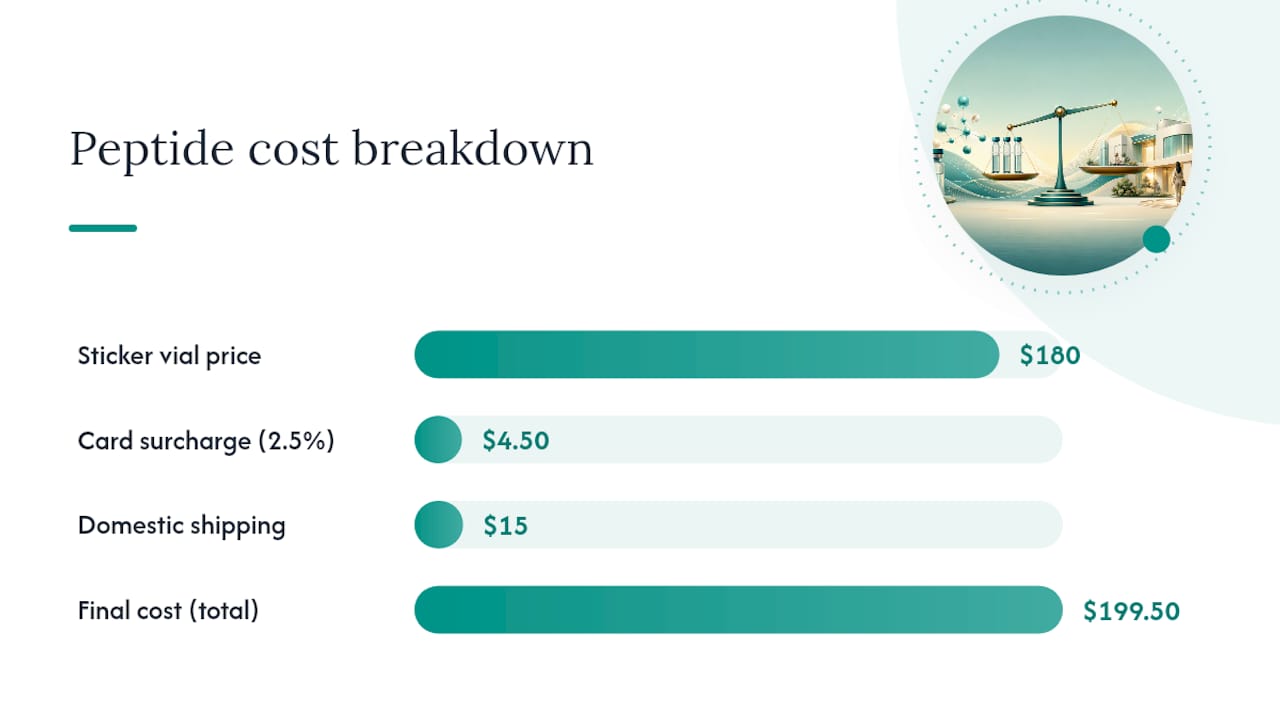
Here's a worked example. Say a vial is listed at $180. Add a 2.5% card processing surcharge ($4.50), then $15 flat-rate domestic shipping, and your final cost lands at roughly $199.50, about 11% above the sticker price. Multiply that gap across a multi-vial order and it adds up fast, which is exactly why serious buyers request an itemized quote before checkout rather than trusting the homepage price.
How Much Does Peptide Clinic Treatment Cost in Australia?
Clinic-based programs bundle several line items together, and each one adds to the total before you've received a single dose.
- Initial consultation: most clinics charge $80 to $250 for a first visit, where a doctor reviews your history and determines suitability.
- Follow-up consults: ongoing appointments typically have a varied cost, often required monthly or every few months to adjust dosing.
- Pathology and monitoring: blood panels checking hormone levels, metabolic markers, or organ function commonly add additional costs per round, depending on what tests are conducted.
- Medication costs: clinic-dispensed peptides and GLP-1 style medications vary widely by compound, with monthly costs varying especially for higher-dose protocols.
Stack those together and a single month of clinic-supervised treatment can land anywhere from $300 to $900, while a three-month program, including the extra pathology round most protocols require, often totals $1,000 to $2,500 or higher. That range explains why so many buyers ask whether clinics are worth the premium over sourcing peptides independently.
Why Do Peptide Prices Vary So Much Between Suppliers?
Five factors drive most of the price spread you'll see across Australian vendors, and understanding them helps you separate genuine value from a risky discount.
- Purity and COA verification. A Certificate of Analysis confirming HPLC purity of ≥99% costs the supplier money to produce and adds cost to the product, but it's the single strongest signal you're getting what the label promises.
- Vial size and concentration. Larger vials almost always carry a lower per-mg price, even when the upfront cost looks higher.
- Shipping and import handling. Cold-chain shipping, packaging, and customs processing all add line items that don't show up in the advertised price.
- Payment method surcharges. Card fees, currency conversion charges, and some cryptocurrency processing costs can shift your final total by several percent.
- Batch documentation depth. Vendors offering full batch-specific COAs rather than generic product-level documentation typically charge more, because independent testing per batch isn't free.
Pro Tip: Before paying, ask the vendor for the specific batch number tied to your order and match it against the COA they provide. A generic, undated COA that doesn't reference a batch number is a red flag worth walking away from.
Reviewing a peptide buying checklist before your first order catches most of these issues before money changes hands.
Clinic vs Lab Purchase: A 3-Month Cost Comparison
Two realistic scenarios show how differently the numbers land depending on the path you take.
- Scenario A, clinic-prescribed program: initial consult, two follow-ups, two pathology rounds, and three months of medication bring the running total to roughly mid-thousands of dollars over three months.
- Scenario B, qualified lab research purchase: product cost across several compounds, COA and batch verification, shipping, and basic reconstitution supplies bring the total closer to several hundreds of dollars over the same period.
These are estimates, not guarantees. Clinic totals swing with dosage protocols and the number of pathology rounds ordered, and lab totals swing with how many compounds a research project requires. Both scenarios also carry recurring costs. Clinics rebill monthly for medication, and labs typically reorder consumables and repeat testing supplies on their own cycle.
What Are the Legal Rules for Buying Peptides in Australia?
The line between research-grade and therapeutic use is the single most important legal distinction affecting cost in this space. Selling research-grade peptides doesn't authorize human therapeutic use, and legal experts are clear that vendors supplying research material carry no responsibility for, and no legal cover over, how a buyer administers it.
- Therapeutic use of peptides in Australia generally requires a valid prescription and clinical supervision from a registered practitioner.
- Using peptides therapeutically without a prescription can carry significant penalties, which is why the clinic route, despite the higher price tag, exists as a legal safeguard, not just a service upsell.
- Research-grade supply sits under a different regulatory category entirely, intended strictly for qualified laboratory and institutional research use.
- If you're unsure which category applies to your situation, a GP or the relevant health regulator is the right first call, not a forum post or a vendor's marketing copy.
Reading through Australia's prescription requirements before you order clarifies which path actually applies to your intended use.
Balancing Cost, Quality, and Compliance
Paying more for COA-verified peptides is justified when research integrity is on the line. A cheaper vial without batch-specific testing introduces variables no serious lab wants in its data. For labs ordering regularly, ask suppliers directly about volume pricing and request the underlying batch data before committing to a repeat order. Compliance isn't a box to check after the fact. It shapes which supplier or clinic you should even be comparing in the first place.
— Tintastic
Where to Buy Documented, HPLC-Verified Peptides in Australia
For qualified researchers weighing cost against reliability, Peptasticlabs supplies research-grade peptides verified to ≥99% purity through HPLC testing, with Certificates of Analysis available on request for every batch.
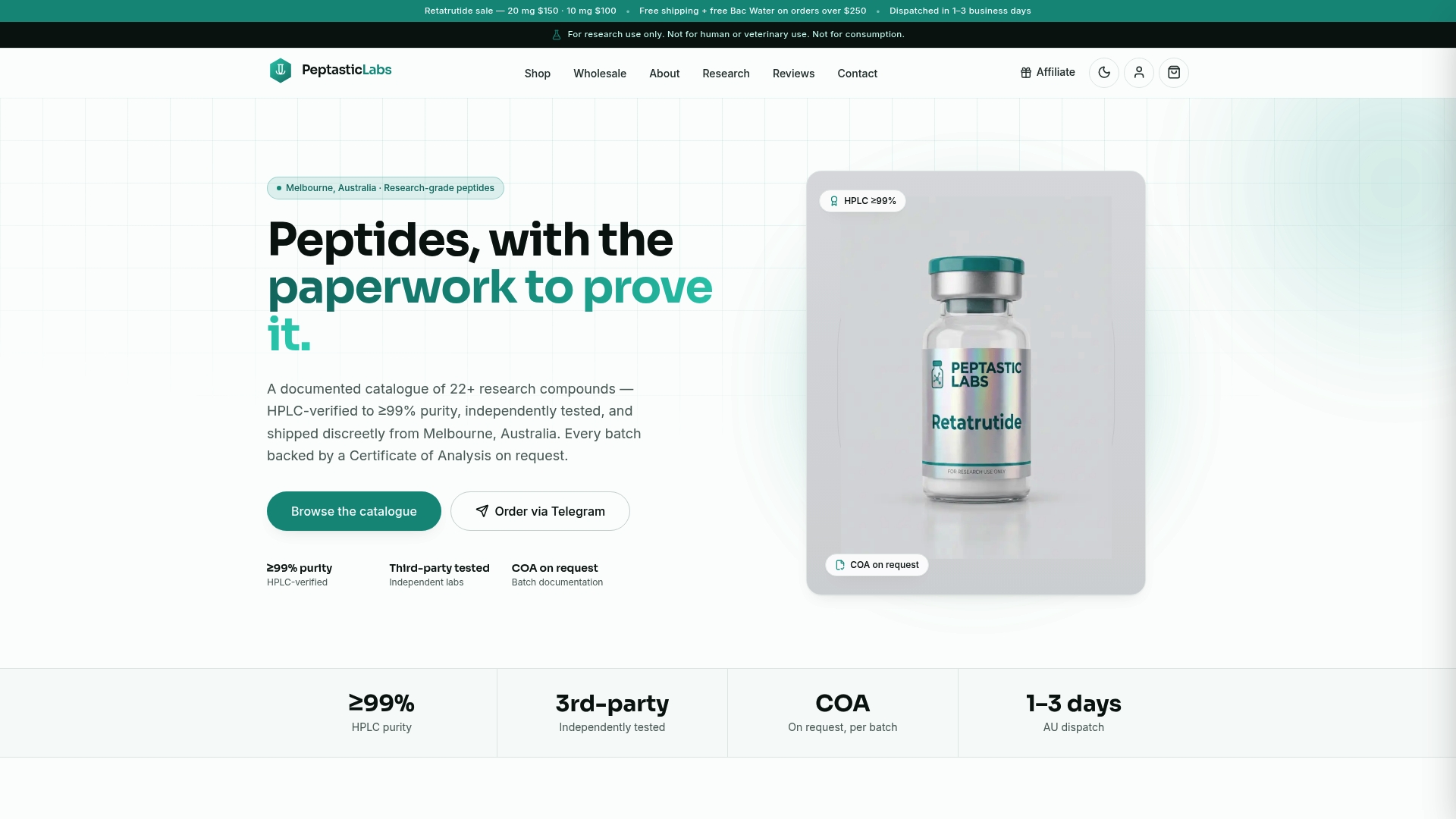
Some suppliers provide compounds with full batch documentation, backed by both in-house checks and independent third-party verification, so buyers are not relying on a vendor's word alone. Browse compounds like MOTS-c, BPC-157, or CJC-1295 with Ipamorelin directly through the product catalogue, and request a COA before you order if you want to verify a specific batch first. Bulk and wholesale pricing may be available for labs and institutions ordering at volume. Review the catalogue and request documentation for your compound of interest to get a firm quote before you commit.
Sources
The cost figures and legal context in this guide draw on the following:
- Are peptides legal in Australia? - Lexology
- Are peptides legal in Australia? - Mondaq
- Peptide Therapy in Australia: Benefits, Risks & Facts - Crown St Medical Centre
- Peptides Australia: what you need to know - HealthyMale
This article is general information, not a substitute for advice from a qualified doctor. Consult a qualified healthcare professional about your own circumstances before acting on anything here.