
GHRP-2 (growth hormone-releasing peptide-2) is a synthetic GHS-R1a full agonist used in laboratory studies to acutely stimulate pulsatile GH release and, with continuous or chronic delivery, produce sustained elevations of IGF-1, IGFBP-3, and IGFBP-5 while also driving orexigenic and anti-inflammatory signals in preclinical models. Researchers studying GHRP-2 in bodybuilding-adjacent contexts, such as muscle hypertrophy, tissue repair, and GH-axis metabolism, will find its effects highly dependent on species, age, sex, dose, and delivery mode. Somatostatin tone and feedback regulation can limit responses over days, making protocol design and endpoint selection critical.
Core finding: A 30-day continuous subcutaneous infusion of GHRP-2 in older adults produced sustained pulsatile GH secretion and stable IGF-1, IGFBP-3, and IGFBP-5 elevations across days 1, 14, and 30 — confirming that chronic delivery maintains the somatotropic axis rather than exhausting it.
Key effects documented in the literature:
- GH secretion: Acute boluses and continuous infusions reliably increase GH pulse amplitude and area under the curve (AUC) in humans and rodents.
- IGF-1 and IGFBPs: Chronic delivery raises circulating IGF-1, IGFBP-3, and IGFBP-5 to levels measurable by standard immunoassay.
- Appetite: Human infusion studies report statistically significant increases in ad libitum food intake.
- Anti-inflammatory/cytoprotective signals: Preclinical models show macrophage polarization shifts, reduced ROS, and improved tissue repair metrics.
Key Takeaways
GHRP-2 is a GHS-R1a full agonist that produces acute GH pulses and, with continuous delivery, stable IGF-1 and IGFBP elevations — but its orexigenic and feedback-regulatory effects require deliberate protocol controls.
| Point | Details |
|---|---|
| Mechanism: GHS-R1a agonism | GHRP-2 acts via Gq/PLC/calcium signaling, distinct from GHRH; combined use yields additive GH output. |
| Chronic delivery vs. bolus | 30-day continuous SC infusion sustains IGF-1, IGFBP-3, and IGFBP-5 elevations; bolus dosing measures acute pituitary capacity only. |
| Pair-feeding controls required | GHRP-2 increased ad libitum intake by 33.5% in one human study; metabolic studies need matched-intake controls. |
| Age, sex, and species matter | Older adults, female subjects, and rodents show different response magnitudes; record and report these covariates. |
| Peptasticlabs documentation | HPLC ≥99% purity, COAs, and batch traceability available on request for institutional procurement. |
Table of Contents
- How does GHRP-2 activate the GH axis at the receptor level?
- What experimental effects does GHRP-2 produce across organ systems?
- What delivery routes and dose ranges appear in published protocols?
- How do species, age, sex, and physiological state alter responsiveness?
- What does a well-designed GHRP-2 study look like?
- What do U.S. labs need to know about sourcing and regulatory compliance?
- How should you evaluate a research-grade peptide supplier?
- What are the key limitations and open questions in GHRP-2 research?
- A note on quality standards and researcher partnerships
- Peptasticlabs GHRP-2: documentation-ready for qualified labs
- Sources
How does GHRP-2 activate the GH axis at the receptor level?
GHRP-2 binds GHS-R1a, a Gq-coupled receptor expressed on pituitary somatotrophs and hypothalamic neurons. Receptor activation triggers phospholipase C (PLC), generating IP3 and DAG, which mobilize intracellular calcium and activate protein kinase C (PKC). The resulting calcium influx drives GH exocytosis from somatotrophs. cAMP-dependent pathways also contribute in some cell types, though Gq/PLC is the primary route.
Cell culture work with fetal pituitary somatotrophs confirmed that GHRP-2 stimulates GH secretion through a distinct membrane receptor separate from the GHRH receptor and somatostatin receptor systems. This mechanistic separation is why GHRP-2 and GHRH produce additive rather than synergistic GH responses in most experimental settings.
Mechanistic note: Because GHS-R1a and the GHRH receptor use different intracellular transduction pathways, combining GHRP-2 with a GHRH analogue (such as sermorelin) augments GH output more than either alone — but the magnitude of that augmentation varies by cohort. Early mechanistic work found greater acute synergy in younger and female subjects.
GHS-R1a is also expressed on macrophages and other immune cells, which explains the non-endocrine effects documented in preclinical models: orexigenic drive, modulation of inflammatory cytokine profiles, and cytoprotective signaling independent of GH release.
- Pituitary: GH exocytosis via calcium/PKC
- Hypothalamus: Amplified GHRH release and suppressed somatostatin tone
- Macrophages/immune cells: Polarization shift, reduced proinflammatory cytokine output
- Peripheral tissues: Downstream IGF-1 production after sustained GH elevation
What experimental effects does GHRP-2 produce across organ systems?
GH and IGF-1 axis
Acute bolus or infusion reliably increases GH AUC. 412 μg/L/240 min](https://pubmed.ncbi.nlm.nih.gov/15699539/) compared with saline (p = 0.003). Chronic continuous delivery shifts the endpoint from acute GH peaks to stable IGF-1 and IGFBP elevation, which is the relevant anabolic signal for muscle repair and metabolic studies.
Appetite and energy intake
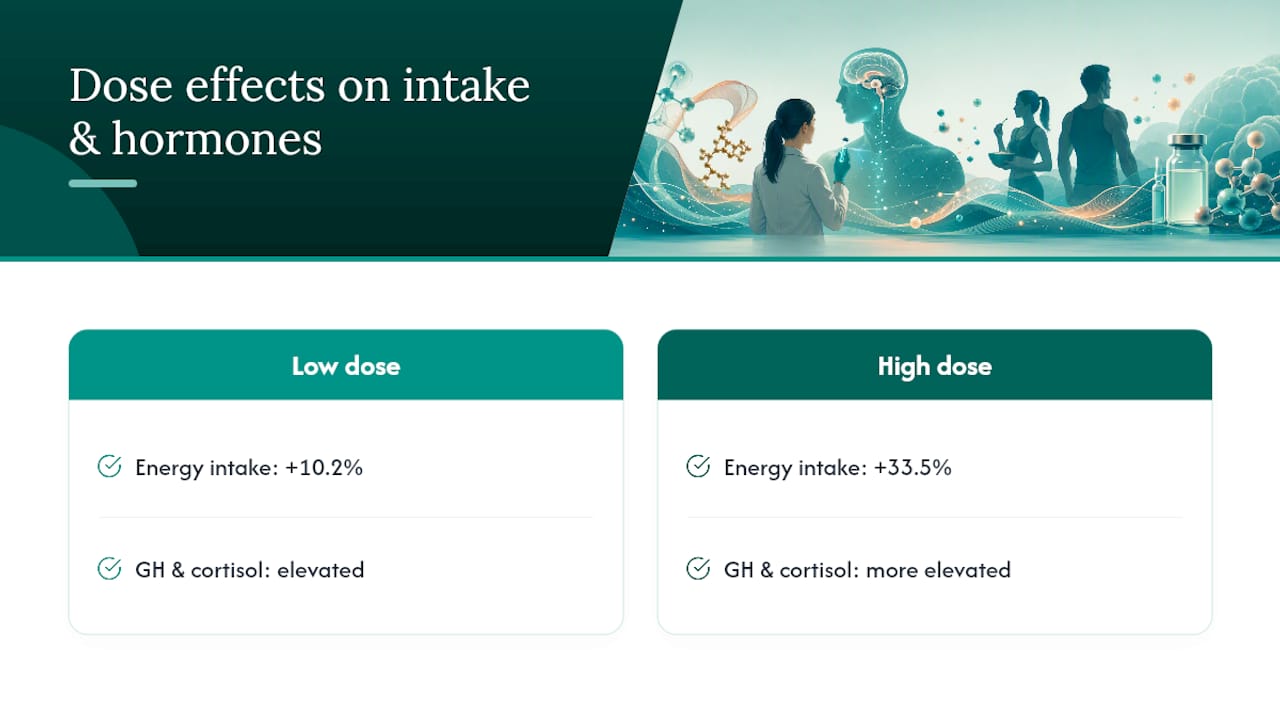
The orexigenic effect is dose-dependent. A randomized infusion study reported energy intake increases of 10.2% at low dose and 33.5% at high dose, alongside dose-dependent GH and cortisol elevations. For metabolic and body-composition studies, this confound is not trivial.
Pro Tip: Include pair-fed or matched-intake control arms in any metabolic or body-composition study using GHRP-2. Without them, anabolic and adiposity outcomes cannot be attributed to GH/IGF-1 signaling rather than increased caloric intake.
Anti-inflammatory, cytoprotective, and tissue-repair signals
Preclinical work documents reduced proinflammatory cytokines, decreased ROS, protection against ischemia-reperfusion injury, and downregulation of E3 ubiquitin ligases (MuRF-1, MAFbx) in muscle — signals relevant to anti-cachexia and muscle-sparing study designs. In a 2024 rat rotator cuff model, systemic GHRP-2 reduced M1 macrophage markers (Cd86, Nos2, tnfa) and improved biomechanical parameters including maximum failure load and stiffness at 4–8 weeks post-repair. For researchers designing peptide-based muscle repair studies, these macrophage and biomechanical endpoints are directly translatable.
Combination data: Five-day combined infusion of GHRP-2 and TRH in critically ill patients reactivated GH and TSH pulsatility and raised IGF-1 and GH-dependent IGFBPs to near-normal levels within 2–3 days, with increases in osteocalcin and leptin and no detectable cortisol changes in that cohort.
What delivery routes and dose ranges appear in published protocols?
Formulation notes from published protocols: sterile saline vehicle is standard; peptide concentration and injection volume must respect species-specific limits (typically ≤10 mL/kg for rodent SC). For rodent studies, osmotic minipumps avoid the stress artifact of repeated injections.
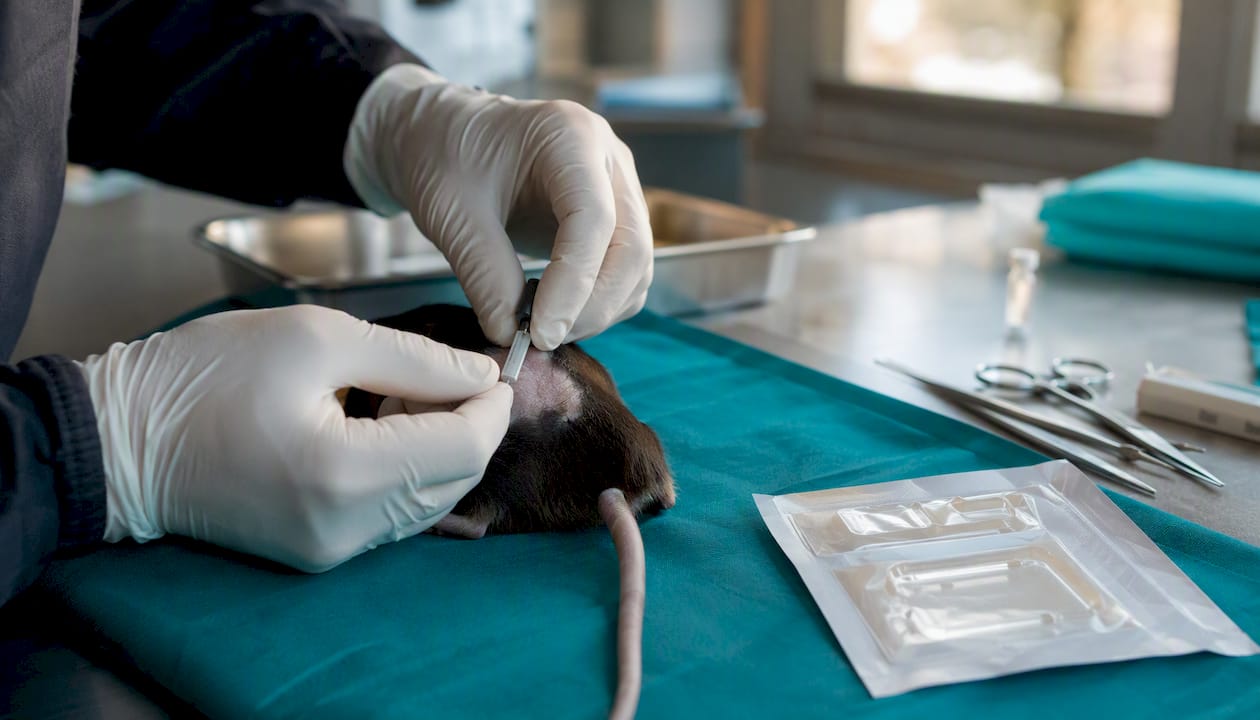
Pro Tip: Continuous low-rate infusion (e.g., 1 μg/kg/h in human studies) produces sustained GH pulsatility and stable IGF-1 elevations suitable for anabolic endpoint analysis. Reserve bolus dosing for acute pituitary-capacity assessments.
How do species, age, sex, and physiological state alter responsiveness?
- Species: Rodent pharmacokinetics and GHS-R1a distribution differ from humans. IGF-1 and tissue-repair outcomes from rat models require cautious translational interpretation; replicate key endpoints in a human-relevant system before drawing clinical conclusions.
- Age: Older adults show blunted baseline GH pulsatility but respond to GHRP-2 infusion with measurable GH and IGF-1 increases. The somatotropic response to acute tests probes pituitary reserve, while chronic infusion reveals a feedback-limited steady state that differs from younger cohorts.
- Sex: Acute synergy with GHRH tends to be greater in women in some cohorts, likely reflecting differences in somatostatin tone and estrogen-modulated GH secretory dynamics.
- Physiological state: Obesity, nutritional deficit, and critical illness all alter baseline ghrelin/GHS-R1a signaling. Critically ill patients with blunted GH pulsatility show robust reactivation with GHRP-2 infusion, as the combined GHRP-2/TRH data demonstrate.
Warning: Somatostatin tone and feedback regulation can normalize GH responses within days of continuous infusion. Monitor GH pulsatility and IGFBP-1 longitudinally to detect feedback-driven attenuation — do not assume steady-state GH elevation persists without verification.
What does a well-designed GHRP-2 study look like?
Checklist before dosing begins
- IACUC approval (animal studies) or IRB approval (human studies) in place and documented.
- Baseline GH pulsatility profile completed (frequent sampling, 10–20 min intervals, 4–6 h minimum).
- Randomization and blinding procedures defined.
- Vehicle control and pair-fed control arms included.
- Peptide reagent COA and HPLC purity documentation retained in study records.
Primary endocrine endpoints
- GH pulse frequency and amplitude (deconvolution analysis recommended)
- IGF-1, IGFBP-3, IGFBP-5 (longitudinal for chronic protocols)
- Cortisol (especially at higher doses or in human studies)
Secondary endpoints
- Ad libitum food intake and body composition (pair-feeding controls mandatory for metabolic studies)
- Tissue histology: macrophage markers (M1/M2 polarization), fibrosis scoring
- Cytokine panels: TNF-α, IL-6, IL-10
- Functional/biomechanical readouts for repair studies (failure load, stiffness)
- IGF-1 pathway measurements for downstream signaling confirmation
Sampling cadence: every 10–20 minutes for 4–6 hours in acute GH studies; days 1, 7, 14, and 30 for IGF-1/IGFBPs in chronic protocols. Combining GHRP-2 with GHRH or TRH requires additional TSH and thyroid hormone panels when the combination strategy follows the critical-illness infusion model.
What do U.S. labs need to know about sourcing and regulatory compliance?
GHRP-2 is used as a research reagent in the United States. It is not FDA-approved for therapeutic use, and all human studies require IRB approval; animal studies require IACUC oversight. Consult your institutional biosafety officer for handling and disposal protocols.
Required quality checks for any supplier:
- HPLC-verified purity ≥99% with chromatogram available per batch
- Certificate of Analysis (COA) covering identity, purity, and appearance
- Batch traceability and documented chain of custody
- Third-party independent testing where available
- Endotoxin testing documentation for in vivo use
Safety signals to monitor in study design: appetite and adiposity changes (orexigenic effect), cortisol elevations at higher doses, and feedback-driven normalization of GH pulsatility. Build monitoring time points into the protocol schedule rather than adding them post hoc.
Compliance note: Retain COAs, batch records, and supplier documentation in study files. U.S. institutional compliance offices and funding agencies increasingly require reagent traceability as part of reproducibility standards.
Pro Tip: Request sample chromatograms and expire-by dates at the time of purchase, not after. For institutional purchasing, confirm the supplier can provide batch-matched documentation for every order — not just a generic certificate.
For broader context on metabolic research peptides and how GHRP-2 fits among other GH-axis secretagogues, Peptasticlabs maintains a catalog-level reference covering endpoints and compound selection.
How should you evaluate a research-grade peptide supplier?
Selection checklist
- HPLC purity ≥99% confirmed per batch (not per product line).
- COA available on request, covering identity, purity, and physical appearance.
- Third-party independent testing documented.
- In-house QC procedures disclosed.
- Sterile handling and cold-chain shipping protocols stated.
- Bulk/wholesale options with institutional invoicing available.
- Clear return and traceability policy for out-of-spec batches.
Documentation to request before ordering:
- Sample chromatogram from the specific batch
- Endotoxin test results (critical for in vivo rodent studies)
- Storage and reconstitution SOPs
- Expiration dating per batch
Batch documentation and chain-of-custody records are available for institutional procurement. The BPC-157 product page illustrates the documentation standard applied across the catalog. Bulk and wholesale orders with institutional billing are supported.
What are the key limitations and open questions in GHRP-2 research?
- Most cytoprotective and tissue-repair findings remain preclinical; human chronic administration data are limited and often confounded by the orexigenic effect.
- Long-term effects on adiposity under sustained GHRP-2 exposure are not well characterized in humans.
- The role of somatostatin tone in different disease states (obesity, sarcopenia, critical illness) and how it modifies dose-response relationships is not fully mapped.
- Dose-response boundaries for tissue repair versus endocrine side effects (cortisol, adiposity) have not been established in controlled human trials.
- Optimal combination strategies with GHRH or TRH, including timing, ratio, and duration, remain open for systematic study. The protein and nutritional context of muscle repair studies adds another variable that few GHRP-2 protocols have controlled for explicitly.
Responsible-use reminder: All protocols described here address laboratory and preclinical research applications only. Translation to human therapeutic or off-label clinical use requires appropriate regulatory approvals and falls outside the scope of this reference.
A note on quality standards and researcher partnerships
Peptasticlabs supplies research-grade peptides with third-party verification, batch-level documentation, and COAs available on request. For institutions designing GHRP-2 studies, the team can provide protocol-specific documentation support during procurement, including batch chromatograms and endotoxin test results for in vivo applications.
Pro Tip: Contact Peptasticlabs before finalizing your study protocol. Confirming batch availability and documentation requirements at the design stage prevents procurement delays that can disrupt longitudinal infusion schedules.
Peptasticlabs GHRP-2: documentation-ready for qualified labs

institutional compliance offices require. Bulk and wholesale options with institutional billing are supported for labs running multi-cohort or longitudinal protocols. Visit the Peptasticlabs research peptide catalog to request documentation or place an order.
Sources
- Sustained Elevation of Pulsatile Growth Hormone (GH) Secretion and Insulin-Like Growth Factor I (IGF-I), IGF-Binding Protein-3 (IGFBP-3), and IGFBP-5 Concentrations during 30-Day Continuous Subcutaneous Infusion of GH-Releasing Peptide-2 in Older Men and Women
- Growth Hormone–Releasing Peptide 2 May Be Associated With Decreased M1 Macrophage Production and Increased Histologic and Biomechanical Tendon‐Bone Healing Properties in a Rat Rotator Cuff Tear Model
- Interactions of GHRP-2 and GHRH on GH secretion (early mechanistic study)
This article is general information, not a substitute for advice from a qualified doctor. Consult a qualified healthcare professional about your own circumstances before acting on anything here.