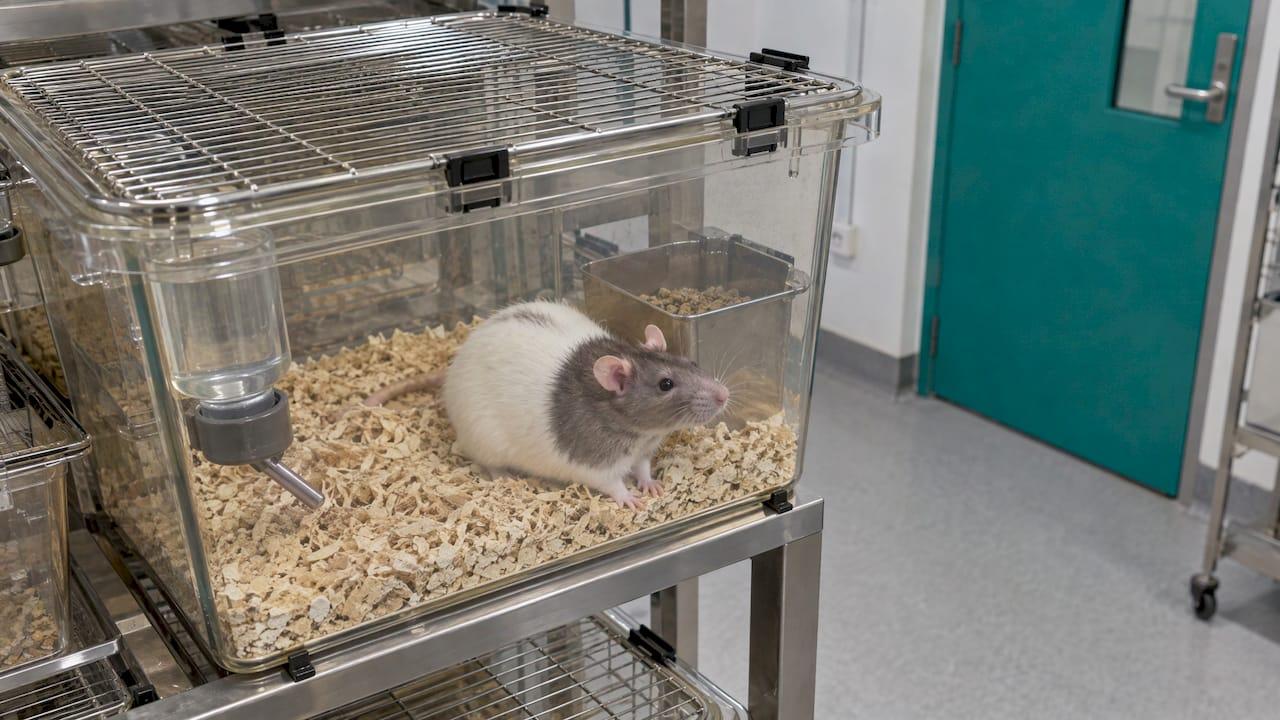
An animal model is a defined combination of species, challenge and route of exposure that reproduces a human disease process closely enough to test a compound before any human work. In peptide research it is the step between cell assays and clinical trials. This guide explains how the models are chosen, how studies are built, what Australian rules govern them, and how to read a rodent result without over-reading it. It also covers why the quality of the peptide itself decides whether a study can be interpreted at all, which is where documented, HPLC-verified material matters.
TL;DR
- An animal model pairs a species with a disease-inducing challenge and a route of exposure. The FDA's guidance describes a well-characterized model as one that has been evaluated for responsiveness.
- Species are chosen for pharmacological relevance, pharmacokinetics, target cross-reactivity and available background data, not convenience.
- In Australia, animal studies need approval from an animal ethics committee under the national Code, and the 3Rs (Replacement, Reduction, Refinement) apply at every stage.
- Rodent results are preclinical evidence. They are not dosing guidance for people.
- A study is only as interpretable as its test article. Peptides with ≥99% HPLC purity and batch documentation remove one variable from the design.
Table of Contents
- What an animal model means in peptide research
- How researchers choose the species
- How peptide studies are designed, dosed and measured
- What animal studies of peptides have reported
- Australian requirements for animal-based peptide studies
- Reading animal results without over-reading them
- Why test-article quality is part of the study design
- Perspective
- Research-grade peptides for laboratory studies
- FAQ
- Sources
What an animal model means in peptide research
The FDA defines an animal model as a specific combination of animal species, challenge agent and route of exposure that produces a disease process corresponding in multiple important aspects to the human condition. The word "model" matters. A mouse does not stand in for a person. It reproduces selected features of a disease so a specific question can be tested: does this peptide change this readout, at this dose, by this route?
Typical examples in peptide work:
- Autoimmune models: non-obese diabetic (NOD) mice for type 1 diabetes, and experimental autoimmune encephalomyelitis (EAE) mice for multiple sclerosis.
- Inflammation models: chemically induced colitis in mice, or inflammatory pain in rats.
- Metabolic models: diet-induced obesity or diabetic rodents, used to test receptor agonist peptides.
- Tumor models: mouse melanoma, used to test peptides that affect tumor growth and vasculature.
A model comes before animal work in a chain. Cell-based assays and binding studies come first, and our guides on in vitro peptide testing methods and peptide receptor binding affinity cover that stage.
How researchers choose the species
Species choice is a scientific decision, and regulators write it down. A 2020 NC3Rs/ABPI review of 172 drug candidates found that every synthetic peptide had been tested in both a rodent and a non-rodent species for toxicology. The rat was used for 92% of synthetic peptides and non-human primates for half. The reasons given were pharmacological relevance, PK/ADME properties (how a compound is absorbed, distributed, metabolized and excreted), target cross-reactivity and the availability of background data.

The same review notes that ICH S6(R1), the guideline for biotechnology-derived products, requires toxicology studies only in pharmacologically relevant species. These are species that express the target receptor and respond to the product in a way similar to humans. The guideline discourages studies in non-relevant species because they can mislead.
In practice, three questions narrow the choice:
- Does the species express the receptor the peptide acts on? If the receptor differs, binding data from cells is the first check.
- Does the peptide survive long enough to act? Short peptides are broken down by proteases. Half-life differs between species, so pharmacokinetics decide the dosing schedule.
- Does a validated disease model exist in that species? Established strains with published baselines make results comparable across labs.
How peptide studies are designed, dosed and measured
Design details vary by question, but published peptide studies share a recognizable structure.
Groups and controls
A typical study has a vehicle control group (for example PBS), one or more peptide dose groups, and often a positive control, a compound with known activity in the model. In one colitis study, orally administered ES2-10 at 5 mg/kg was compared with sulfasalazine, an established anti-inflammatory drug. Group size, sex, age and strain are fixed in advance, since rodent strain, age and sex differences are a recognized source of variation between studies.
Route and dose
Doses are expressed per kilogram of body weight. Route changes exposure. A rat pharmacokinetic study of semaglutide compared oral, sublingual and subcutaneous delivery. It used a subcutaneous dose of 0.01 mg/kg and reported that sublingual dosing showed lower variability in plasma concentrations than oral dosing. The point for study design: the same peptide gives different exposure by route, so the route must match the question.
The pain study by Lohman and colleagues (2023) shows the level of detail to expect. It tested dynorphin-based kappa opioid receptor agonist peptides in a rat model of inflammatory nociception at 0.3 mg/kg given into the paw (n=6), and the effect was blocked by naloxone, which confirmed the receptor mechanism.
Readouts
- Disease incidence or severity: in the FhHDM-1 study, 50% of NOD mice were protected from type 1 diabetes versus 84% incidence in PBS controls (p<0.0001).
- Behavioral or functional scores: attack frequency in EAE mice, or pain thresholds in rats.
- Mechanistic markers: cytokines such as TNF and IL-6, receptor signaling pathways, vascular markers.
- Pharmacokinetics: plasma concentration over time, biodistribution in healthy or tumor-bearing mice.
Mechanistic readouts often rely on immunoassays. Mouse-target reagents, such as an anti-mouse ANPEP antibody, are the kind of tool used when a murine study needs a target-specific detection step.
What animal studies of peptides have reported
Published work gives a sense of the range. Each result below is specific to its model, dose and route.
| Study | Model | Peptide | Reported finding |
|---|---|---|---|
| Lund et al., 2016 | NOD mouse, EAE mouse | FhHDM-1 (68-mer) | 50% of NOD mice protected from type 1 diabetes versus 84% incidence in controls; fewer EAE attacks; effect linked to suppressed macrophage TNF and IL-6 secretion |
| Cobos et al., 2022 | TNBS colitis in mice | AIP2-20, AIP1-13, ES2-10 | Protection against colitis; oral ES2-10 at 5 mg/kg comparable to sulfasalazine |
| Lohman et al., 2023 | Rat inflammatory nociception | Dynorphin-based KOP agonists | Antinociception comparable to morphine and U50486A at 0.3 mg/kg, with reduced desensitization |
| Ashlaw et al., 2025 | Animal models of diabetes and obesity | Monomeric dual MC4R/GLP-1R agonist | Multi-receptor approach reported for metabolic disease |
| Beta2-GPI study, 2020 | Mouse melanoma | β2-GPI-derived peptides | Increased sFlt-1 secretion; reduced tumor growth and vascular markers |
Two patterns stand out. First, peptide design is iterative: the hookworm work used a downsizing approach to reach peptides of 20 residues or fewer and identified a conserved helical region tied to the anti-inflammatory effect. Second, mechanism is reported alongside outcome. Readers who work on immune questions will find the study sequence laid out in our six-step lab pipeline for immunology peptide models and in the overview of autoimmunity peptide research. For metabolic readouts, see peptides in adipose tissue research.
Australian requirements for animal-based peptide studies
Any animal work in Australia sits under the Australian code for the care and use of animals for scientific purposes, published by the NHMRC. The Code applies to live non-human vertebrates and cephalopods. It is adopted into legislation in all states and territories, and compliance is a prerequisite for NHMRC funding. The NHMRC page notes that the Code is under review, so check it for the current version.
An animal ethics committee (AEC) must be satisfied that a project:
- has scientific merit;
- uses animals only where no suitable replacement exists;
- uses the minimum number of animals needed;
- applies the 3Rs at all stages.
The Code also says death as an endpoint must be avoided unless essential to the project's aims.
State and territory law adds detail. The ACT incorporates the Code through its 2014 Code of Practice, requiring justified animal use, minimum numbers and AEC approval. New South Wales' Animal Research Act 1985, in its version in force from 3 April 2026, requires accreditation of research establishments, animal research authorities for individual researchers and supplier licenses. Its committees must include at least one independent member who is not involved in animal research.
Victorian researchers should confirm requirements with their institution's AEC. The practical consequence for anyone planning a study: the protocol, including the source and quality of the test article, goes through ethics review before the first animal is dosed.
Reading animal results without over-reading them
An animal study answers a narrow question in a controlled system. Three limits shape how to read it.
Species specificity. The 2018 review of the peptide hormone relaxin points to species specificity and immunogenicity when a human peptide is given to animals, along with differences across rodent strains, ages and sexes, and differences in treatment duration. A result belongs to the species, strain and protocol that produced it.
Dose scaling. A mg/kg figure in a mouse paper is a number tied to that model. It is not a recommendation for any other species, and it is not human dosing information.
Preclinical status. Animal findings generate hypotheses for further work. The review above makes the case for careful model selection and for models that match the disease question.
For gym-focused readers in Melbourne and elsewhere in Australia: published rodent data describes laboratory research. Research-grade peptides are supplied for laboratory use, not for human or veterinary use. If you have a health or performance question, take it to a doctor.

Why test-article quality is part of the study design
When a peptide group differs from the vehicle group, the conclusion assumes the vial contained the intended sequence at the stated purity. Impurities, truncated sequences and aggregates are variables that can change an outcome without appearing in the protocol. For that reason, identity and purity data are part of the methods section of a careful paper.
Three practical points for labs:
- Identity: mass spectrometry confirms the molecular mass matches the intended sequence.
- Purity: HPLC quantifies the main peak against impurities.
- Traceability: a batch-specific Certificate of Analysis (COA) lets a later experiment be tied to the same material.
Handling matters as well. Peptides can aggregate in solution, which changes effective concentration. Our guide on how to prevent peptide aggregation covers testing one residue at a time, and the notes on selecting peptides for cell culture apply to the in vitro work that precedes animal studies.
Perspective
Animal-model papers are only as reproducible as their materials section. When a lab repeats a published peptide experiment, the first question is whether the material matches: same sequence, same purity, same batch documentation.
That is why we work to a fixed standard. Each compound in our catalog of over 22 is independently tested, HPLC-verified to ≥99% purity, and supported by batch documentation. Certificates of Analysis are available on request.
For researchers planning an immunology, metabolic or tissue repair study, the sourcing decision belongs in the protocol, next to species, route and dose. We supply the documentation so that decision can be recorded.
Tintastic
Research-grade peptides for laboratory studies
Peptastic Labs supplies independently tested, research-grade peptides across metabolic, cognitive and neuro, tissue and repair, longevity, cosmetic science, hormone and reproductive categories, plus blends, ancillaries and reagents. Each is HPLC-verified to ≥99% purity with full batch documentation, and COAs are available on request. Bulk and wholesale options are available for institutional volumes. Browse the full peptide catalogue to match compounds to your study design.
For deeper reading on the immune side of animal work, see four translational paths for immunomodulatory peptides and the role of peptides in immune modulation.
FAQ
What is the most common animal used in peptide studies?
Rodents dominate. In the NC3Rs/ABPI review of 172 drug candidates, the rat was used for 92% of synthetic peptides in toxicology work, alongside a non-rodent species. Mice are the usual choice for disease-model efficacy studies such as NOD diabetes or EAE.
Do animal studies in Australia need ethics approval?
Yes. The Australian Code requires approval from an animal ethics committee, and it is adopted into law in all states and territories. The committee must be satisfied that the work has scientific merit, that animals are essential, that numbers are minimized and that the 3Rs are applied.
Can I use a mouse dose as a dose for people?
No. A mg/kg dose in a mouse is specific to that species, strain, route and model. Published animal doses describe laboratory protocols. For personal health or training questions, see a doctor.
Why does the peptide's purity matter in an animal study?
The result is attributed to the peptide, so the peptide has to be what the protocol says it is. HPLC purity and mass spectrometry identity data, tied to a batch through a Certificate of Analysis, document that.
Sources
- FDA, Product Development Under the Animal Rule
- Justification for species selection for pharmaceutical development (NC3Rs/ABPI review, 2020)
- Lund et al., 2016, Scientific Reports: parasite-derived 68-mer peptide
- Peptides derived from hookworm, Frontiers in Medicine, 2022
- Lohman et al., Frontiers in Pharmacology, 2023
- Ashlaw et al., Metabolism, 2025
- Beta2 Glycoprotein I-derived therapeutic peptides, 2020
- Peptide hormone relaxin: from bench to bedside, 2018
- Single-dose pharmacokinetics of sublingual semaglutide in rats
- NHMRC, Australian code for the care and use of animals for scientific purposes
- ACT Animal Welfare Code of Practice 2014 (No 1)
- Animal Research Act 1985 (New South Wales)