
Yes, peptide affiliate programs can be a reliable revenue stream, but only for creators who choose programs on payout durability, compliance support, and documented product quality rather than headline commission. A 30% rate means nothing if refunds, processor reserves, and payout holds eat most of it before your first transfer arrives. Prioritize written terms, third-party testing, and clear disclosure rules over the biggest number on the landing page.
TL;DR:
- The net payout often drops significantly after refunds, reserves, and chargebacks are factored in, making high commission rates less meaningful.
- Proven program durability depends on clear refund policies, low chargeback rates, and verified third-party testing, not just initial payout promises.
- Testing tracking accuracy with small purchases and securing written terms before scaling are essential to avoid future revenue losses.
- Peptastic Labs offers verified, high-purity peptides with transparent documentation, tiered commissions, and real-time tracking, making it a trustworthy choice.
- Consistent, compliant, and well-documented affiliate relationships sustain long-term earnings better than one-off high-paying promotions.
Table of Contents
- How Do Peptide Affiliate Programs Actually Pay Out?
- What Actually Determines Whether a Program Is Worth Joining?
- How Do You Join, Test, and Validate a Program Before Scaling Traffic?
- What Makes Peptastic Labs a Credible Program to Join?
- Building a Sustainable Affiliate Strategy in the Peptide Niche
- Ready to Promote Research-Grade Peptides With Real Documentation?
- Sources
- FAQ
How Do Peptide Affiliate Programs Actually Pay Out?
Most programs run on one of three models: flat revenue share, cost-per-acquisition (CPA), or a hybrid that pays a bounty per sale plus a smaller ongoing percentage. Tiered structures are common across the category. One published example shows commission scaling from 10% for new affiliates to 30% for top performers, with rates climbing as your sales volume increases.
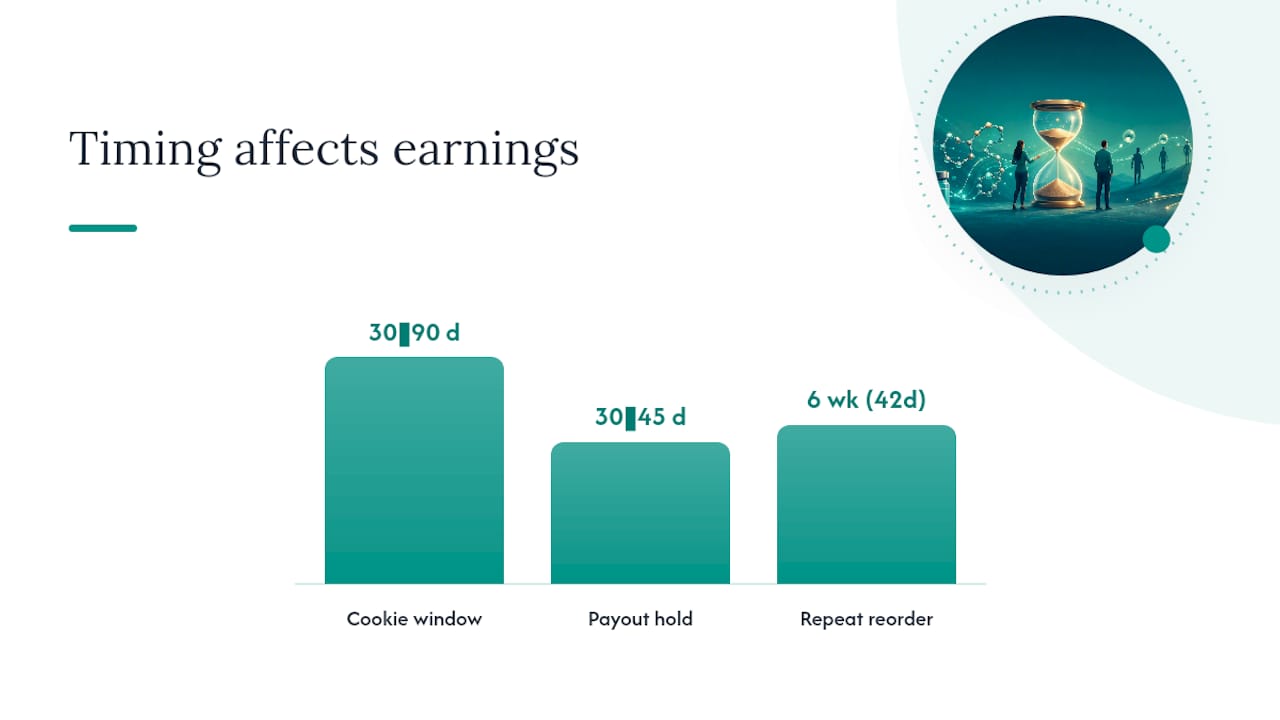
Attribution is where programs actually differ. A tracking link drops a cookie in the browser; a discount code attributes the sale at checkout regardless of the link clicked. Cookie windows in the space typically run 30 to 90 days. Some programs extend attribution to repeat orders inside that window, which matters enormously for lifetime earnings on a customer who reorders every six weeks.
Beyond the rate itself, a handful of mechanics decide whether a program is worth your time:
- Payment methods and timing. Monthly payouts are standard, usually via bank transfer, PayPal, or crypto, often with a 30 to 45 day hold on the first cycle.
- Promotional assets. Established programs supply creative banners, COAs, disclosure templates, and a login dashboard for real-time reporting.
- Program restrictions. Expect bans on branded-keyword ad bidding, self-referrals, and any claim implying a peptide treats or cures a condition.
- Recurring attribution. Some programs pay only on the first sale; others credit every reorder inside the cookie window.
None of this shows up in a five-second scan of a sign-up page. You have to read the terms.
What Actually Determines Whether a Program Is Worth Joining?
Commission rate is the least reliable predictor of what lands in your account. Program durability, the operational stuff that determines whether an offer keeps paying at scale, matters more, and it's usually buried in fine print rather than the pitch page.
Run through this order before you commit traffic:
- Model the net payout, not the gross rate. Subtract expected refunds, chargebacks, and processor reserves from the advertised commission. A 25% rate with a 12% refund rate and a rolling reserve pays a lot less than a 15% rate on a program with tight fulfillment and low return volume.
- Check the billing model. One-time purchases carry lower clawback risk than subscriptions, where a canceled renewal months later can claw back a commission you already spent.
- Read the compliance package. Look for a disclosure template, a documented list of prohibited claims, and whether content needs pre-approval before it goes live.
- Verify operational trust signals. Confirm the vendor publishes Certificates of Analysis or third-party test results, and that the billing descriptor on a customer's statement matches the brand name (mismatched descriptors drive disputes and refund requests).
- Test the tracking. Ask whether the dashboard shows real-time clicks and conversions, and get a straight answer on link versus code attribution before you build a campaign around either.
Program durability, meaning refund handling, reserve percentages, and how cleanly a payout reconciles with a customer's actual order, determines whether an offer survives past its first few months far more than the number printed on the sign-up page.
Pro Tip: Ask for a program's chargeback rate before you ask about the commission tier. A vendor that won't share that number, even in general terms, is telling you something.
How Do You Join, Test, and Validate a Program Before Scaling Traffic?
Applications typically ask for your platform (blog, YouTube, newsletter), audience size, and how you plan to promote. Approval usually lands within a few business days, sometimes instantly for smaller programs.
Once you're in, treat your first few weeks as a testing phase, not a launch:
- Generate your referral link and, separately, activate any discount code the program provides.
- Run a small test purchase through your own link and confirm it appears correctly attributed on the dashboard within 24 to 48 hours.
- Add UTM parameters to your links so you can cross-check dashboard numbers against your own analytics.
- Reconcile the dashboard's reported order against the actual order confirmation before trusting the system at scale.
Best practice here is straightforward: run controlled, small-dollar test purchases and compare what the dashboard reports against what actually shipped, rather than assuming the tracking works because the program says it does.
Before you put any paid budget behind a program, get four things in writing: payout cadence, clawback and reserve rules, the list of prohibited promotional practices, and the refund window customers get. After launch, watch three numbers monthly: your approval rate on submitted content, chargeback trends, and whether payout reconciliations match your own tracking. A program that stalls on any of those three during your first payout cycle may indicate future performance.
What Makes Peptastic Labs a Credible Program to Join?
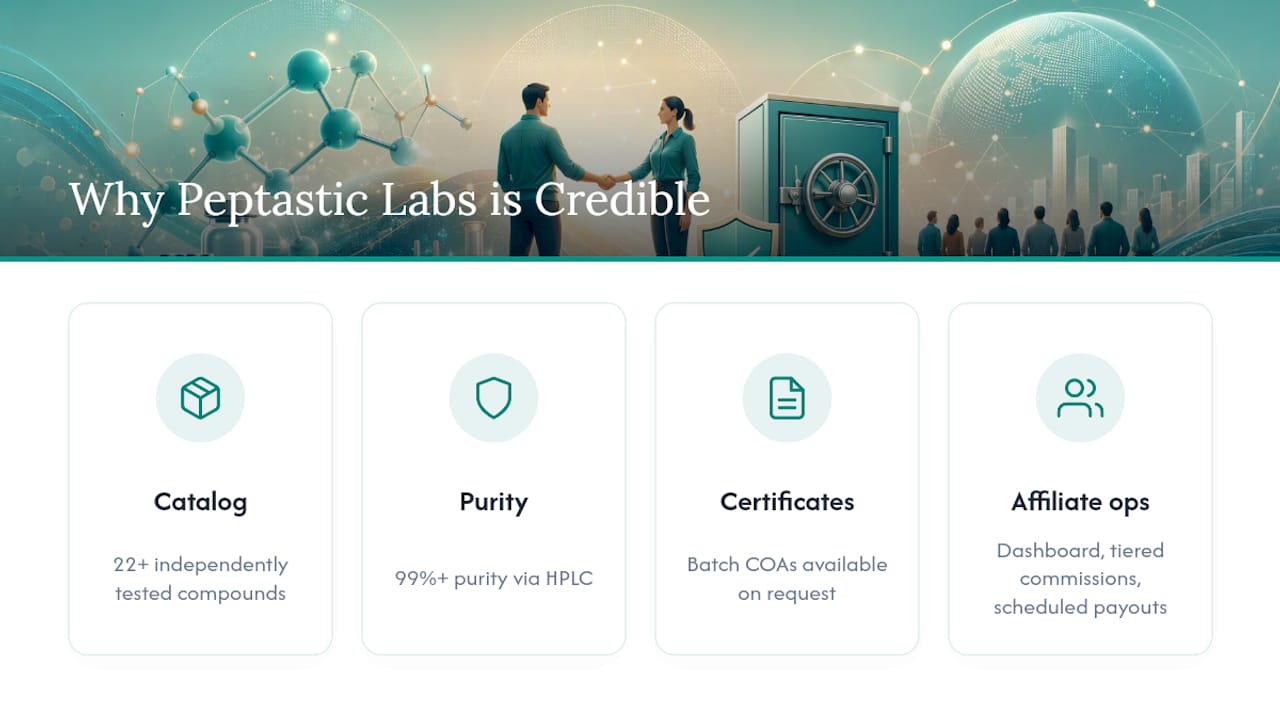
Peptastic Labs runs a catalog of more than 22 independently tested compounds, each verified to 99% purity or higher through HPLC, with batch-specific Certificates of Analysis available on request. For an affiliate, that documentation is the difference between promoting a product you can defend to your audience and promoting one you're hoping nobody asks about.
The affiliate structure includes tiered commissions, recurring attribution windows, a real-time affiliate dashboard for tracking, creative assets, and regular payout scheduling.
Creators working in regulated research niches should also review Peptastic Labs' guides on what research-grade peptide purity standards actually mean and how third-party testing works, since both explain the documentation you'll be pointing your audience toward. During onboarding, ask for sample payout rules and compliance templates in writing. A program confident in its own terms will hand them over without hesitation.
Building a Sustainable Affiliate Strategy in the Peptide Niche
The programs that last aren't the ones with the biggest first-month check. They're the ones you can still explain to your audience, and defend to yourself, a year later. Build for repeatable earnings and clean compliance, not the one viral post that pays out big and then disappears.
Treat every affiliate relationship like a vendor contract, because that's what it is. Keep the written terms, log your test purchases, and model your projections conservatively, with room for refunds and reserve holds you didn't plan for. Programs with transparent, boring rules tend to outlast the ones that lead with excitement.
— Tintastic
Ready to Promote Research-Grade Peptides With Real Documentation?
Peptastic Labs provides a catalog with Certificates of Analysis available for compounds, helping affiliates promote products with supporting documentation. Instead of chasing a headline commission on unverified stock, you're linking to batch-documented, HPLC-tested peptides your audience can actually check.
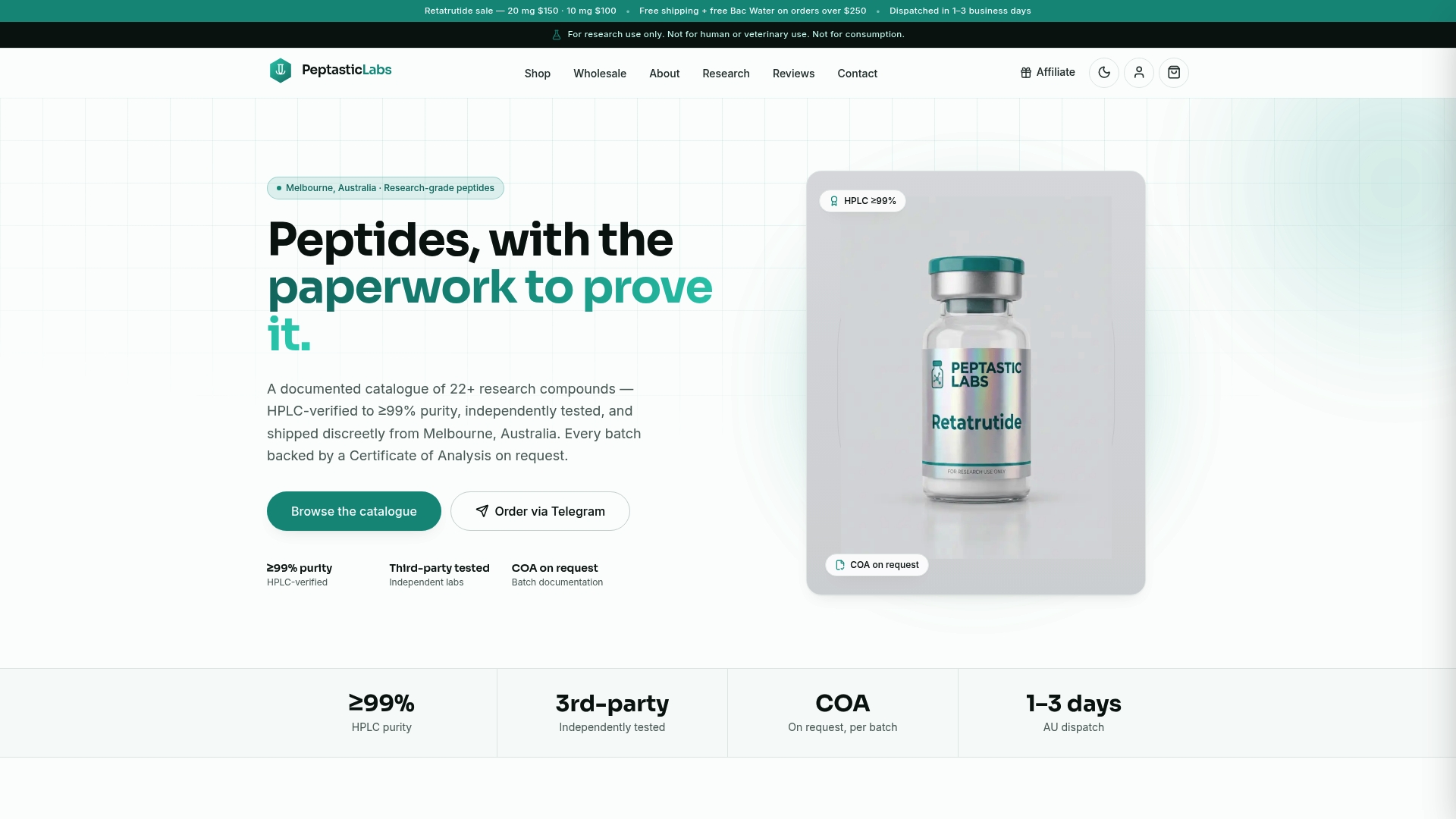
Starter perks include tiered commissions, Certificates of Analysis on request, an affiliate dashboard with real-time tracking, and sample disclosure language for content adaptation. If you're building out paid campaigns, a partner like BabyLoveGrowth covers the traffic side of scaling an affiliate operation once your tracking is solid.
To apply, visit the Peptastic Labs site and submit your platform details through the affiliate sign-up page. Onboarding support walks you through activating your link, requesting your first COA samples, and confirming payout terms before you publish a single post.
Sources
Key references for the compliance and program-design claims above: the FTC's disclosure standard for affiliate endorsements, an industry breakdown of peptide affiliate regulatory lanes, and published program terms showing tiered commissions and cookie windows.
- Healius Peptides affiliate program — commission tiers, 90-day attribution
- FTC’s view on affiliate marketing for peptide brands — Your Peptide Brand
FAQ
What Are the Best Peptide Affiliate Programs?
The best programs combine tiered commissions with recurring attribution windows, published payout terms, and third-party tested products with available COAs. Peptastic Labs meets that bar with documented purity testing and a dashboard-based tracking system.
How Do You Become a Peptide Affiliate?
Apply directly through a program's affiliate page with details on your platform and audience, wait a few business days for approval, then test your referral link with a small purchase before promoting it widely.
What Is the Highest-Paid Affiliate Program in This Space?
There's no single fixed answer since rates vary by tier and vendor, but published examples show top-performer tiers reaching around 30% commission after volume thresholds are met. Net earnings after refunds and reserves usually matter more than the top-line percentage.
How Can You Become a Peptide Distributor?
Distributor relationships (bulk purchasing and resale) differ from affiliate marketing (referring customers for a commission); most research-grade peptide suppliers, including Peptastic Labs, offer wholesale inquiry channels separate from their affiliate sign-up.
Do Peptide Affiliates Have to Disclose Their Relationship?
Yes. The FTC requires that affiliates disclose material connections clearly and conspicuously, placed near the affiliate link or endorsement itself, not buried in a footer or bio.