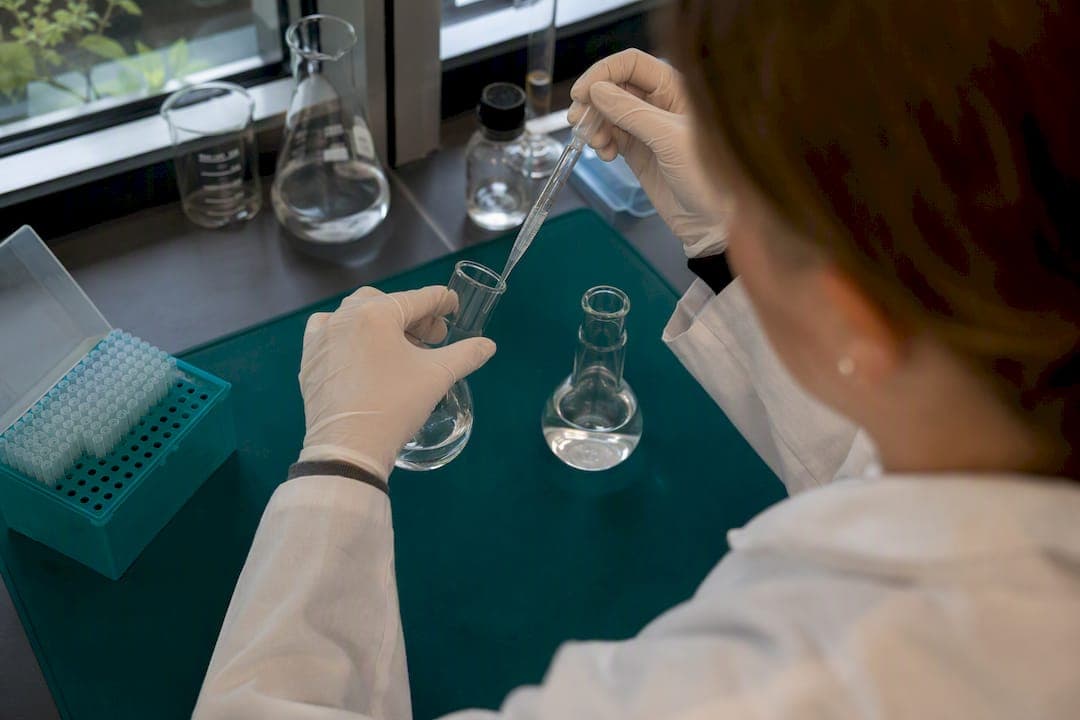
If you're running cell-based assays, in vivo studies, or API development, remove trifluoroacetic acid (TFA) from your synthetic peptides before you start. The recommended default is HCl counter-ion exchange: repeated dissolution in dilute HCl, flash freezing, and lyophilization. This procedure is validated across peer-reviewed protocols and consistently pushes residual TFA below the limit of quantification (LoQ) for sensitive applications.
Your target should be residual TFA below the analytical limit of quantification (LoQ) for assays where trace acid can skew results. Detection methods like 19F-NMR, HPLC-ELSD, and FT-IR confirm when you've hit that mark.
- Default method: HCl counter-ion exchange (2–10 mM HCl, freeze, lyophilize, repeat)
- Target: below LoQ or <1% residual TFA for cell-based/in vivo work
- Watch for: cationic sequences (Arg/Lys/His-rich), which bind TFA more tightly and may need extra cycles
Key Takeaways
HCl counter-ion exchange at 2 to 10 mM, validated by 19F-NMR or HPLC-ELSD, reliably reduces residual TFA below detection without harming peptide purity.
| Point | Details |
|---|---|
| Default removal method | Use HCl counter-ion exchange at 2–10 mM, repeated two to three cycles, confirmed between cycles by 19F-NMR or HPLC-ELSD. |
| Watch cationic sequences | Arg/Lys/His-rich peptides bind TFA more tightly and often need additional exchange cycles beyond the standard count. |
| Lyophilization alone isn't enough | Freeze-drying removes free TFA but not counter-ions bound to charged side chains; exchange is required for bound acid. |
| Report the salt form | State whether structural, permeability, or binding data was collected on the TFA salt or the exchanged form. |
| Choose validated sourcing | Peptasticlabs supplies HPLC-verified peptides at ≥99% purity with batch documentation and COAs available on request. |
Table of Contents
- What Is TFA Removal in Peptides and Why It Matters
- Validated HCl Exchange Protocol and Alternative Methods
- How to Confirm TFA Removal: Detection Methods and Thresholds
- Should You Do TFA Removal In-House or Hire a Service?
- Peptastic Labs: What Documented TFA Removal Should Look Like
- Does Residual TFA Affect Peptide Folding and Structure?
- TFA Interference in Mass Spectrometry and NMR Analysis
- Purity and Yield Before and After TFA Removal
- Safety and Environmental Handling of TFA in the Lab
- Storing Peptides After TFA Removal
- An Editorial Take on Where TFA Removal Protocols Fall Short
- Get Validated, TFA-Reduced Peptides From Peptasticlabs
- Sources
What Is TFA Removal in Peptides and Why It Matters
Trifluoroacetic acid is the cleavage reagent that liberates peptides from resin during solid-phase synthesis, and it doesn't leave quietly. It sticks around as a counter-ion, paired electrostatically with protonated amine groups on arginine, lysine, and histidine side chains. That residual acid isn't a cosmetic issue. It interferes with biological assays, alters cell proliferation readouts, and in some systems produces measurable cytotoxicity even at trace concentrations.
There's also a mass and weight bias problem researchers underestimate. A peptide sample weighed with bound TFA counter-ions will report a molecular weight and net peptide content that doesn't match the actual peptide backbone. If you're dosing by weight in an in vivo study, that discrepancy compounds fast. Sequence dependence makes this worse: residual TFA content varies from about 10% to 45% of peptide weight depending on how many basic residues are present, so a highly cationic sequence can carry nearly half its measured mass as bound acid, not peptide.
For anyone running quantitative pharmacology, structure-activity work, or regulatory-track studies, that variance alone justifies routine TFA removal rather than treating it as an edge case.
Validated HCl Exchange Protocol and Alternative Methods
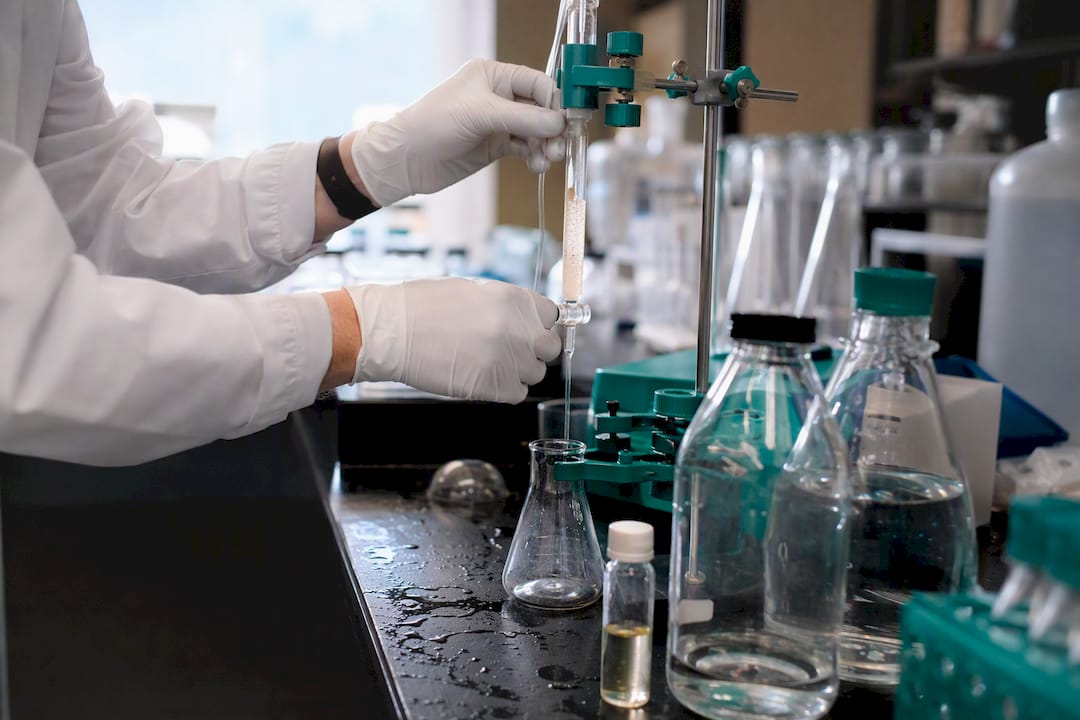
The standard laboratory procedure for TFA removal is counter-ion exchange using dilute hydrochloric acid, and it's been validated across multiple peer-reviewed studies as effective without degrading peptide purity.
Stepwise HCl exchange protocol:
- Dissolve the lyophilized peptide fully in a dilute HCl solution, targeting a final concentration between 2 mM and 10 mM.
- Freeze the solution quickly, ideally in liquid nitrogen, to prevent ice crystal formation that can affect peptide structure.
- Lyophilize to dryness.
- Repeat the dissolve-freeze-lyophilize cycle at least twice; most neutral peptides reach acceptable TFA levels within two to three cycles.
- Confirm residual TFA by 19F-NMR or HPLC-ELSD between cycles rather than assuming completion after a fixed number of repeats.
A consensus study published in 2025 identified 10 mM HCl as the optimal exchange concentration, reducing TFA below the limit of quantification without measurable impact on peptide purity. That figure isn't arbitrary. The optimal window sits between 2 mM and 10 mM: go too low and exchange is incomplete, go too high and you risk acid-catalyzed hydrolysis, particularly deamidation or backbone cleavage at sensitive motifs. Validate concentration on a small test aliquot for each new sequence before scaling.
Pro Tip: Don't assume freeze-drying alone solves the problem. Lyophilization removes free, unbound TFA in solution, but it does nothing for TFA counter-ions bound stoichiometrically to charged side chains. Bound TFA requires an actual exchange step, not just drying.
Two alternatives suit specific situations better than repeated HCl cycling:
Acetate exchange via ion-exchange resin works well for larger batches. Run the peptide over an anion-exchange resin eluted with sodium acetate, and confirm exchange completeness by HPLC-ELSD. Resin capacity should run 10 to 50 times the anion sites present on the peptide, and a control peptide run alongside the batch catches partial exchange before it reaches your freezer.
RP-HPLC exchange integrates counter-ion swapping into a purification step you're likely already running, which saves time for peptides already scheduled for HPLC cleanup. For detailed dissolution and buffer-handling notes during these cycles, Peptasticlabs's peptide solubility guide covers practical handling considerations that matter during repeated freeze cycles.
How to Confirm TFA Removal: Detection Methods and Thresholds
Three analytical techniques dominate validated TFA detection work, each measuring something slightly different.
19F-NMR detects fluorine directly, giving you a quantitative readout of residual TFA independent of peptide structure. It's the most direct method for confirming counter-ion exchange, since TFA is essentially the only fluorine source in a typical peptide sample.
HPLC-ELSD (evaporative light scattering detection) separates and quantifies TFA alongside peptide peaks without requiring a UV-active chromophore on the acid. ATR-FTIR picks up characteristic TFA carbonyl and C-F stretching bands, useful as a faster screening method before committing to NMR time. All three were adapted and validated according to ICH-aligned method comparison standards in recent consensus work.
For acceptance thresholds, aim for residual TFA below the assay's LoQ, or under roughly 1% by weight for cell-based and in vivo applications where trace acid could confound results. Report counter-ion content explicitly rather than assuming a "purified" peptide is TFA-free by default.
A practical QC workflow: prepare a representative sample from each lyophilization cycle, choose 19F-NMR for definitive quantification or HPLC-ELSD when you need it folded into existing purification analysis, and document results per batch. Third-party testing adds an independent verification layer that matters when results feed into publications or preclinical filings.
- 19F-NMR: direct, quantitative, gold standard for confirming exchange
- HPLC-ELSD: integrates with existing purification QC, no chromophore needed
- ATR-FTIR: fast screening, less precise at very low residual levels
- Ion chromatography: useful for confirming counter-ion identity (chloride vs. acetate) post-exchange
Should You Do TFA Removal In-House or Hire a Service?
The decision usually comes down to assay sensitivity, batch scale, and whether you need documented QC for external review.
Outsource when:
- Your work feeds into API development or a GLP-aligned pathway requiring traceable, validated documentation
- You lack in-house lyophilization or NMR access to confirm exchange completeness
- You're processing large batches where resin capacity and consistency become logistical problems
- Regulatory or publication reviewers will expect a Certificate of Analysis (COA)
DIY is reasonable when:
- You're running a small pilot assay where peptide will be heavily diluted before use
- The downstream application isn't pH-sensitive
- You have access to lyophilization equipment and at least HPLC-ELSD for confirmation
Pro Tip: Before ordering from any provider, ask for the exchange method used, number of cycles performed, residual TFA value with the analytical method that produced it, and a COA you can attach to your own lab records.
Peptastic Labs: What Documented TFA Removal Should Look Like
A quality provider doesn't just claim low TFA. It shows you the data. Every compound Peptasticlabs supplies is independently tested and HPLC-verified to ≥99% purity, with batch documentation available on request, exactly the kind of paper trail you should expect before trusting a vendor's counter-ion claims.
When you're evaluating a peptide source for cell-based or in vivo work, the deliverables that matter are specific: the exchange or purification method used, the analytical technique that confirmed residual TFA (19F-NMR, HPLC-ELSD, or FT-IR), the numeric result, and a signed Certificate of Analysis tying that data to the batch you're actually receiving.
Typical deliverables from a rigorous provider include:
- Test method disclosed (not just a purity percentage with no method attached)
- Residual TFA or counter-ion value stated numerically
- COA with batch-specific documentation
- Handling and reconstitution notes appropriate to the counter-ion form supplied
If your protocol calls for a specific salt form, acetate instead of chloride, for example, ask the supplier directly whether custom counter-ion exchange or extended QC reporting is available. Peptasticlabs's Certificate of Analysis guide walks through what a properly documented COA should contain, useful reference before you accept any vendor's data at face value.
Does Residual TFA Affect Peptide Folding and Structure?
Bound TFA counter-ions sit on protonated side chains, which changes the local charge environment a peptide presents in solution. For peptides that depend on specific charge distribution to fold correctly, particularly amphipathic helices and cell-penetrating sequences, that altered charge state can shift folding kinetics or stabilize a conformation that doesn't match the physiological form you're trying to study.
Counter-ion identity also changes lipophilicity. Swapping TFA for chloride or acetate alters membrane permeation behavior in cell-penetrating peptides, which matters directly if your assay depends on a peptide crossing a lipid bilayer at a predictable rate. A peptide validated with TFA as the counter-ion may behave differently once exchanged, so if permeability data already exists for a specific salt form, don't assume it transfers automatically after exchange.
This isn't an argument against TFA removal. It's an argument for reporting the salt form alongside your data. If you're publishing binding affinity, permeability, or structural data, state whether you tested the TFA salt or the exchanged form. Reviewers increasingly expect this level of detail, and it prevents a downstream lab from failing to reproduce your result simply because they used a peptide with a different counter-ion.
TFA Interference in Mass Spectrometry and NMR Analysis
Residual TFA doesn't just sit inertly in your sample. It actively interferes with two of the most common analytical techniques peptide researchers rely on.
In mass spectrometry, TFA is a well-documented source of ion suppression in electrospray ionization, particularly in negative-ion mode. Residual TFA competes for charge during ionization, which can suppress peptide signal intensity or introduce adduct peaks that complicate spectral interpretation. If you're running LC-MS on a peptide with heavy TFA loading, expect noisier baselines and potential underestimation of true peptide concentration.
In NMR analysis, TFA carries its own proton and fluorine signals that overlap with or obscure peptide resonances, especially in the aliphatic region where TFA's trifluoromethyl group can complicate integration. This is precisely why 19F-NMR works so well as a detection method for TFA itself, but it's also why researchers running structural NMR on the peptide need low residual TFA first. A peptide with 15% to 20% bound TFA by weight will show a measurably different NMR profile than the same peptide after exchange, not because the peptide structure changed, but because the counter-ion signal is no longer competing for spectral space.
Removing TFA before either analysis produces cleaner data and avoids misattributing an artifact to the peptide itself.
Purity and Yield Before and After TFA Removal
Researchers sometimes worry that counter-ion exchange will cost them peptide mass or introduce degradation. The peer-reviewed data doesn't support that concern when the protocol is run correctly. The 2025 consensus study found that 10 mM HCl exchange reduced TFA below the limit of quantification with no measurable impact on peptide purity, meaning HPLC purity profiles before and after exchange were statistically consistent.
Where researchers do see a shift is in reported mass and weight-based dosing, and this is arguably the more important number. A peptide carrying 20% to 30% bound TFA by weight will show a corresponding drop in "true" peptide content once that TFA is exchanged out, not because peptide was lost, but because the measured weight before exchange included acid that was never peptide in the first place. This is why weight-based dosing calculations should always reference the exchanged, TFA-reduced form rather than raw as-received mass.
Yield losses during exchange itself are typically modest for standard peptides when the protocol stays within the validated HCl concentration range. The bigger yield risk comes from going outside that window, using HCl concentrations well above 10 mM in an attempt to speed up exchange, which risks acid-catalyzed side reactions at sensitive motifs. Staying within validated parameters protects both purity and yield simultaneously.
Safety and Environmental Handling of TFA in the Lab
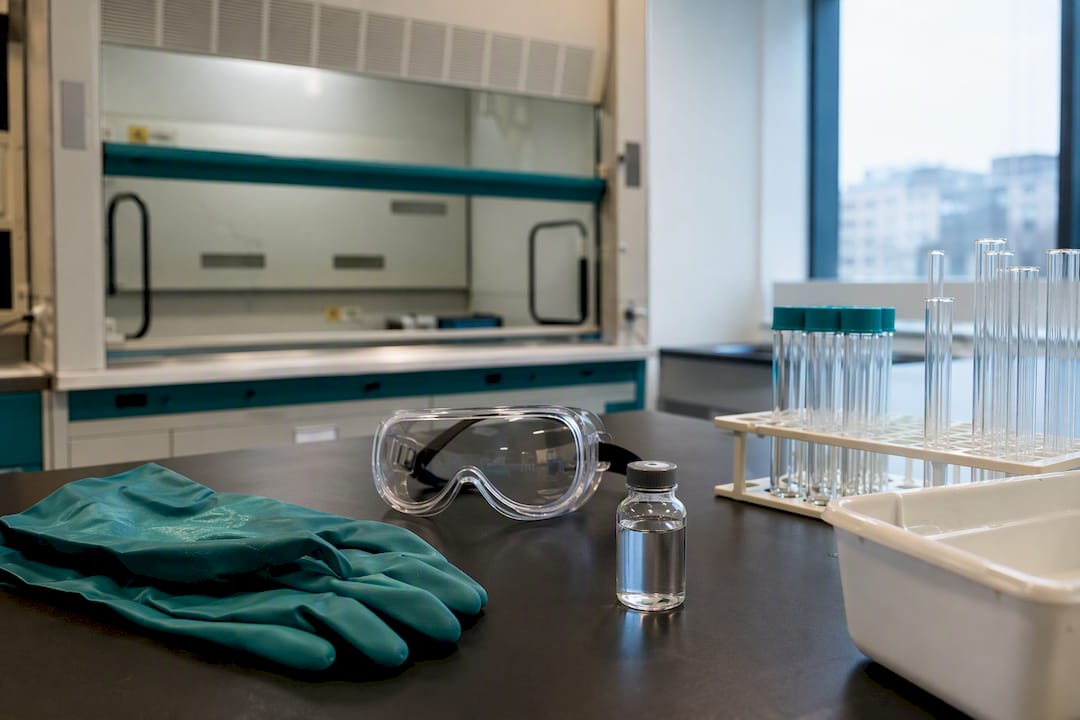
TFA is corrosive, volatile, and demands standard acid-handling precautions: fume hood use, appropriate gloves, and eye protection during cleavage and exchange steps. The dilute HCl solutions used in counter-ion exchange (2–10 mM) are far less hazardous than concentrated cleavage-stage TFA, but they still require standard acid-safety practice, particularly when scaling to larger batch volumes.
Environmental disposal deserves attention too. TFA is a persistent perfluorinated compound that doesn't break down readily in standard wastewater treatment, and it has drawn increasing regulatory scrutiny as a persistent environmental contaminant. Lab waste streams containing TFA, whether from cleavage reactions or exchange byproducts, should go through your institution's halogenated waste disposal protocol rather than standard aqueous waste. Check your local environmental health and safety guidelines before disposal, since requirements vary by institution and jurisdiction.
Ion-exchange resin waste from acetate exchange procedures also needs proper handling, since spent resin can carry concentrated TFA loads even after the peptide itself has been recovered. Label and segregate this waste stream separately from general lab consumables.
Storing Peptides After TFA Removal
Once you've exchanged TFA out, storage conditions deserve a second look, because the peptide's chemical environment has changed even if the sequence hasn't. Peptides in the chloride or acetate form can behave differently under freeze-thaw stress than the original TFA salt, particularly regarding solubility and aggregation tendency.
Lyophilized, TFA-reduced peptide should go into airtight containers with desiccant, stored at negative 20 degrees Celsius or below for long-term storage, consistent with standard peptide handling. Avoid repeated freeze-thaw cycles once reconstituted. If you've validated a specific counter-ion form for an assay, reconstitute in buffer matched to that form's solubility profile rather than reusing a buffer optimized for the original TFA salt. For sequences prone to acid-catalyzed degradation at sensitive motifs, especially after exposure to HCl during exchange, cold-chain storage becomes more important, not less, since residual acid exposure during processing can leave peptides marginally more vulnerable to hydrolysis over time. Peptasticlabs's storage guide covers the practical handling steps that protect exchanged peptide from degradation between receipt and use.
Document the counter-ion form and exchange date on your storage label. A peptide that sat six months post-exchange without documentation is a peptide you'll need to re-verify before trusting it in a sensitive assay.
An Editorial Take on Where TFA Removal Protocols Fall Short
Most lab guides treat TFA removal as a checkbox: run the HCl cycles, call it done. That's the gap worth naming. The peer-reviewed consensus around 10 mM HCl is solid, but it's a starting concentration, not a universal fix, and treating it as one-size-fits-all is exactly how cationic sequences end up under-exchanged in published work.
The more defensible practice is treating every new sequence as its own validation problem. Run a small test aliquot, check residual TFA between cycles instead of assuming a fixed cycle count clears it, and report the counter-ion form alongside any binding or permeability data. That last point gets skipped constantly, and it's probably the single biggest reproducibility gap in this corner of peptide chemistry.
Where the reader should focus first: don't optimize the removal method before you've picked the right detection method. A peptide "cleared" by a technique with a high LoQ isn't actually clear. Get the analytics right, then trust the protocol.
— Tintastic
Get Validated, TFA-Reduced Peptides From Peptasticlabs
Running your own HCl exchange protocol takes equipment, validated cycle counts, and analytical confirmation you may not have sitting in-house, especially if you're scaling past a pilot batch. Peptasticlabs solves that upstream: every compound in the catalog ships already verified to ≥99% purity by HPLC, with batch-specific documentation so you're not troubleshooting counter-ion issues mid-experiment.
The catalog spans more than 22 independently tested compounds across metabolic, cognitive, tissue repair, longevity, immunology, and cosmetic research applications, each backed by a Certificate of Analysis available on request. If your protocol calls for a specific counter-ion form or extended QC reporting, that's a conversation worth having before you order rather than after. Browse the current research-grade peptide catalog and request a COA for the batch you need, bulk and wholesale pricing is available for larger studies.
Sources
- Towards a Consensus for the Analysis and Exchange of TFA as a Counterion in Synthetic Peptides and Its Influence on Membrane Permeation — MDPI (2025)
- PMC — HCl exchange protocol (systematic study)