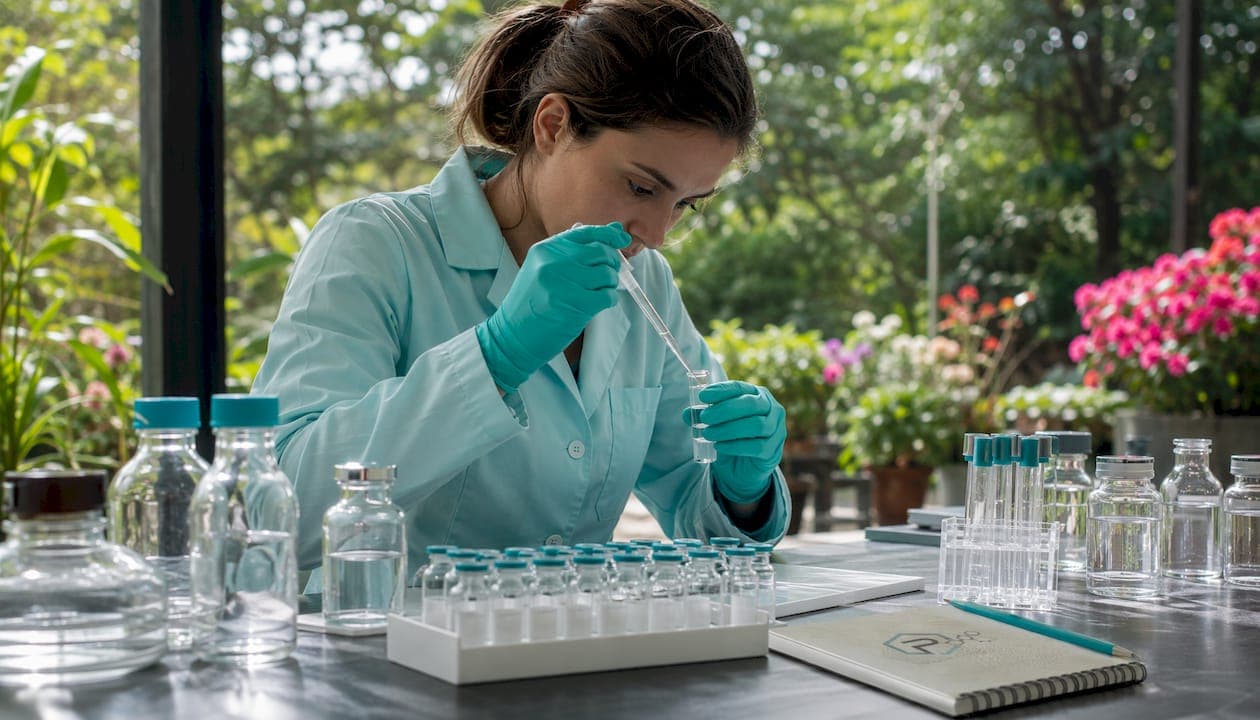
Sterility is an independent quality axis in peptide research, not a property you can infer from HPLC purity. A peptide verified at ≥99% purity can still carry viable bacteria, fungi, or endotoxin fragments that degrade the compound enzymatically, activate innate immune pathways in receptor assays, or destabilize cell cultures entirely. The compendial standard governing sterility testing for pharmaceutical and research materials is USP <71>, which requires a minimum 14-day incubation in two media: fluid thioglycollate medium (FTM) and soybean-casein digest medium (SCD). For researchers, the practical baseline is this: treat every research peptide as non-sterile unless the vendor provides documented sterility and endotoxin testing results.
Immediate actions to reduce contamination risk:
- Request a Certificate of Analysis (COA) that explicitly lists sterility method, incubation dates, and LAL endotoxin results. A COA showing only purity and identity has not addressed sterility.
- Reconstitute under a laminar flow hood using sterile, 0.22 µm-filtered diluent.
- Use bacteriostatic water (0.9% benzyl alcohol) for multi-dose vials only as a preservative between punctures, not as a sterilizing step.
- Run bacteriostasis/fungistasis (B/F) checks before accepting a sterility result for any peptide matrix.
- Add LAL endotoxin testing to any protocol involving cell culture or in vivo administration.
Pro Tip: HPLC purity does not equate to sterility. Purity, identity, quantity, and sterility are orthogonal properties. A ≥99% purity result tells you nothing about viable microbial load or endotoxin content.
Table of Contents
- What sterility testing is and why USP <71> sets the baseline
- Why sterility specifically matters in peptide experiments and reproducibility
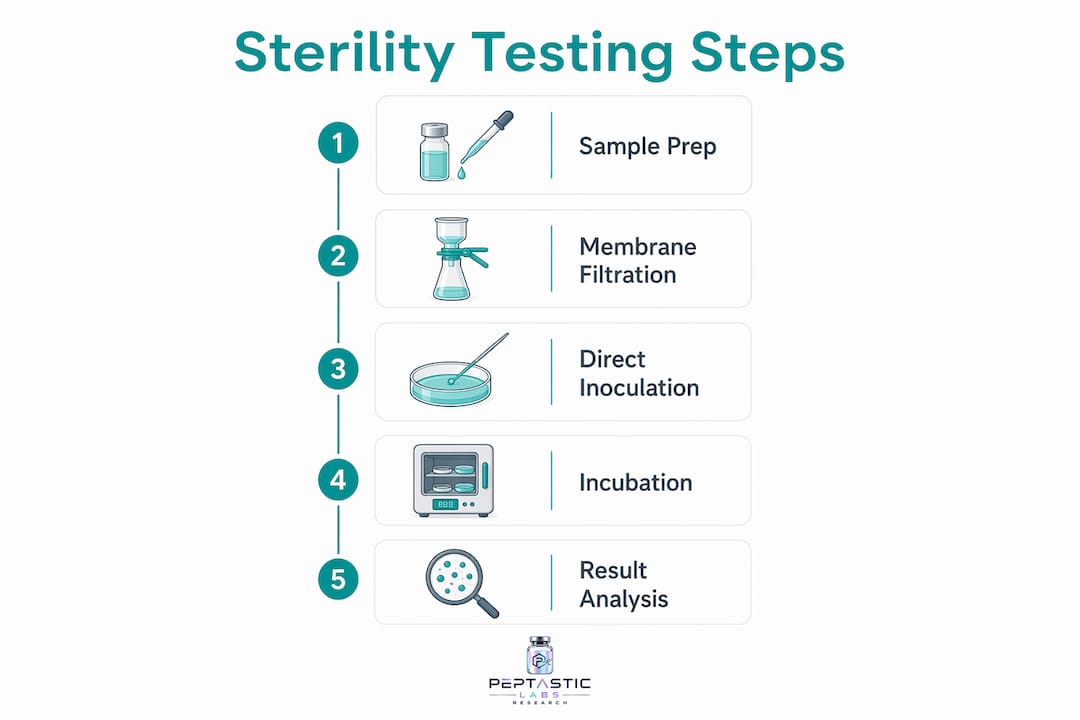
- Compendial sterility methods per USP <71>: membrane filtration vs. direct inoculation
- Growth media, incubation timelines, and the USP <71> 14-day rule
- Method suitability for peptide matrices: B/F checks, neutralizers, and validation
- Limitations of USP <71> for peptides and when rapid microbial methods add value
- How sterility, bioburden, and endotoxin testing differ and when to run each
- Practical aseptic technique and handling practices for peptides
- How a quality-focused supplier documents sterility and supports researcher confidence
- Key Takeaways
- The contamination problems that look like something else
- Peptasticlabs: research-grade peptides with documented QC at every batch
- Authoritative sources and recommended further reading
What sterility testing is and why USP <71> sets the baseline
Sterility testing determines whether a sample is free of viable microorganisms under defined test conditions. It is a binary, qualitative result: pass (no growth detected) or fail (growth detected). This is distinct from endotoxin testing, which uses the Limulus Amebocyte Lysate (LAL) assay to detect pyrogenic lipopolysaccharide fragments from gram-negative bacteria, and from bioburden testing, which quantifies total microbial load rather than confirming absence.
USP <71> is the primary compendial standard in the United States for sterility testing of pharmaceutical articles. It specifies two test methods (membrane filtration and direct inoculation), two growth media (FTM and SCD), a 14-day incubation period, and requirements for method suitability validation. Research peptides sold as lyophilized powders are typically not manufactured under pharmaceutical fill-finish conditions, so a vendor COA listing only purity usually omits sterility and endotoxin data entirely. The absence of those lines on a COA most commonly means those tests were not run, not that the sample passed them.
USP <71> has defined limits. It confirms absence of detectable viable organisms under the specific conditions of the test. It does not detect endotoxin, does not quantify microbial load, and cannot account for organisms that fail to grow in FTM or SCD under standard incubation conditions. For research peptides, method suitability validation is particularly important because the peptide matrix itself may interfere with microbial growth, producing false negatives.
Why sterility specifically matters in peptide experiments and reproducibility
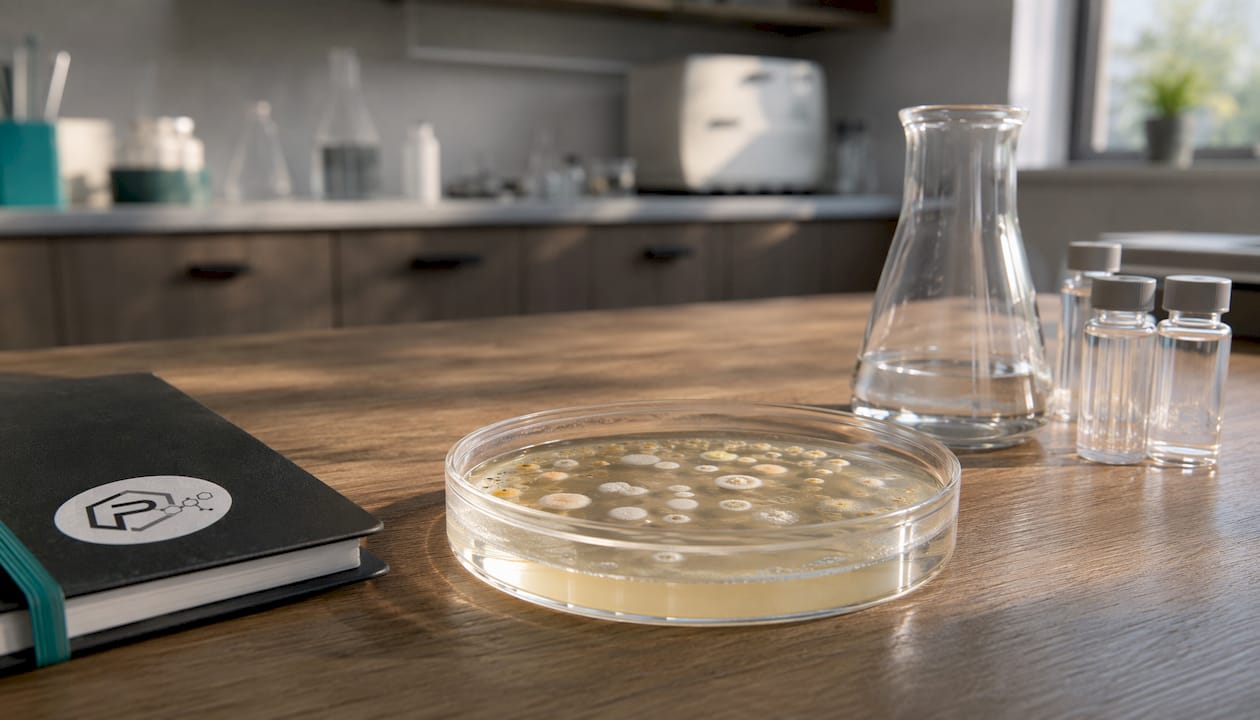
Microbial contamination in peptide samples produces two categories of harm: direct chemical degradation and indirect assay interference. Proteolytic and peptidolytic enzymes secreted by bacteria cleave peptide bonds, reducing bioactive concentration and altering the compound's sequence. This can happen within hours of contamination, well before turbidity or visible culture collapse appears.
The subtler problem is assay interference. Microbial metabolites can change cell behavior and gene expression without producing any visible sign of contamination. In receptor binding assays, endotoxin activates TLR4 and related innate immune receptors, generating signal that mimics or masks the peptide's intended pharmacological effect. In cell culture, even low-level contamination shifts morphology, proliferation rates, and cytokine profiles, producing data that looks plausible but does not replicate.
Reproducibility failure is the most costly downstream consequence. Contamination frequently produces good-looking data that simply does not hold up across runs or labs. A researcher who attributes irreproducible results to peptide batch variation may be looking at a sterility problem, not a synthesis problem. Checking peptide sequence integrity alongside sterility documentation is the correct diagnostic sequence.
Pro Tip: Never equate HPLC purity with sterility status. A peptide verified at ≥99% purity by HPLC has been assessed for chemical identity and quantity, not for viable organisms or endotoxin. These require separate, independent assays.
Compendial sterility methods per USP <71>: membrane filtration vs. direct inoculation
USP <71> specifies two methods. The choice depends on the physical and chemical properties of the peptide sample.
Membrane filtration
Membrane filtration is the preferred method for aqueous, filterable samples. The procedure:
- Pass the entire sample volume through a 0.45 µm membrane filter under aseptic conditions.
- Wash the membrane with sterile diluent to remove residual antimicrobial or bacteriostatic agents (e.g., benzyl alcohol from bacteriostatic water).
- Transfer the membrane, or sections of it, into FTM and SCD.
- Incubate for 14 days at the specified temperatures.
- Inspect for turbidity or visible growth at intervals and at the end of incubation.
For peptide samples, adsorption to the membrane is a documented concern. Hydrophobic or amphipathic peptides may bind to the filter material, reducing the effective sample load and potentially concentrating antimicrobial residues that inhibit growth. Adsorption controls must be included in method validation.
Direct inoculation
Direct inoculation is used when the sample cannot be filtered, such as oily preparations or samples with very low volume. The procedure:
- Transfer the specified volume of sample directly into FTM and SCD vessels.
- Mix gently to distribute the sample.
- Incubate for 14 days under required conditions.
- Inspect at intervals for turbidity or growth.
Operational differences and limitations:
- Direct inoculation introduces the full matrix into the medium, which increases the risk that bacteriostatic or fungistatic components in the sample suppress microbial growth and produce a false negative.
- Membrane filtration removes most matrix inhibitors via the wash step, making it more reliable for peptide samples that contain preservatives.
- Both methods require B/F (bacteriostasis/fungistasis) testing to confirm the matrix does not inhibit growth in the test system.
- Neither method detects endotoxin; a separate LAL assay is required.
- Sample volumes must meet USP <71> minimums; low-volume research vials may require pooling or proportional adjustment.
Growth media, incubation timelines, and the USP <71> 14-day rule
The two media used in USP <71> sterility testing are not interchangeable. Each targets a distinct microbial spectrum.
| Medium | Full Name | Target Organisms | Incubation Temp | Incubation Period |
|---|---|---|---|---|
| FTM | Fluid Thioglycollate Medium | Aerobic and anaerobic bacteria | 30°C | 14 days |
| SCD | Soybean-Casein Digest Medium | Aerobic bacteria and fungi | 20°C | 14 days |
FTM contains sodium thioglycollate, which scavenges oxygen and creates a gradient from aerobic at the surface to anaerobic at depth. This allows recovery of both aerobic and anaerobic bacteria in a single vessel. SCD (also called tryptic soy broth in some references) supports a broader range of aerobic organisms and is the primary medium for fungal recovery.
Practical guidance on incubation and result interpretation:
- Incubation must run the full 14 days. Early termination is not acceptable under USP <71>, even if no growth is visible at day 7.
- Inspect vessels at 3–4 day intervals and at the end of the 14-day period.
- True positives: turbidity, pellicle formation, or visible particulate growth confirmed by subculture.
- Equivocal results: slight turbidity without clear growth. Subculture onto solid media and re-incubate; if no organisms are recovered, the result may be attributed to non-microbial particulates, but the test must be documented and reviewed against B/F data.
- Typical sample volumes per USP <71> for small-volume preparations (less than 1 mL): test the entire contents of each container.
- For lyophilized peptides, reconstitute in sterile diluent immediately before testing and document the diluent lot and sterility status.
Method suitability for peptide matrices: B/F checks, neutralizers, and validation
A sterility test result is only meaningful if the test system has been shown to support microbial growth in the presence of the sample matrix. This is the purpose of bacteriostasis/fungistasis (B/F) testing. B/F checks and use of neutralizers are required to demonstrate that the peptide matrix does not suppress growth in FTM or SCD.
Method suitability checklist:
- Run B/F tests using the same matrix concentration and preparation as the actual sterility test.
- Spike each medium with a low inoculum of specified challenge organisms (e.g., Staphylococcus aureus, Pseudomonas aeruginosa, Clostridium sporogenes, Candida albicans, Aspergillus brasiliensis).
- Confirm that spiked vessels show growth comparable to unspiked controls within 5 days.
- If growth is suppressed, introduce a neutralizer (e.g., polysorbate 80, histidine, or dilution) and repeat B/F testing.
- Document neutralizer identity, concentration, and its own sterility status.
Common matrix issues in peptide samples:
- Turbidity from poorly soluble peptides can obscure growth detection; pre-filter or dilute to the lowest effective concentration.
- Peptide adsorption to membrane filters reduces sample load; test alternative membrane materials (e.g., mixed cellulose ester vs. PVDF) and document recovery.
- Bacteriostatic agents (benzyl alcohol, preservatives) carried over from the reconstitution diluent suppress growth; the membrane wash step must be validated to remove them.
- Antimicrobial peptides (AMPs) are a special case: their intrinsic activity against bacteria means direct inoculation will almost always require neutralization or significant dilution.
Validation documentation to request from a testing laboratory:
- Positive and negative control results for each test run.
- B/F test data with organism identities, inoculum counts, and growth confirmation.
- Neutralizer identity and validation data.
- Adsorption control data for membrane filtration runs.
Pro Tip: When evaluating a supplier's sterility test report, ask specifically whether B/F testing was performed on the peptide matrix at the concentration tested, not on a surrogate matrix. A B/F pass on water does not validate the method for a peptide solution.
Limitations of USP <71> for peptides and when rapid microbial methods add value
USP <71> is the regulatory baseline, but it has documented limitations that matter specifically for research peptide workflows.
Compendial limitations:
- 14-day time-to-result is incompatible with short-shelf-life research batches or time-sensitive experimental schedules.
- Qualitative pass/fail output provides no information about microbial load or species identity.
- Sensitivity gaps exist for very low-burden samples; a single viable organism in a large volume may not be detected if it fails to grow under test conditions.
- No endotoxin information: a USP <71> pass does not address LAL-reactive material.
- Method suitability validation burden is significant for novel peptide matrices.
Rapid microbial methods (RMM) options:
- ATP bioluminescence: Detects viable cells by measuring adenosine triphosphate. Results in hours rather than days. Validated for environmental monitoring and some product testing; sensitivity can be affected by matrix ATP background.
- Flow cytometry: Enumerates and differentiates viable and non-viable cells using fluorescent staining. High sensitivity and speed; requires instrument access and method development.
- PCR-based broad detection: Identifies microbial DNA from a wide range of organisms. Extremely sensitive; does not distinguish viable from non-viable cells, which limits its use as a sterility test but makes it useful for contamination investigation.
RMM options complement USP <71> rather than replace it in most regulated contexts. For research labs, ATP bioluminescence or flow cytometry can provide rapid screening before committing a batch to a 14-day compendial test, reducing the risk of wasted experimental time. Any RMM used in a GMP or publication-grade context requires formal validation per FDA guidance and USP <1223>.
How sterility, bioburden, and endotoxin testing differ and when to run each
These three assays answer different questions. Running only one and inferring the others is a common and consequential error.
| Test | What It Answers | What It Does Not Answer |
|---|---|---|
| Sterility (USP <71>) | Are viable microorganisms absent? | Endotoxin load; microbial count; species identity |
| Bioburden | How many viable organisms are present? | Endotoxin; sterility (presence ≠ absence) |
| Endotoxin (LAL) | Is LAL-reactive endotoxin present? | Viable organisms; non-endotoxin pyrogens |
When to run each:
- Sterility testing: Required when the protocol demands confirmed absence of viable organisms. Cell culture assays using sensitive primary cells, in vivo administration, and publication-grade data sets all warrant sterility confirmation.
- Bioburden testing: Useful for raw material qualification, process monitoring, and setting contamination baselines before a sterility test. Bioburden counts inform whether a batch is likely to pass sterility testing and help identify process failure points.
- LAL endotoxin testing: Mandatory for any in vivo study. Endotoxin at sub-nanogram per milliliter concentrations activates TLR4, producing fever, cytokine cascades, and confounded pharmacological readouts. A sterile peptide can still carry high endotoxin loads from gram-negative organisms killed during synthesis or processing. Run LAL independently of sterility testing for all cell culture and in vivo applications.
For control compounds in peptide studies, the same testing logic applies: a vehicle control that carries endotoxin will generate biological signal independent of the test peptide, corrupting the entire experimental comparison.
Practical aseptic technique and handling practices for peptides
Aseptic technique is an active, ongoing process, not a one-time setup. Laminar flow hoods are not perfectly sterile, and routine behaviors including breathing near open vials and extended exposure time materially increase contamination risk.
Reconstitution and vial handling checklist:
- Wash hands and don gloves before entering the hood workspace.
- Wipe the hood surface with 70% ethanol and allow to dry for at least 2 minutes before placing materials.
- Inspect the peptide vial for visible particulates, discoloration, or compromised septa before use.
- Use only sterile, 0.22 µm-filtered diluent. Confirm the diluent lot's sterility status before use.
- Swab the vial septum with 70% isopropyl alcohol and allow to dry before needle insertion.
- Insert the needle at a 45° angle to minimize coring of the septum.
- Add diluent slowly down the vial wall; do not vortex. Gentle swirling or end-over-end rotation preserves peptide integrity.
- Change needles between vials and between transfers to prevent cross-contamination.
- Aliquot immediately after reconstitution; minimize the number of subsequent vial punctures.
- Label aliquots with date, diluent, concentration, and handler ID.
Dos and don'ts for storage and multi-use vials:
- Use bacteriostatic water (0.9% benzyl alcohol) only for multi-dose vials where repeated puncture is planned. It inhibits bacterial growth between punctures but is not a sterilant and does not replace aseptic technique.
- Store reconstituted peptides at the temperature specified for the compound; most require 2–8°C for short-term use or −20°C for longer storage.
- Do not return unused reconstituted peptide to the original vial.
- Discard any vial showing turbidity, particulates, or off-color appearance.
Pro Tip: Reconstitution liquids are the most common contamination vectors in peptide workflows. Autoclaved equipment does not protect against a non-sterile diluent. Verify the sterility status of every liquid used in reconstitution, not just the peptide itself.
How a quality-focused supplier documents sterility and supports researcher confidence
Research peptides are typically sold as lyophilized powders and are rarely manufactured under pharmaceutical fill-finish standards. A COA that lists only HPLC purity and mass confirmation has not addressed sterility or endotoxin. Researchers need to know what to request and how to read what they receive.
Supplier QC checklist: what to request before purchase:
- COA scope: HPLC purity (method and column details), mass spectrometry identity confirmation, and net quantity per vial.
- Sterility test method: USP <71> membrane filtration or direct inoculation; specify which was used.
- Incubation dates and media: FTM and SCD, with start and end dates confirming the full 14-day period.
- B/F test data: confirmation that the peptide matrix did not inhibit growth in the test system.
- LAL endotoxin result: method (gel-clot, turbidimetric, or chromogenic), result in EU/mL, and pass/fail threshold used.
- Third-party lab identity: name and accreditation status of the testing laboratory.
- Batch number and date of manufacture for traceability.
Peptasticlabs provides batch-level documentation including HPLC-verified purity at ≥99%, third-party testing confirmation, and COAs available on request. Researchers evaluating what a research-grade peptide should include in its documentation can use the checklist above as a baseline for vendor comparison.
How to phrase vendor documentation requests:
- "Please provide the sterility test report for this batch, including the method used (USP <71> membrane filtration or direct inoculation), the media used (FTM and SCD), incubation dates, and B/F test results."
- "Please provide the LAL endotoxin result for this batch, including the method, result in EU/mL, and the pass/fail specification applied."
- "Please confirm whether the sterility and endotoxin tests were performed by a third-party laboratory, and if so, provide the lab name and accreditation."
Reading a COA critically, rather than treating its presence as sufficient, is one of the highest-leverage quality steps a researcher can take before a study begins.
Key Takeaways
Sterility is an independent, testable property that HPLC purity cannot confirm, and every research peptide workflow should treat it as a separate quality requirement with its own documentation standard.
| Point | Details |
|---|---|
| Sterility ≠ purity | HPLC purity at ≥99% does not confirm absence of viable organisms or endotoxin; both require separate assays. |
| USP <71> baseline | Sterility testing requires 14-day incubation in FTM and SCD; a pass is qualitative and does not address endotoxin. |
| Run LAL for in vivo and cell culture | Endotoxin activates TLR4 independently of viable organisms; a sterile peptide can still carry LAL-reactive material. |
| Validate method suitability | B/F testing must confirm the peptide matrix does not suppress microbial growth before a sterility result can be trusted. |
| Peptasticlabs documentation | Peptasticlabs provides HPLC-verified COAs at ≥99% purity with third-party testing; request sterility and LAL data before purchase for study-critical batches. |
The contamination problems that look like something else
Sterility failures in peptide research rarely announce themselves. The more common presentation is a dataset that almost works: controls behaving slightly off, dose-response curves that shift between runs, or a cell viability result that cannot be reproduced the following week. These patterns get attributed to peptide batch variation, operator error, or instrument drift before anyone checks the reconstitution log or requests a sterility report.
The triage sequence that actually resolves these cases is straightforward. First, confirm the COA includes sterility and endotoxin data for the batch in question. If those lines are absent, treat the batch as unverified and quarantine it from ongoing experiments. Second, review the reconstitution log: what diluent was used, was it filtered, was the hood properly prepared, and how many times was the vial punctured. Third, run a quick bioburden check on any remaining reconstituted stock and a LAL test on the same material. Fourth, isolate the affected experimental runs from the dataset and document the incident with enough detail to support an SOP update.
The harder lesson is that contamination frequently produces plausible data. A low-level endotoxin burden in a cytokine assay does not produce an obviously wrong result; it produces a result that is slightly elevated in a direction that looks biologically interesting. Laboratories that treat missing sterility and endotoxin lines on COAs as implied safety rather than unanswered questions are the ones that spend months chasing irreproducible findings. Updating SOPs to require sterility and LAL documentation at the procurement stage, before a batch enters the lab, is the most effective single intervention.
Peptasticlabs: research-grade peptides with documented QC at every batch
Researchers who need verified purity and traceable batch documentation without the uncertainty of undocumented sourcing will find Peptasticlabs built around exactly that requirement. Each of the 22+ compounds in the catalog is independently HPLC-tested to ≥99% purity, with third-party verification and batch-level COAs available on request. That documentation baseline covers purity and identity; for studies where sterility and endotoxin status are protocol requirements, Peptasticlabs supports researchers in obtaining the specific QC data their work demands.
Documents researchers can request from any supplier before purchase:
- Sterility test report: method (USP <71> membrane filtration or direct inoculation), media (FTM and SCD), incubation dates.
- B/F test data confirming method suitability for the peptide matrix.
- LAL endotoxin result: method, EU/mL value, and pass/fail specification.
- Third-party lab name and accreditation status.
- Batch number and manufacture date for full traceability.
If sterility and endotoxin status matter for your study, request that data before the batch enters your lab. Review the peptide buying checklist for a complete procurement framework, or visit Peptasticlabs to request COA documentation for a specific compound.
Authoritative sources and recommended further reading
The claims in this article are grounded in compendial standards, peer-reviewed laboratory science, and supplier documentation guidance. The following sources back specific sections:
- USP <71> Sterility Tests (FDA reference): primary authority for membrane filtration, direct inoculation, FTM/SCD media, 14-day incubation, and B/F testing requirements. Backs all compendial method sections.
- Aseptic Technique and Its Application in Microbial Contamination Control: peer-reviewed review of aseptic practice in laboratory environments; backs the practical guidance section on hood use, human factors, and contamination vectors.
- Are Research Peptides Sterile? USP <71> Explained: covers lyophilized peptide manufacturing standards, B/F testing requirements, and COA gaps; backs the supplier documentation and method suitability sections.
- Endotoxin and Sterility Testing for Peptides: explains the distinction between sterility and endotoxin testing and the 14-day USP <71> incubation requirement; backs the sterility vs. endotoxin comparison table.
- Sterility, Purity, Potency: Three Tests: establishes that purity, identity, quantity, and sterility are orthogonal properties; backs the BLUF and "why it matters" sections.
- Why Proper Sterilisation Is the Backbone of Reliable Medical Research: covers enzymatic degradation, subtle contamination manifestation, and reconstitution liquid risk; backs the reproducibility and practical guidance sections.
- Peptide Research Safety Guide: Handling, Contamination Prevention, and Lab Best Practices: covers bacteriostatic water properties and multi-dose vial handling; backs the reconstitution workflow section.
- An Extensive Method for Maintenance of Sterility in Mammalian Cell Culture Laboratory Routine: peer-reviewed cell culture contamination study; backs the cell culture impact discussion and incubator/hood contamination risk points.
- Peptide Therapeutic Development Process: 2026 Guide: covers sterility considerations in peptide development workflows at development and scale-up stages; relevant context for upstream process implications.