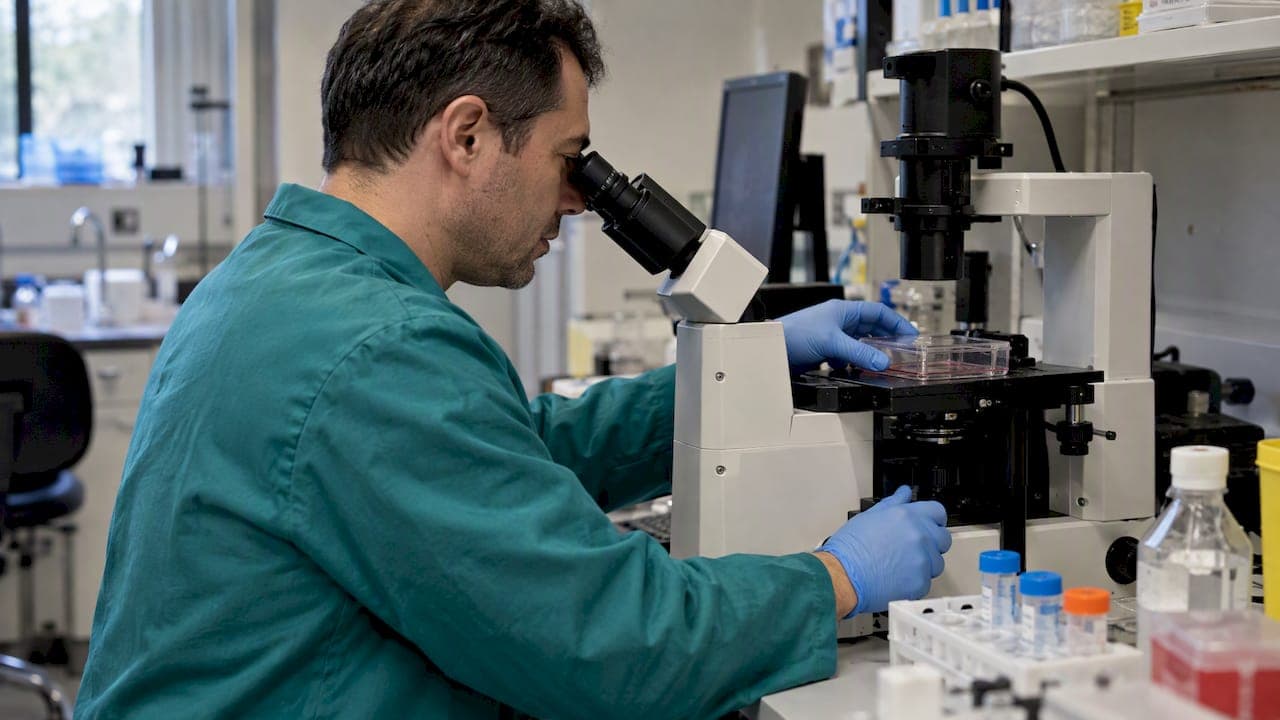
Antioxidant peptides are short amino-acid sequences that reduce oxidative damage by scavenging radicals, chelating transition metals, or activating cellular antioxidant programs such as Nrf2. Carnosine-type dipeptides, glutathione-related dipeptides, thioredoxin-mimetic peptides and mitochondria-targeted peptides are classes discussed in this field. Preclinical and human evidence exists for several of them, and we summarize it below.
TL;DR:
- A 2024 analysis of 9 trials involving 350 participants found carnosine and related dipeptides lowered CRP, TNF alpha, and MDA while raising catalase activity.
- A trial of 90 adults found daily 48 mg cysteine peptides reduced erythema after UVB exposure for 4 weeks, with pigmentation benefits at 5 weeks.
- Human studies remain small, laboratory assays differ, and many mechanisms rely on cell models, so individual biomarker changes need replication before guiding dose decisions.
- Test each proposed mechanism with a matching readout: Keap1 binding requires Nrf2 target gene measurements, while oxidation claims need site specific protein mapping.
- Choose the delivery route before selecting stability modifications, and match outcome markers to the proposed mechanism because impurities can distort redox assays.
Table of Contents
- How do antioxidant peptides act at the molecular level?
- What does the evidence show in cells, animals, and people?
- Which peptide classes matter most, and what does each do?
- How are antioxidant peptides and oxidized proteins measured?
- How are antioxidant peptides applied, and what limits their performance?
- How do we support reproducible peptide research?
- Where should antioxidant-peptide research go next?
- Our catalog for oxidative-stress research
- FAQ
- Sources
How do antioxidant peptides act at the molecular level?
Peptides reach redox biology by four routes: signaling through Nrf2, direct scavenging, metal coordination, and targeting of mitochondria. A 2024 review of screening and mechanisms names Keap1-Nrf2 interactions, mitochondrial targeting and metal chelation as the principal mechanisms reported for these molecules. The sections below take each in turn.
Nrf2-Keap1-ARE activation. Under normal conditions, Keap1 holds Nrf2 in the cytoplasm and marks it for degradation. Certain peptides bind Keap1 competitively, which frees Nrf2 to enter the nucleus and switch on genes under the antioxidant response element. A 2026 synthesis of peptide redox networks reports that this raises expression of SOD, GPx and heme oxygenase-1 (HO-1), helping restore redox homeostasis. This is why the field now treats peptides as signaling molecules rather than simple scavengers.
Direct scavenging and carbonyl trapping. Histidine-containing dipeptides such as carnosine neutralize reactive species and trap reactive carbonyls, including aldehydes generated when membrane lipids peroxidize. Their imidazole ring does much of the work.
Metal coordination. Free iron and copper catalyze the formation of hydroxyl radicals. Peptides that coordinate these ions limit that catalysis before it starts, a mechanism the same screening and mechanism review lists alongside radical scavenging.
Mitochondrial targeting. Mitochondria are a main source of cellular reactive oxygen species (ROS). Cardiolipin-binding peptides such as SS-31 concentrate at the inner mitochondrial membrane, where they are reported to reduce electron-leak ROS and support mitochondrial quality control.

Thiol chemistry. Thioredoxin-mimetic (TXM) peptides are redox-active tri- and tetra-peptides optimized for cell permeability and blood-brain barrier (BBB) crossing. According to a 2025 review of TXM peptides, they act through thiol chemistry that mimics thioredoxin's disulfide-reducing function.
The practical summary:
- Nrf2 route: upregulates endogenous enzymes (SOD, GPx, HO-1), a slower but self-sustaining effect.
- Scavenging route: acts on existing radicals and carbonyls, immediate but stoichiometric.
- Chelation route: prevents radical formation at the source.
- Mitochondrial route: limits ROS where the largest share is generated.
- Thiol route: restores reducing capacity in protein-bound and free thiol pools.
The shift in the field: as of 2026, peptide redox research describes peptides as signaling molecules, and warns that indiscriminate activation of antioxidant pathways such as Nrf2 can unintentionally affect tumor shielding or immune homeostasis.
That caution is the reason precision matters. Redox balance is contextual. Forcing thiol levels up or down can disrupt normal redox signaling, so well-designed interventions support endogenous systems instead of overwhelming them.
What does the evidence show in cells, animals, and people?
The evidence base is layered. Laboratory work is plentiful, animal data is encouraging for several classes, and human trials exist but are small. Readers weighing translational readiness should keep that hierarchy in mind.
In vitro and animal findings. Preclinical studies repeatedly report lower intracellular ROS, reduced lipid peroxidation and protective cellular outcomes. Food-derived work is a good example: tilapia hydrolysates and peptides have yielded at least 16 peptides with cellular and in vivo antioxidant evidence, including lower intracellular ROS and higher antioxidant enzyme activity in model systems. TXM peptides such as TXM-CB3 showed protective effects across multiple animal models, according to the TXM review.
Human data on histidine dipeptides. A 2024 systematic review and meta-analysis of 9 trials with 350 participants reports quantitative human findings. Supplementation with carnosine and histidine-containing dipeptides versus placebo produced these changes:
- C-reactive protein (CRP): weighted mean difference (WMD) of -0.97 mg/L
- TNF-α: WMD of -3.60 pg/mL
- Malondialdehyde (MDA), a lipid peroxidation marker: WMD of -0.34 μmol/L
- Catalase activity: increase, WMD of 4.48 U/mL
Biomarker shift across 9 trials: MDA fell by 0.34 μmol/L while catalase activity rose by 4.48 U/mL, so both the damage marker and the defense marker moved in the expected direction.
A smaller exercise study points the same way: a dipeptide extract was reported to raise antioxidant status and regulate the oxi-inflammatory response to intense exercise.
Human data on cysteine-containing peptides. A 2024 randomized, double-blind study enrolled 90 healthy adults aged 30 to 59. Participants took 48 mg/day of oral cysteine-containing peptides. After 4 weeks, UV-B-induced skin erythema was significantly attenuated, and pigmentation benefits appeared at 5 weeks. The trial is useful for dosing and duration: the effect needed daily intake across several weeks, not a single dose.
Where the evidence is thin. Sample sizes are small, assays differ between laboratories, and many mechanistic claims rest on cell models. The peptide redox networks review frames the field as maturing but contextual, and the screening review notes that the breadth of models makes direct comparison difficult. Treat any single number as a signal that needs replication, not a settled dose-response curve.
Which peptide classes matter most, and what does each do?
Several groups are commonly discussed in this field. For a broader orientation to naming and classification, our overview of peptide types and uses for researchers covers the wider landscape.
Carnosine and histidine-containing dipeptides. Carnosine traps carbonyls, coordinates metals and buffers aldehydes derived from lipid peroxidation. It is the class with the clearest human meta-analytic data, summarized above.
Glutathione and cysteine-containing dipeptides. Glutathione (GSH) is the central thiol buffer of the cell. A review of glutathione biology describes it as a life-sustaining small molecule protecting against oxidative stress, aging and damaging inflammation. Cysteine-containing peptides supply the rate-limiting amino acid, which is the logic behind the skin trial described earlier.
Thioredoxin-mimetic (TXM) peptides. These short redox-active motifs reproduce thioredoxin's reducing activity in a form small enough to cross membranes. Their preclinical effects across disease models are discussed in the TXM review.
Mitochondria-targeted peptides (SS-31). SS-31 is a mitochondria-targeted peptide discussed in research on oxidative stress.
Mitochondrial-derived peptides (MOTS-c). MOTS-c is discussed as a mitochondrial-derived peptide. Its role overlaps with the targeted peptides above, though its origin is endogenous.
Two practical notes cut across all five classes:
- Peptides discussed in this literature can be modified for stability.
- Terminal blocking, cyclization and carrier systems are common design strategies because unmodified peptides are vulnerable to proteolysis.
For researchers working on exercise-related oxidative load, our discussion of peptides in muscle repair covers adjacent territory, and inflammation-linked redox effects are discussed in our guide to peptides in immune modulation.
How are antioxidant peptides and oxidized proteins measured?
Claims about oxidative stress are only as good as the assay behind them. The workflow has three layers: finding candidates, testing them in cells, and mapping oxidative damage at the molecular level.
Finding candidates. Classical screening uses enzymatic hydrolysis and fractionation of protein sources. Newer pipelines are bioinformatics-driven: machine-learning models trained on sequence and structural properties, for example enrichment in tryptophan, tyrosine and phenylalanine, prioritize candidates before synthesis, and in silico docking estimates Keap1 binding.
Cell-based outcomes. Common readouts include ROS-sensitive fluorescent probes, activity of SOD, catalase and GPx, and lipid peroxidation markers such as MDA.
Mapping oxidized proteins. Oxidative post-translational modifications (oxPTMs) are diverse and low in abundance. A review of mass spectrometry methods explains that chemical derivatization and peptide-level enrichment, for example with ARP, improve identification and quantitation, but pitfalls exist and rigorous workflows are required. The core steps:
- Label oxidized residues chemically, for example carbonyls with an ARP probe, or tag them with an affinity reagent such as O-ECAT, which supports site-specific identification of carbonylation products by nano-LC and Fourier transform mass spectrometry.
- Digest the protein and enrich modified peptides at the peptide level.
- Separate by LC-MS/MS and fragment with CID or ETD. ETD fragment ion ratios can report the extent of oxidative modification on specific sites.
- Localize the modification site and compare relative abundance across conditions.
Pro Tip: Match the assay to the proposed mechanism. A Keap1-binding claim needs Nrf2 target-gene readouts, not just a radical-scavenging assay, and any oxPTM claim needs site-level mapping.
Site-specific mapping and method standardization matter because biomarker and mechanistic claims depend on them. Without both, results from different laboratories cannot be compared.
How are antioxidant peptides applied, and what limits their performance?
Applications cluster in four areas, each with its own design constraints.
- Functional foods and supplements: food-derived hydrolysates are mixtures, while isolated peptides are defined compounds. Research aims include exercise recovery and skin protection, as in the tilapia hydrolysate work and the dipeptide exercise study cited earlier.
- Cosmetic and topical use: peptides appear in oxidative protection and collagen-related signaling, as the screening review notes for cosmetics. For the collagen angle, see our 2026 research update on peptides and collagen production.
- Therapeutic research: mitochondrial and neurodegenerative targets are the priority, with TXM peptides and SS-31 carrying the most translational interest, per the TXM review.
- Experimental tools: defined peptides serve as probes for redox pathways in cell and animal models.
Bioavailability is the central constraint. Digestive stability decides whether an orally delivered peptide reaches tissue intact. Common design responses are N- and C-terminal blocking to resist proteolysis, carrier systems to improve uptake, and attention to dosing and duration, since the cysteine-peptide trial above required weeks of daily intake.
Pro Tip: Before ordering material, define the mechanism you want to test, choose an assay that reads out that mechanism, and request a Certificate of Analysis confirming identity and purity.
Planning guidance in short:
- Choose the delivery route first, because it determines how much stability engineering you need.
- Select outcome markers that match the claimed mechanism (enzyme activity, MDA, Nrf2 targets).
- Specify peptide purity in the protocol, since impurities can themselves be redox-active.
- Plan for replication, because the human evidence base is still small.
How do we support reproducible peptide research?
We supply research-grade peptides with batch documentation and Certificates of Analysis available on request. Our catalog lists a range of compounds.
For proteomics and oxPTM mapping, material identity and purity are not formalities. An unverified impurity can generate artifactual oxidation signals or confound a cell assay, and batch traceability lets another laboratory reproduce your result. If you need a COA or sample details before designing a study, request them through our catalog.
Where should antioxidant-peptide research go next?
The most valuable work will treat redox biology as a network of compartments rather than a single pool of "antioxidant capacity." The peptide redox networks review points toward precision-designed, tissue-specific mimetics, and that direction makes sense given its warnings about indiscriminate pathway activation. Two gaps stand out: oxPTM measurement needs shared standards, and human trials need to grow beyond the small samples that dominate today. Peptide chemistry only becomes persuasive when it is paired with rigorous proteomics and trials designed around a stated mechanism. The popular framing of peptides as generic "antioxidants" will not survive that scrutiny, and the field is better for it.
— Tintastic
Our catalog for oxidative-stress research
Researchers planning redox experiments need verified material and paperwork that stands up in a methods section. Every peptide we list comes with batch documentation and a Certificate of Analysis on request. Our product lines include Metabolic, Longevity, Tissue & Repair, and Cognitive & Neuro, with bulk and wholesale options for larger programs.
Researchers who also work with thymosin-family compounds may find the TB-500 versus Thymosin Beta-4 comparison a useful reference. To request a COA or confirm research quantities, start from our peptide catalog.

This article is general information, not a substitute for advice from a qualified doctor. Consult a qualified healthcare professional about your own circumstances before acting on anything here.
FAQ
Does stress increase free radicals?
Yes, in many circumstances. Intense physical exertion is one documented example: a dipeptide extract study examined the oxi-inflammatory response to intense exercise. Psychological stress has also been linked to oxidative changes, though the evidence base differs by context.
What are free radicals?
Free radicals are highly reactive molecules with an unpaired electron, such as the hydroxyl radical. They damage lipids, proteins and DNA, and metal ions such as iron can catalyze their formation, which is why metal chelation is a recognized peptide mechanism.
How do antioxidants work?
Antioxidants either neutralize reactive species directly, bind the metals that generate them, or raise the cell's own defenses. Peptides can do all three, including through Keap1-Nrf2 signaling, which increases SOD, GPx and HO-1 expression.
What foods should I avoid if I have high oxidative stress?
We do not make dietary recommendations, and the sources here do not establish a list of foods to avoid. A physician or registered dietitian can assess your individual situation.
Sources
- Effects of carnosine and histidine-containing dipeptides on biomarkers of inflammation and oxidative stress: a systematic review and meta-analysis - PubMed
- Oral administration of cysteine peptides attenuates UV-B-induced skin erythema and pigmentation in humans | Scientific Reports
- Peptide Redox Networks in Human Cells | International Journal of Peptide Research and Therapeutics | Springer Nature Link
- New Insights into Antioxidant Peptides: An Overview of Efficient Screening, Evaluation Models, Molecular Mechanisms, and Applications