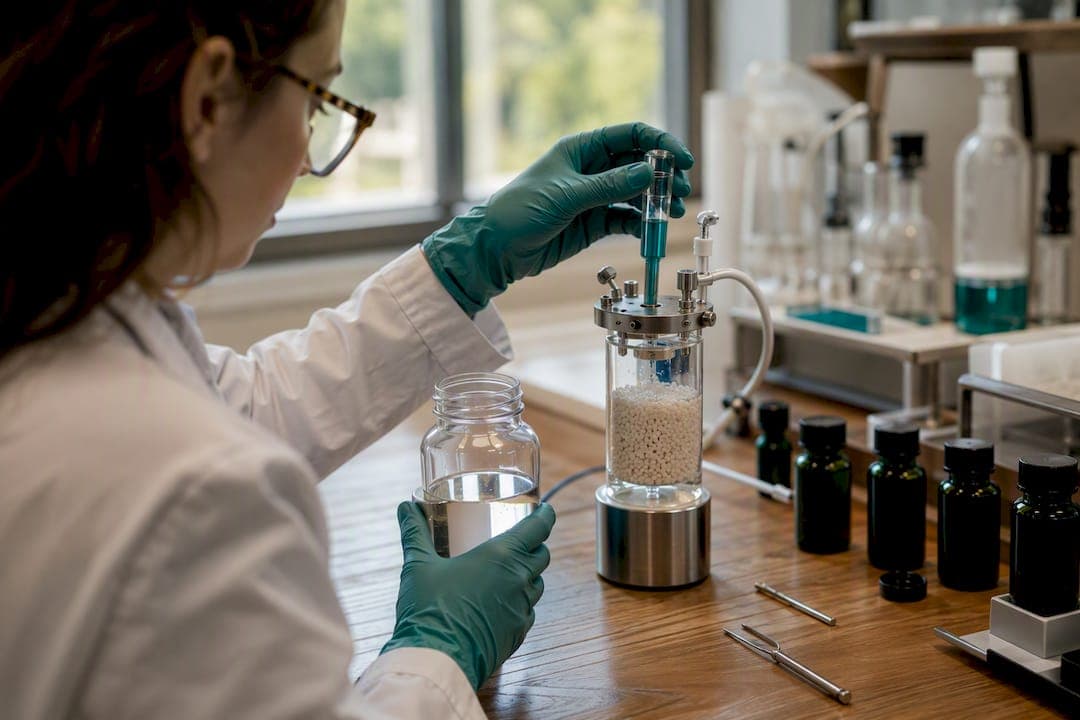
Solid-phase peptide synthesis remains the industry standard, accounting for roughly three-quarters of production activity, but the defining shift underway is toward greener, scale-ready workflows. Solvent substitution, convergent ligation, and continuous-flow platforms are converging with SPPS rather than replacing it. GLP-1 agonist demand is the operational force pushing labs and CDMOs to adopt these methods faster than academic timelines would normally allow. For researchers, the practical move is to build solvent-reduction and convergent-assembly thinking into bench protocols now, before a scale-up conversation forces the issue.
TL;DR:
- Long sequences above 50 residues benefit most from fragment conjugation methods like native chemical ligation rather than traditional linear solid-phase synthesis.
- Greening efforts focus on solvent recovery and substitution, but reducing reagent excess and adopting convergent strategies deliver larger environmental benefits.
- Purification bottlenecks, especially reversed-phase HPLC, heavily influence manufacturing costs and scalability, with higher purity crude products significantly easing downstream processing.
- CDMOs' platform choices and capacity, including flow and ligation expertise, are critical factors for successful scale-up and must align with initial synthesis methods.
- Automation and inline monitoring, combined with machine learning, improve synthesis predictability and success rates, especially for complex or aggregation-prone sequences.
Table of Contents
- Current State of Peptide Synthesis and the Market Behind It
- Which Synthesis Method Fits Which Peptide, and What's New
- Greening Peptide Synthesis: What's Regulatory and What's Practical
- Scale-Up and Manufacturing: Where the Real Bottlenecks Sit
- Automation, In-Line Monitoring, and Where AI Fits In
- Market Outlook: Demand Signals and What to Watch
- A Practical Framework for Method Selection and Scale-Up Prep
- Sourcing Standards Behind the Data: What Peptastic Labs Verifies
- Where the Field Needs to Move Faster
- Sources
Current State of Peptide Synthesis and the Market Behind It
Ask any process chemist why SPPS still dominates and the answer has little to do with elegance. It works because it automates cleanly, tolerates a wide range of sequences, and plugs into a supply chain of resins, protecting groups, and coupling reagents that has been optimized for four decades. SPPS accounted for roughly three-quarters of peptide synthesis activity in 2025, and that share has held even as therapeutic peptide approvals accelerate.
What's changed is the pressure sitting on top of that dominant method. GLP-1 class therapeutics turned peptide manufacturing from a niche specialty into a capacity problem, and that demand has pulled more work toward contract development and manufacturing organizations that can scale beyond a single lab's synthesizer. The commercial success of these drugs has driven measurable investment in outsourced, scale-ready synthesis capacity through 2025 and into 2026, according to the same manufacturing advances analysis.
That demand surge exposes a gap between what works at the bench and what survives a technology transfer. Method choice made in year one of a discovery program has direct consequences three years later when a CDMO asks about reagent excess, resin loading, and purification burden.
A few structural realities shape almost every conversation about scale in this field:
- SPPS's stepwise, linear character makes long sequences (above roughly 40 to 50 residues) prone to aggregation and truncation products, which compounds purification cost.
- Automation and instrument standardization have made SPPS the default teaching and discovery method, reinforcing its market share even where it isn't the most efficient route.
- CDMO capacity has become the practical bottleneck for translating a validated sequence into kilogram-scale material, more so than any single chemistry limitation.
- Therapeutic classes built on modified, cyclic, or stapled peptides are growing faster than standard linear peptide demand, and they stress SPPS's limitations more directly.
None of this displaces SPPS. It does mean researchers evaluating peptide types and their applications need to think about manufacturability earlier than convention has typically demanded.
Which Synthesis Method Fits Which Peptide, and What's New
Method selection is no longer a binary choice between solid-phase and liquid-phase chemistry. It's a spectrum, and the right answer depends heavily on sequence length, aggregation risk, and how far the project needs to scale.
Solid-phase peptide synthesis (SPPS) anchors the growing chain to an insoluble resin, allowing excess reagents to be washed away after each coupling step. It remains the default for sequences under about 50 residues and for any project needing rapid automation.
Liquid-phase peptide synthesis (LPPS) runs the same coupling chemistry in solution, historically without a solid support. Modern variants use soluble polymer tags (PEG-based supports being the most common) to retain some of SPPS's purification convenience while avoiding resin-loading limits. LPPS suits large-scale production of shorter, well-behaved sequences where solvent volume per gram of product matters more than step count.
Chemo-enzymatic peptide synthesis (CEPS) uses proteases or peptide ligases to form bonds under mild, often aqueous conditions. It sidesteps racemization risk and heavy protecting-group use, but substrate scope is still narrower than chemical methods.
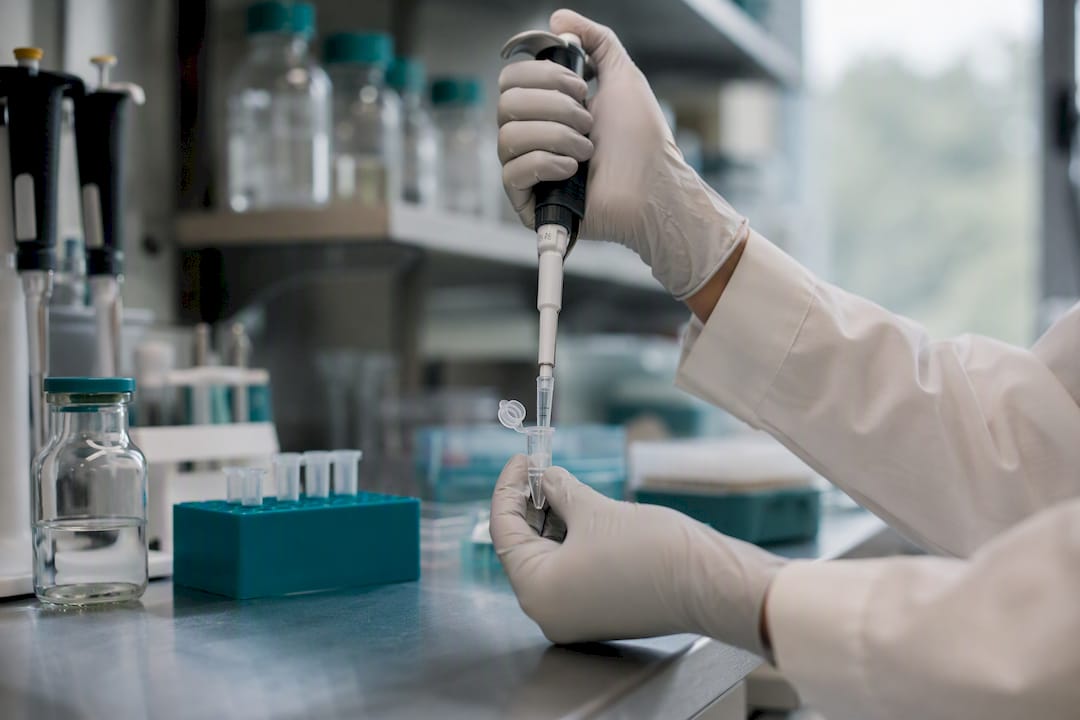
Native chemical ligation (NCL) and related chemoselective ligation strategies join two unprotected peptide fragments through a thioester intermediate, forming a native amide bond at the junction. This is where convergent assembly earns its reputation. Convergent NCL approaches have been reported to produce higher overall yields and purity for long sequences compared with stepwise SPPS in reported studies, because each fragment is short enough to synthesize cleanly and purify before ligation.
Mechanochemical and recombinant methods round out the field. Ball-milling approaches eliminate bulk solvent entirely for certain coupling steps, and recombinant expression remains the most atom-efficient route for very long, unmodified sequences, though it can't touch most modified or non-natural residues.
Here's a practical mapping for method selection by sequence profile:
- Short, unmodified sequences under 30 residues. Standard SPPS with microwave assistance is usually the fastest and most cost-effective route.
- Sequences between 30 and 50 residues with moderate hydrophobicity. SPPS with pseudoproline dipeptides or backbone protection to disrupt aggregation, still assembled linearly.
- Long or aggregation-prone sequences above 50 residues. Fragment condensation via NCL, synthesizing two or three shorter fragments by SPPS and ligating them, is the higher-probability path to a clean product.
- Cyclic, stapled, or post-translationally modified peptides. A hybrid approach, using SPPS to build the linear precursor and a dedicated cyclization or ligation step to install the modification.
- High-volume, well-behaved short peptides destined for commercial scale. LPPS or flow-based SPPS to cut solvent volume per batch.
Two innovations are reshaping the "when" as much as the "how." Microwave-assisted automated synthesizers have been used at small and semi-industrial scale to reduce reaction times and improve yields in some instances, with instrument makers now partnering directly with manufacturers on kilogram-scale runs. Continuous-flow platforms, meanwhile, improve reagent delivery, mixing, and temperature control well beyond what batch reactors achieve, and benchtop flow instruments introduced in 2024 and 2025 show higher throughput and better reproducibility than earlier-generation systems.
Pro Tip: If a sequence contains three or more consecutive hydrophobic or beta-branched residues, budget for fragment-based ligation from the start rather than troubleshooting aggregation after a failed linear synthesis. Retrofitting a convergent strategy midproject costs more time than planning for it up front.
Greening Peptide Synthesis: What's Regulatory and What's Practical
Solvent use is where peptide chemistry's environmental cost concentrates, and regulators have started to act on it directly. The European Union's REACH restriction on dimethylformamide, effective December 2023, forced labs and manufacturers across the industry to validate DMF alternatives on compressed timelines rather than waiting for the field to converge organically. That single regulatory change did more to accelerate greener SPPS adoption than a decade of voluntary sustainability initiatives, according to Fluorochem's summary of recent synthesis advances.
The honest picture, though, is incremental progress rather than a wholesale platform shift. Reviews describe solvent substitution and solvent recovery as the main levers currently in use, alongside longer-term efforts to develop alternative synthetic platforms such as flow and chemo-enzymatic systems, but a full replacement of traditional SPPS solvent chemistry remains a longer-term goal, not a current reality.
Practical steps researchers can apply on the bench today include:
- Substituting DMF with N-formylmorpholine (NFM), 2-methyltetrahydrofuran (2-MeTHF), or dimethyl carbonate blends for wash and coupling steps.
- Recovering and recycling wash solvents where equipment allows, rather than treating each wash as single-use.
- Reducing coupling reagent and amino acid excess per cycle, which cuts both solvent load and downstream purification burden.
- Favoring convergent, fragment-based assembly for long sequences, since it lowers the total protecting-group mass carried through synthesis.
- Exploring aqueous or micellar SPPS variants for shorter, less hydrophobic sequences where water can substitute for a meaningful share of organic solvent.
The atom-economy angle deserves more attention than it gets. Reducing protecting-group mass and limiting reagent excess often produces larger reductions in process mass intensity than solvent swaps alone, and convergent NCL strategies amplify those gains further for long peptides. That's a different lever than the solvent conversation dominating most greening headlines, and it's one that pays off regardless of which solvent system a lab eventually settles on. For anyone reworking a synthesis protocol, the peptide solubility guide is a useful reference for matching solvent choice to sequence hydrophobicity before defaulting to the industry standard.
Scale-Up and Manufacturing: Where the Real Bottlenecks Sit
Chemistry rarely kills a scale-up project. Purification does. Reversed-phase HPLC remains a dominant downstream burden in peptide manufacture, contributing heavily to both cost and solvent consumption, and that burden scales roughly linearly with sequence length and inversely with crude purity coming out of synthesis. A crude product at 60% purity requires dramatically more preparative HPLC runtime, solvent, and column wear than one entering purification at 85%, which is exactly why upstream method choice (linear SPPS versus convergent ligation) has downstream financial consequences.
Equipment and resin decisions compound that effect. Low-loading resins reduce aggregation risk but require more synthesis cycles to hit target scale; higher-loading resins move faster but raise the odds of incomplete couplings on longer sequences. Neither choice is universally correct. It depends on the sequence in front of you.
CDMOs have responded to rising therapeutic demand by expanding both synthesis and purification capacity, but capability varies widely between providers. Before committing a sequence to external scale-up, it's worth confirming a few things directly:
- What synthesis platform does the CDMO run at target scale (batch SPPS, flow, or a hybrid), and does that match what was validated at bench scale?
- What purification capacity exists in-house versus outsourced, and how does that affect turnaround and cost per gram?
- Can the CDMO handle fragment-based or ligation chemistry, or only standard linear SPPS?
- What solvent recovery and waste handling systems are in place, particularly relevant for DMF-restricted markets?
Reviewing examples of applied peptide research that made it from bench to scale can clarify which of these questions matter most for a given sequence class.
Automation, In-Line Monitoring, and Where AI Fits In
Predictability is the real prize automation delivers, more than raw speed. Automated synthesizers paired with microwave assistance shorten individual coupling cycles, but the bigger gain comes from consistency across hundreds of cycles that a human operator would struggle to replicate manually. In-line monitoring, tracking coupling completion or deprotection efficiency in real time, catches failed couplings before they propagate into a ruined batch, which matters enormously for long or aggregation-prone sequences where a single missed step can compromise an entire synthesis run.
Machine learning is starting to earn its place in this workflow rather than just being a buzzword attached to it. Analytics models are being used to predict aggregation risk from sequence composition and to optimize cycle parameters (coupling time, temperature, reagent equivalents) before a synthesis even begins, particularly when paired with automated flow synthesizers that can execute optimized parameters precisely. That combination improves success rates for difficult sequences that would otherwise require multiple failed attempts to dial in manually.
None of this replaces chemical judgment. It does mean labs that standardize data collection, logging coupling efficiencies, aggregation events, and purification yields in a consistent format, build the dataset that makes those predictive tools useful once a project reaches scale.
Market Outlook: Demand Signals and What to Watch
Market estimates for peptide synthesis and manufacturing vary depending on which segment an analyst is measuring, custom synthesis services, therapeutic peptide APIs, or the broader peptide therapeutics market, so growth figures published by different firms often diverge sharply even when describing the same underlying trend. The consistent signal across sources is direction, not a single agreed number: demand is climbing, and outsourcing is climbing with it.
The primary driver is unambiguous. The commercial success of GLP-1 class therapeutics has materially increased demand for peptide synthesis capacity and pushed CDMO outsourcing and manufacturing investment higher through 2025 and 2026. That single therapeutic class has done more to reshape capacity planning across the industry than any other development in the past decade.
A few indicators worth tracking as the field moves through 2026:
- New therapeutic peptide approvals in metabolic and oncology indications, which signal where the next capacity crunch will hit.
- CDMO capital investment announcements, a leading indicator of where outsourced capacity is expanding fastest.
- Regulatory movement on additional solvents beyond DMF, which would accelerate greener protocol adoption industry-wide.
- Adoption rates of continuous-flow platforms at commercial scale, the clearest signal of whether flow moves from promising to standard.
Downside risk sits mostly in supply chain concentration for specialized resins and protecting-group reagents, where a single supplier disruption can ripple through multiple manufacturers simultaneously. Upside scenarios hinge on flow and convergent ligation maturing fast enough to relieve the purification bottleneck before demand outpaces capacity.
A Practical Framework for Method Selection and Scale-Up Prep
Getting from a validated sequence to a defensible manufacturing plan comes down to answering the same questions in the same order every time.
- Define the project goal first. Discovery-stage flexibility calls for standard SPPS; a candidate heading toward IND filing needs a synthesis route validated for scale from day one.
- Assess sequence complexity honestly. Count consecutive hydrophobic residues, check for known aggregation motifs, and flag any cyclization or modification requirements before choosing a method.
- Map complexity to method. Short and clean sequences stay on linear SPPS; long, difficult, or modified sequences move to fragment-based ligation or a hybrid platform.
- Build the protocol checklist. Resin loading capacity, coupling reagent choice (HATU, HBTU, or newer uronium/phosphonium alternatives), solvent plan, and purification strategy all need to be decided together, not sequentially.
- Pressure-test with scale-up questions early. Ask what a CDMO's synthesis platform and purification capacity look like before finalizing a bench protocol, not after.
Pro Tip: Run a small-scale purification trial on your actual crude product, not a model peptide, before committing to a full synthesis campaign. Crude purity out of synthesis is the single best predictor of downstream HPLC cost, and it varies enough between sequences that generic benchmarks are unreliable.
Red flags during technology transfer typically show up as vague answers to specific questions: a CDMO that can't state expected crude purity for a comparable sequence, or one that hasn't validated the exact coupling chemistry your bench protocol used. The peptide buying guide checklist covers similar due-diligence questions worth adapting for a manufacturing partner conversation.
Sourcing Standards Behind the Data: What Peptastic Labs Verifies
Every trend discussed here, greener protocols, convergent ligation, tighter analytics, ultimately depends on one unglamorous foundation: knowing exactly what's in the vial before you start an experiment. Peptastic Labs verifies every compound in its catalog of more than 22 research-grade peptides to ≥99% purity via HPLC, with third-party verification layered on top of in-house testing.
That documentation matters more as synthesis methods diversify. A peptide produced by convergent ligation and one produced by standard linear SPPS can carry different impurity profiles even at similar nominal purity, which is exactly why full batch documentation and Certificates of Analysis, available on request, aren't a formality. They're what lets a researcher trace an unexpected result back to a synthesis variable instead of guessing. Anyone evaluating what "research-grade" should actually guarantee can find the fuller breakdown in what defines a research-grade peptide.
Where the Field Needs to Move Faster
The greening conversation in peptide chemistry has spent too long treating solvent substitution as the finish line. Swapping DMF for 2-MeTHF is worthwhile, but it's a smaller lever than reworking assembly strategy itself. Convergent ligation and flow platforms address the atom-economy and purification burden that solvent choice alone can't touch, and the field's slow uptake of those methods outside specialist labs is a bigger obstacle to real sustainability than any single regulatory restriction. Academic groups publishing novel ligation chemistry and industrial teams managing purification costs need to compare notes more than they currently do. If you're designing a bench protocol this year, build it with scale in mind from the first coupling cycle, not as an afterthought once a CDMO asks hard questions. Peptastic Labs' documentation practices offer one applied model for what that rigor looks like in procurement.
— Tintastic
Sources
The technical claims in this piece draw on peer-reviewed and industry-recognized sources. The RSC review on sustainability in peptide chemistry covers current purification technology and green chemistry challenges in depth. The PMC review on aqueous and micellar peptide synthesis details microwave-assisted automation advances. Pharma's Almanac's manufacturing analysis covers commercial and CDMO market context, and the PSC journal paper on green chemical peptide synthesis provides the atom-economy and ligation data referenced throughout.
- Sustainability in peptide chemistry: current synthesis and purification technologies and future challenges
- Challenges and Achievements of Peptide Synthesis in Aqueous and Micellar Media (PMC review)